



Showing 1 - 10 of 1,662
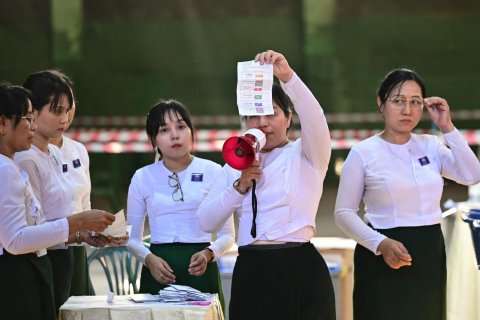
Region must not abandon Myanmar
News, Sally Tyler, Published on 16/02/2026
» A particular confluence of events pertaining to Myanmar -- the fifth anniversary of its latest junta, elections early this month widely seen as illegitimate, and the beginning of a case on charges of genocide brought by Gambia at the International Court of Justice -- should have brought increased international scrutiny to the beleaguered nation.

Corruption keeps getting worse
Editorial, Published on 15/02/2026
» Everyone knows corruption in Thailand is bad, but few realise how bad. By global standards, Thailand is slipping into the bottom tier.

How world's super-rich are rewriting the rules
Oped, Joseph E Stiglitz & Jayati Ghosh, Published on 13/02/2026
» Ongoing efforts to derail multilateral tax cooperation lie at the heart of a global programme to replace democratic governance with coercive rule by the extremely wealthy -- or what we call 21st-century Caesarism. Any strategy to counter this programme, therefore, must recognise that taxing extreme wealth is essential to saving democracy.
Emerging markets stand strong
Oped, Kristalina Georgieva and Mohammed Al-Jadaan, Published on 12/02/2026
» It used to be that when advanced economies sneezed, emerging markets caught a cold. That is no longer true. Following recent global shocks, such as the post-pandemic inflation surge and a new wave of tariffs, emerging markets have held up well. Inflation has continued to slow, currencies have generally retained their value, and debt issuance costs have remained at manageable levels. There has been no sign of the kind of financial turbulence that came with past economic shocks.
Reinvent Thailand to revive growth
Oped, Boonwara Sumano, Published on 11/02/2026
» In the 1990s, Thailand ranked second in Asean for state performance, behind only Singapore. Today, we trail several neighbours. This decline has unfolded gradually over three decades -- through repeated economic crises, institutional stagnation, and reforms that never quite went far enough. What is different today is that the cost of inaction has become far more dangerous.
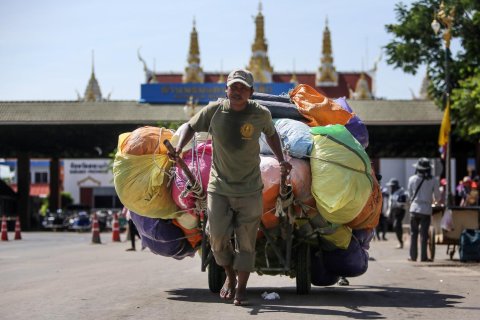
From conflict to shared prosperity
News, David Jay Green, Published on 10/02/2026
» The news from the front line, the border between Cambodia and Thailand, has a depressing familiarity. Another ceasefire is agreed upon, but it is accompanied by hostile statements from officials of both governments, and, in the past, such statements have led to aggressive action by one or both military forces. This opens the door to armed combat. People are killed or injured, property and infrastructure damaged, and people's livelihoods disrupted. We need to break this cycle; we need real peace.
Rethinking global health finance
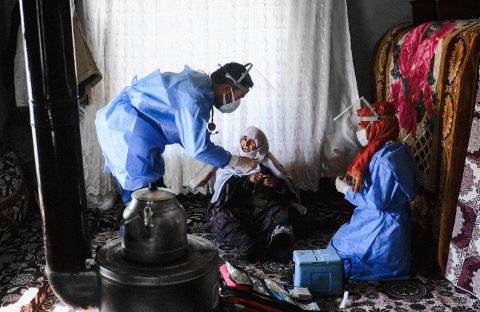
Oped, Walter O Ochieng & Tom Achoki, Published on 06/02/2026
» For the past half-century, the economics of global health were straightforward. Under the so-called "grant-based" approach, rich countries donate to poor countries, which use the funds to meet their populations' health needs. Success was measured by services provided or lives saved, rather than by balance sheets. While this model was far from perfect, the latest approach replacing it -- focused on using tools like guarantees and blended finance to crowd in private capital -- threatens to produce even worse outcomes.
Middle powers can do their bit
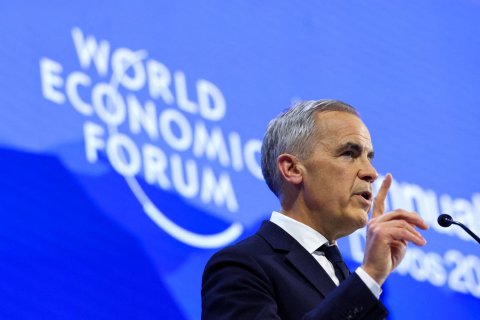
News, Moreno Bertoldi & Marco Buti, Published on 02/02/2026
» Amid escalating geopolitical tensions, the world is increasingly caught between the United States -- an extractive superpower -- and China, a "dependency superpower" whose global influence rests on making other countries reliant on its exports. In the absence of meaningful resistance, both are likely to remain on this course, leaving middle powers to comply with their demands or face retaliation.
Is it worth it? Seeing through the marketing traps
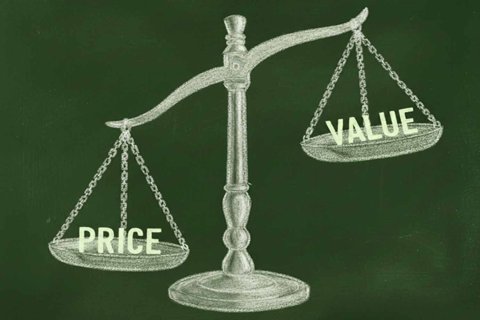
Rattanan Wangkanjana, Published on 21/01/2026
» As purchasing power weakens and living costs soar, daily expenses shock Bangkok residents.
Peace board price tag
Oped, Editorial, Published on 21/01/2026
» Thailand has received an invitation from US President Donald Trump to join his newly proposed "Board of Peace", an organisation ostensibly aimed at overseeing the reconstruction and peace process in Gaza following more than two years of devastating conflict.