



Showing 1 - 10 of 2,659
Anutin fuels border fear
News, Editorial, Published on 14/02/2026
» From a dubious plan to tightly seal the border with Cambodia, caretaker Prime Minister Anutin Charnvirakul, who is seeking to form a coalition government, has now given the nod to construct additional fencing along the frontier -- a move that signals extended hostility towards Thailand's immediate neighbour.
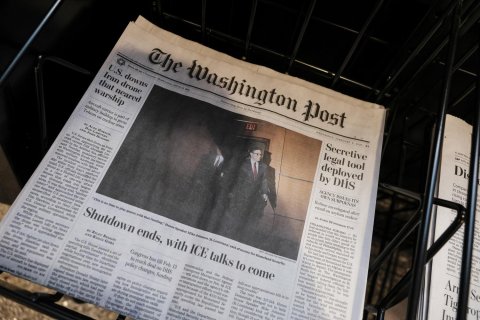
When journalism still exists -- but no longer matters
News, Carla Norrlöf, Published on 14/02/2026
» 'Democracy Dies in Darkness" became the motto of the Washington Post in 2017, four years after Jeff Bezos, the Amazon founder and one of the world's richest men, purchased the newspaper. Today, however, Mr Bezos, who has throttled the Post's opinion page and now slashed the newspaper's staff, seems determined to demonstrate that a free press, an essential component of democracy, can be killed off in broad daylight.

How world's super-rich are rewriting the rules
Oped, Joseph E Stiglitz & Jayati Ghosh, Published on 13/02/2026
» Ongoing efforts to derail multilateral tax cooperation lie at the heart of a global programme to replace democratic governance with coercive rule by the extremely wealthy -- or what we call 21st-century Caesarism. Any strategy to counter this programme, therefore, must recognise that taxing extreme wealth is essential to saving democracy.
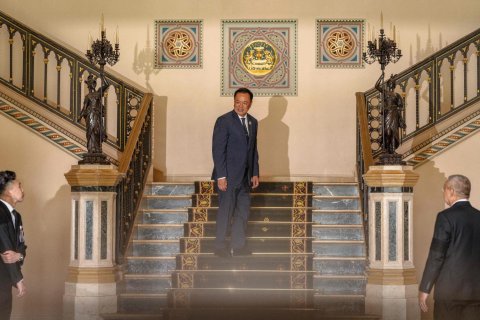
Next government won't be a grey one
Oped, Nattaya Chetchotiros, Published on 12/02/2026
» The formula for the new government will be an amalgamation of three colours -- navy blue representing the Bhumjaithai Party (BJT), red symbolising Pheu Thai (PT), and light blue, the colour code of the Democrat Party.
Emerging markets stand strong
Oped, Kristalina Georgieva and Mohammed Al-Jadaan, Published on 12/02/2026
» It used to be that when advanced economies sneezed, emerging markets caught a cold. That is no longer true. Following recent global shocks, such as the post-pandemic inflation surge and a new wave of tariffs, emerging markets have held up well. Inflation has continued to slow, currencies have generally retained their value, and debt issuance costs have remained at manageable levels. There has been no sign of the kind of financial turbulence that came with past economic shocks.
Japanese PM Takaichi comes out on top
Oped, Taniguchi Tomohiko, Published on 11/02/2026
» Japanese Prime Minister Sanae Takaichi has just scored an unprecedented victory in the country's general election. The ruling Liberal Democratic Party (LDP), which she leads, won 316 seats in the 465-member House of Representatives (the Diet's lower house), up sharply from 198. The combined strength of two parties that had merged hastily -- despite their fundamentally opposing platforms -- in an effort to bring Ms Takaichi down fell from 167 seats to just 49. The LDP, which celebrated its 70th anniversary last year, has never looked more robust.

SSO under strain
Postbag, Published on 10/02/2026
» Re: "Reality check for SSF", (Editorial, Jan 30).
Rethinking global health finance
Oped, Walter O Ochieng & Tom Achoki, Published on 06/02/2026
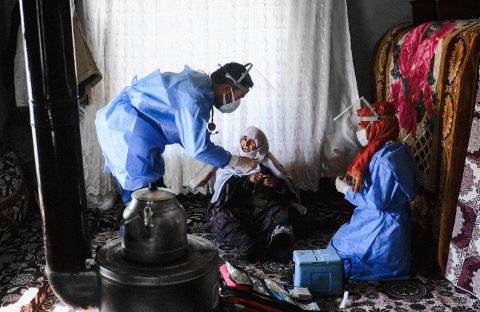
» For the past half-century, the economics of global health were straightforward. Under the so-called "grant-based" approach, rich countries donate to poor countries, which use the funds to meet their populations' health needs. Success was measured by services provided or lives saved, rather than by balance sheets. While this model was far from perfect, the latest approach replacing it -- focused on using tools like guarantees and blended finance to crowd in private capital -- threatens to produce even worse outcomes.
Our tariff-era dollar, your problem
Oped, Qiyuan Xu, Published on 04/02/2026
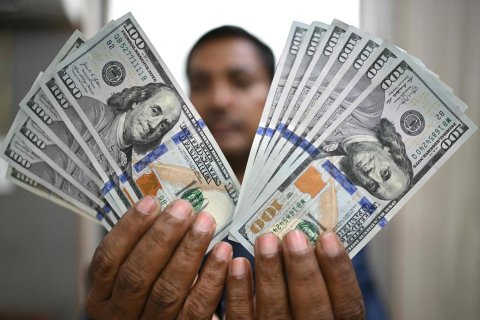
» In 2025, the dollar index, which measures the greenback's strength against a basket of major currencies, fell by roughly 9.4%. Over the same period, the United States' average effective tariff rate rose by around 14.4 percentage points, from 2.4% to 16.8%, according to the Yale Budget Lab. Taken together, these shifts imply that, in the import trade domain, the US experienced an effective exchange-rate depreciation of around 24%.
Middle powers can do their bit
News, Moreno Bertoldi & Marco Buti, Published on 02/02/2026
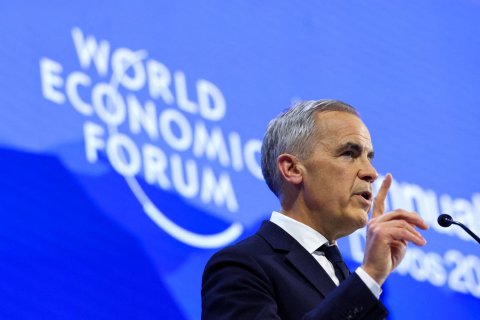
» Amid escalating geopolitical tensions, the world is increasingly caught between the United States -- an extractive superpower -- and China, a "dependency superpower" whose global influence rests on making other countries reliant on its exports. In the absence of meaningful resistance, both are likely to remain on this course, leaving middle powers to comply with their demands or face retaliation.