



Showing 1 - 10 of 23

How world's super-rich are rewriting the rules
Oped, Joseph E Stiglitz & Jayati Ghosh, Published on 13/02/2026
» Ongoing efforts to derail multilateral tax cooperation lie at the heart of a global programme to replace democratic governance with coercive rule by the extremely wealthy -- or what we call 21st-century Caesarism. Any strategy to counter this programme, therefore, must recognise that taxing extreme wealth is essential to saving democracy.
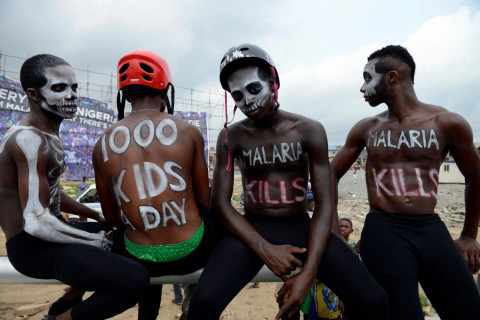
Africa's example to end malaria
Oped, Jean Kaseya, Published on 26/05/2025
» Despite being preventable and curable, malaria has continued to claim African lives. In 2023, the continent accounted for about 95% of the 597,000 deaths from malaria worldwide, 76% of which were children under the age of five.

Lockerbie bombing and the questions that linger
Oped, Kantathi Suphamongkhon, Published on 20/12/2024
» I often wondered how much of our lives are predetermined by forces beyond our comprehension.

The case for funding food security
Oped, Gelsomina Vigliotti & Maurizio Martina, Published on 17/10/2024
» Although enough food is produced to feed the global population, hunger and malnutrition due to conflict, poverty, economic slowdowns, and climate change still threaten millions of lives. In 2023, around 2.3 billion people faced moderate or severe food insecurity and more than 730 million people suffered from hunger, with undernutrition linked to almost one-half of deaths of children under age five.

It's an illiberal era
Oped, Postbag, Published on 05/01/2024
» Re: "Asian elections, democracy in 2024", (Opinion, Dec 29).
Creating pathways for Arab youth
Oped, Jihad Azour, Published on 17/05/2023
» Optimism can be difficult to muster at a time of heightened uncertainty and global turmoil. The 2022 ASDA'A BCW Arab Youth Survey, conducted only a few months after Russia's full-scale invasion of Ukraine and on the heels of the Covid-19 pandemic, reflected a darkening economic outlook.

Tyranny's propagandists triumph
Oped, Maria Ressa & Nishant Lalwani, Published on 05/04/2023
» If democracy had its own doomsday clock, it would be at two minutes to midnight. According to the most recent analysis by Varieties of Democracy (known as V-Dem), 72% of the world's population lived in autocracies last year, compared to 50% a decade ago. For the first time in more than two decades, there are more authoritarian regimes than liberal democracies -- and we are not doing enough to address this threat.

The digital solution to corruption
News, Bjorn Lomborg, Published on 27/03/2023
» Corruption is an enormous, global challenge, likely costing more than $1 trillion annually, or $120 (4,000 baht) for every person in the world. World leaders have long promised to tamp down on corruption, but unfortunately, we're getting nowhere. Now, new research identifies a surprisingly straight-forward, cheap way to reduce corruption that can also make countries hundreds of millions or even billions of dollars.

China and the sovereign-debt time bomb
Oped, Anne O Krueger, Published on 24/01/2023
» International capital flows have long been a major source of economic growth. Savings in higher-income countries have financed high-yielding investments in low-income countries, generating benefits for all. After World War II, capital flows under the Marshall Plan drove the rapid reconstruction of Europe, and after those countries recovered, they extended their own foreign aid and other official financial flows to the developing world. Private financing also increased substantially; by the 1990s, it accounted for over half of total capital flows to developing countries.