




Showing 1 - 10 of 97
Re-energising higher education in Asean
News, Vitit Muntarbhorn, Published on 22/12/2025
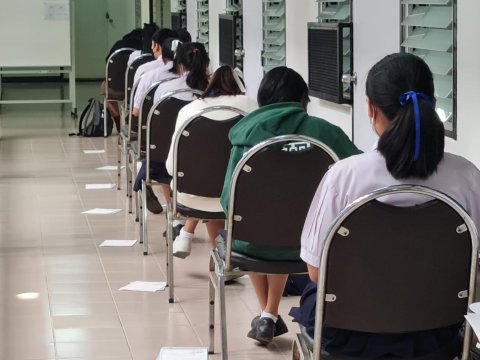
» Higher education, implying the tertiary level associated with universities and parallel institutions, is at an inflexion point in Southeast Asia, where the trajectory of socio-political, economic and cultural development is changing rapidly.
AI as Asia's new growth engine?
Oped, Lee Jong-wha, Published on 27/11/2025
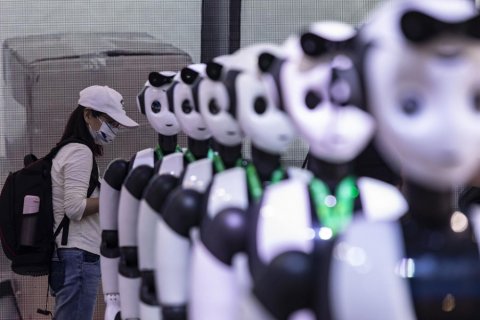
» Two decades after globalisation fuelled a global economic boom, growth has shifted onto a more subdued path, where it is likely to remain for the foreseeable future. Beyond the immediate shock of fragmenting trade and investment ties -- a result of rising geopolitical tensions, particularly between the United States and China -- lie structural headwinds, including population ageing, stagnant productivity, and the growing costs of inequality and natural disaster. These challenges strike at the heart of Asia's growth model.
AI set to replace most humans
News, Stephen Jen, Published on 22/08/2025
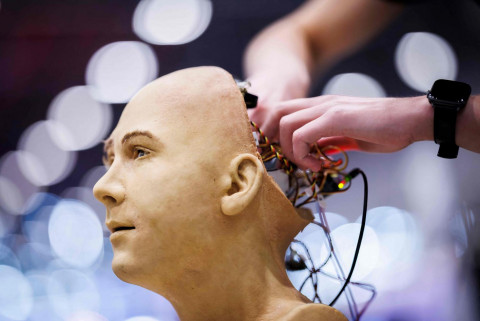
» Is technology more job augmenting or job replacing? This has been a long-standing debate. But recent academic work suggests that technology has been a net destroyer of jobs for decades.
Not above the law
Postbag, Published on 26/07/2025
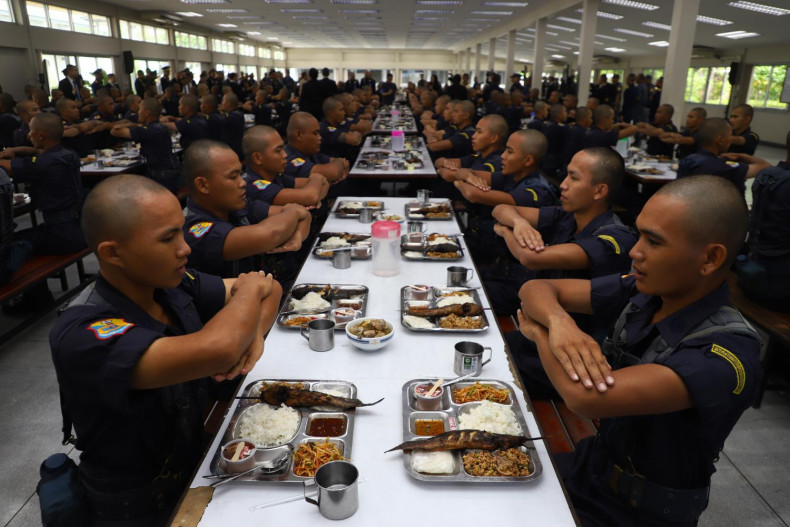
» Re: "PP backs public criticism of ruling in cadet's death", (BP, July 24).

China's unbeatable new export is not a product
Oped, Jeffrey Wu, Published on 24/07/2025
» The Chinese "cannot be allowed to export their way back to prosperity", argues US Secretary of the Treasury Scott Bessent, who claims that China's economy is the "most unbalanced in history". Such remarks reflect the growing fear in Washington that China's overcapacity, subsidies, and dumping are distorting global trade.

Rethinking what it means to be human
News, Peerasit Kamnuansilpa, Published on 05/07/2025
» In the decades ahead, Thailand will not collapse in a blaze of war, disease, or climate catastrophe. Rather, it will quietly wither from within. The twin forces of demographic decline and digital automation are converging with astonishing speed, and yet our political and moral imaginations remain unprepared.

Thailand at intelligence crossroads
Oped, Worsak Kanok-Nukulchai, Published on 23/06/2025
» As the United States and China pour vast investments into artificial intelligence, we stand on the brink of a power shift more profound than the atomic age--one where machines, not humans, may soon drive the pace of progress. On the horizon is Artificial General Intelligence or AGI, where machines can perform any intellectual task that humans can do, but also think, reason, adapt and innovate. The signs are clear: we may be approaching the end of the pre-AGI era.

Two models for future autonomous agentic AIs
News, Daron Acemoglu, Published on 10/04/2025
» AI "agents" are coming, whether we are ready or not. While there is much uncertainty about when AI models will be able to interact autonomously with digital platforms, other AI tools, and even humans, there can be little doubt that this development will be transformative -- for better or worse. Yet, despite all the commentary (and hype) around agentic AI, many big questions remain unaddressed, the biggest being which type of AI agent the tech industry is seeking to develop.

Centre-left parties must regain relevance in Germany
Oped, Bartosz M Rydlinski, Published on 01/03/2025
» Germany's Social Democrats are one of the West's oldest political parties, with a legacy of advocating parliamentary democracy, opposing Nazism, and leading the modernisation of postwar Germany. In addition to many notable labour, economic, and human-rights reforms the party has implemented over the years, ex-SPD leader and West German chancellor Willy Brandt's Ostpolitik in the 1970s laid the groundwork for Germany's reunification in 1990.

What's happened to the Asian Century?
Oped, Thitinan Pongsudhirak, Published on 14/02/2025
» Until recently, the "Asian Century" seemed a compelling narrative but now it is not what it used to be. It was supposed to herald a shift in global economic power from the West to the East, driven by China's rapid rise, India's economic dynamism, and the broader development of Asia. But a quarter of the way into the 21st century, the promise of Asian dominance appears less certain. The enduring technological and economic might of the United States, coupled with its geopolitical backlash against China, has lowered expectations. While Asia remains formidable, the trajectory of global power is open and fluid, with potential dominance shifting not necessarily to any nation or region but perhaps to a non-state entity.