



Showing 1 - 10 of 115

Mind the green for better play
Sports, Brett Brasier, Published on 25/03/2026
» If you lay down the flagstick, place it off the green to prevent doing any damage to the green and to hinder it from getting in the way of play. Generally, if there is no caddie, the player closest to the hole will be regarded as the one to look after and tend the flagstick when applicable. Try not to hang around after putting; therefore, after everyone has holed out, immediately walk to the next tee.

Simple golf etiquette every player should always follow
Sports, Brett Brasier, Published on 18/03/2026
» Replacing your divots is a must and probably the first etiquette rule that we learn. If the divot has disintegrated then try to find a container of soil/sand and simply fill in the divot.

Free relief, OB stakes and the one-club drop
Sports, Brett Brasier, Published on 11/02/2026
» Please allow me to try and explain what is an immovable obstruction once more. They are basically artificial, fixed objects like cart paths, sprinklers, or fences -- they allow for a free, one-stroke relief drop if they interfere with a player's lie, stance, or swing. Relief is not permitted for line-of-sight interference. Players must find the nearest point of complete relief, not closer to the hole, and drop within one club-length.

Golf made simple: Key rules every player should know
Sports, Brett Brasier, Published on 01/10/2025
» Carrying on with some basic 'easy to understand' golf rules that we all need to know well. To correctly drop a golf ball, you must release the ball from your hand at knee height, allowing it to fall straight down without touching your body or equipment before hitting the ground. The ball must then land and come to rest within the defined relief area for that required situation. Should it bounce away from the dropping area you can try two more times. If still unsuccessful -- you can then place the ball. If you drop the ball incorrectly, you simply must re-drop it without penalty, but you incur a penalty if you play the ball from a wrong place after dropping it.

Old tricks and new science in green reading
Sports, Brett Brasier, Published on 27/08/2025
» I have to be honest and say that the 'Feet Feeling Method' for finding the break in a putt has never excited me. This involves using your feet to feel the slope of the green while you walk around it. The Plumb Bob Method in finding the line of any putt involves using your putter as a plumb line to judge the slope. To do this, you need to stand behind your ball, at a right angle to the hole, and hold up your putter so it covers the ball. Then, you align the shaft of your putter with the ball. If the shaft seems to tilt to one side, it indicates that the green also slopes in that direction and you then allow for this.

Choosing the right putter is important
Sports, Brett Brasier, Published on 20/08/2025
» Putters come in many shapes and sizes: blade putters and mallet putters. Some are more traditional, have a simple design and are often favoured by 'feel' putters who rely more on their intuition and touch. Mallet putters have larger heads and offer more forgiveness on off-centre hits, making them ideal for golfers who prefer a 'straight-back-straight-through' stroke.
A few simple setup tweaks
Sports, Brett Brasier, Published on 06/08/2025
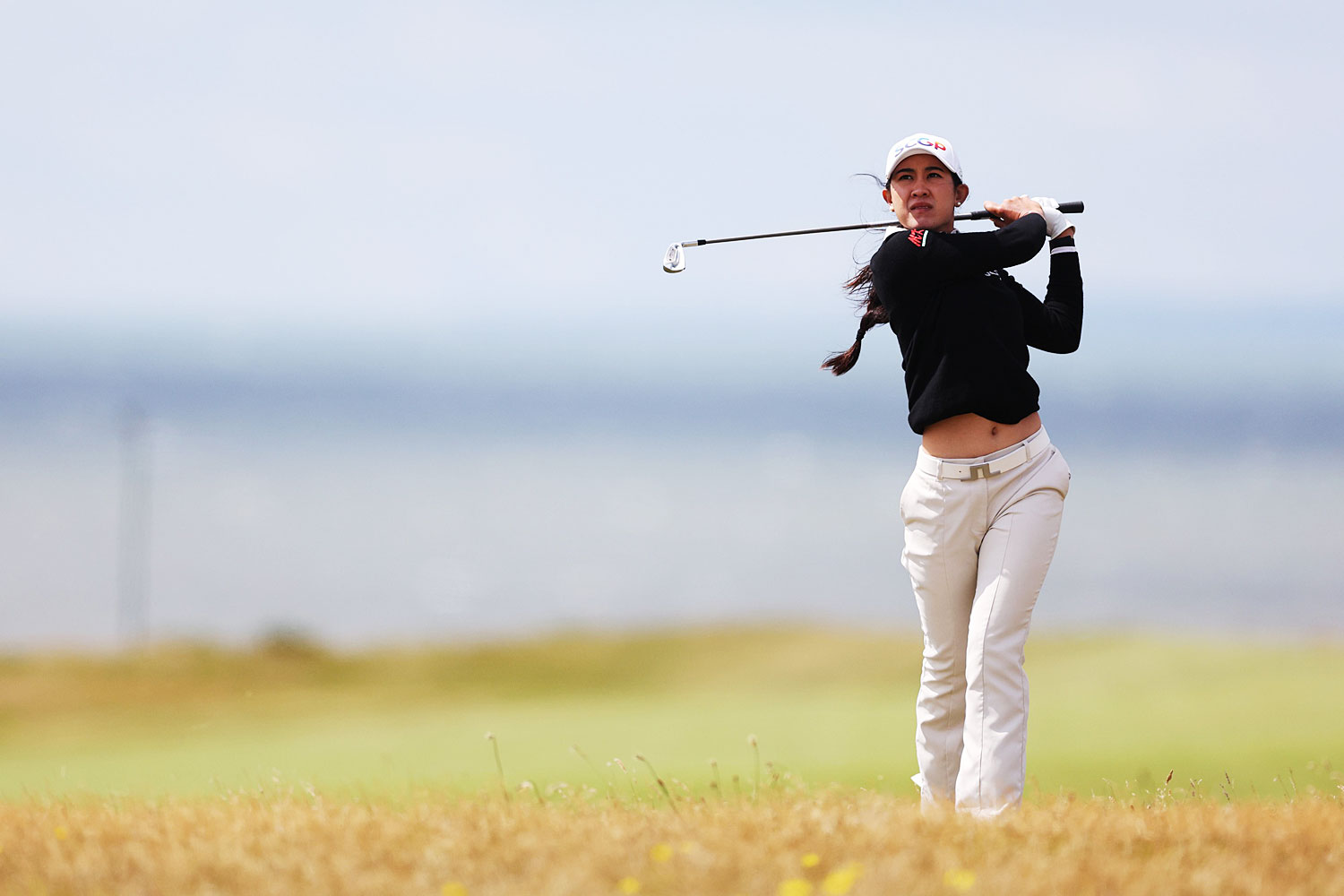
» Those of us getting on in life usually have more time to play but suffer from less flexibility, less range of motion and less speed. It's a sad combination, especially when your brain still remembers the swing you used to have.

Find fairways more often by going against the grain
Sports, Brett Brasier, Published on 23/07/2025
» When it comes to hitting it long off the tee, go with your normal shot shape. When driving the ball well, most of us play a slight draw, so no matter what the conditions, we'll always have this natural shape. Getting off the tee is the hardest part of the game for new golfers. I've seen many golfers fight their natural shot shape.

Why pressure and practice games matter
Sports, Brett Brasier, Published on 16/07/2025
» It's been proven that the brain can't learn unless you are challenging it with random tasks. Showing up to the range and hitting your driver for hours on end won't do much to improve your golf game. This is exactly why practice games are so effective. They simulate real pressure that you will feel on the course and encourage you to practise like you play.

Tweaks that make big difference
Sports, Brett Brasier, Published on 02/07/2025
» Stand tall and align your posture. A golf swing is a full-body motion and this is the huge difference between a new golfer and one with experience. The efficient transfer of energy during a swing is the main movement that identifies a good and useless golfer. Those who can play well are able to harness all of their rotational power from their hips, shoulders, and legs. Your spine should align with your knees, and the balls of your feet when hitting a tee shot. Keeping your posture straight will allow more consistent drives and longer shots.