



Showing 1 - 10 of 13
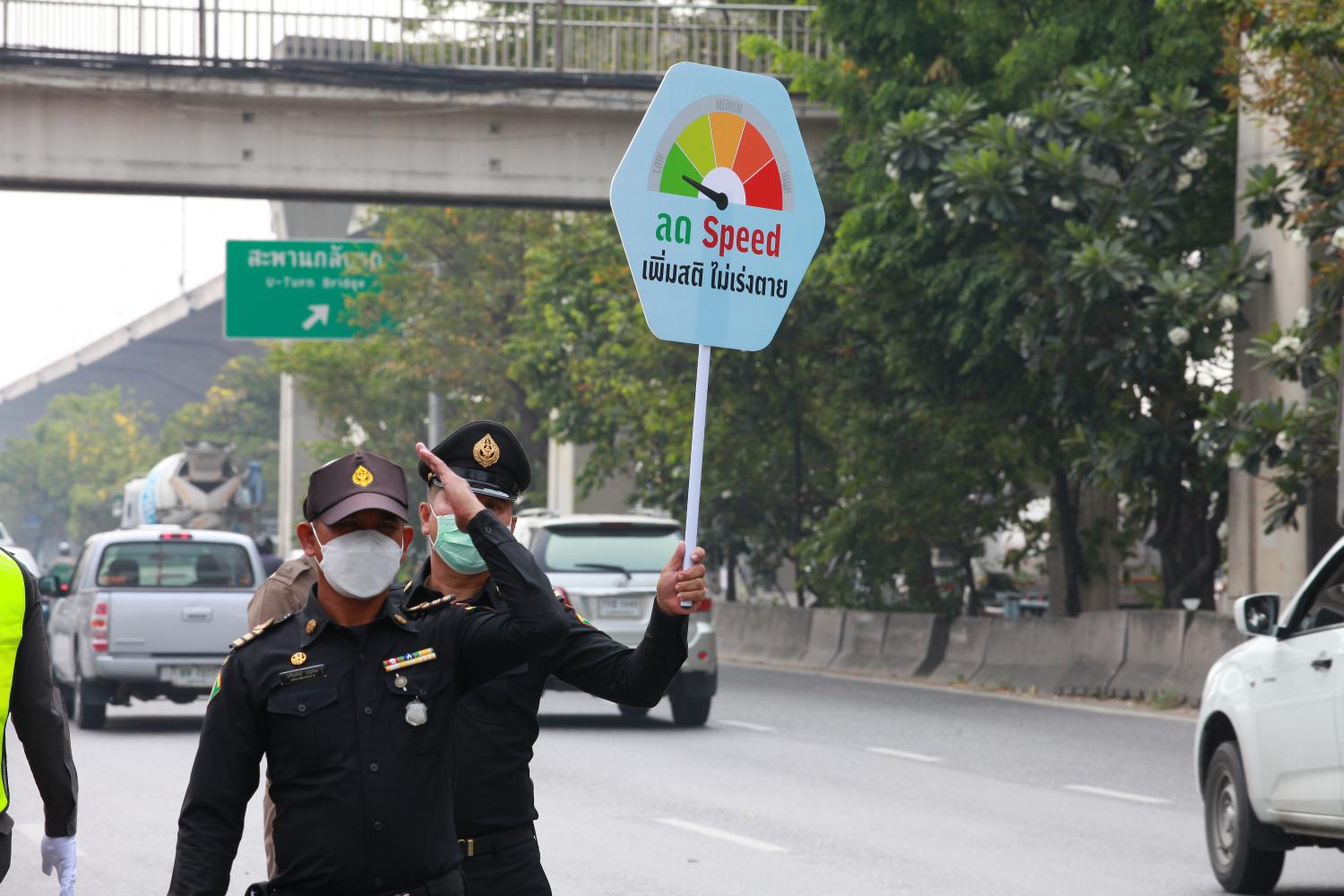
We don't need 'Seven Dangerous Days'
Oped, Peerasit Kamnuansilpa, Published on 27/02/2026
» Every Thai driver recognises the moment. The light turns green. Naturally, you can move; yet in Thai-style traffic, your instincts tell you to be hesitant. Despite the traffic light, a reckless motorcycle may still cross. A pickup may not stop. Drivers behind start honking as they wait to pass through the intersection. For a brief second, drivers just cannot afford to be certain about how others will behave.

The effects of unfinished momentum
News, Peerasit Kamnuansilpa, Published on 08/11/2025
» Why do some nations surge confidently into the future while others advance only in half-steps, not declining but not accelerating either? In their influential book Why Nations Fail (first published in 2012), Daron Acemoglu -- now a Nobel Prize economist -- and James Robinson, both economists and political scientists at the University of Chicago, offer a helpful lens for understanding Thailand's development path without casting blame or provoking division.

Rethinking what it means to be human
News, Peerasit Kamnuansilpa, Published on 05/07/2025
» In the decades ahead, Thailand will not collapse in a blaze of war, disease, or climate catastrophe. Rather, it will quietly wither from within. The twin forces of demographic decline and digital automation are converging with astonishing speed, and yet our political and moral imaginations remain unprepared.

Rethinking leadership in Thailand
News, Peerasit Kamnuansilpa, Published on 14/06/2025
» Thailand stands at a development crossroads. On the surface, the nation has invested heavily in education, innovation, and technical training. Each year, it produces a new wave of high-achieving graduates, particularly in the fields of science and technology. Yet, the country remained mired in a persistent middle-income trap. The question is not whether Thailand has talent, but whether it has the institutional culture and civic direction to channel that talent into meaningful national progress.

The roadway to enabling governance
Oped, Peerasit Kamnuansilpa, Published on 30/04/2025
» On May 11, communities across Thailand will vote in 2,469 municipal elections. Despite these polls being routine, they are a pivotal test of the country's commitment to moral leadership and enabling governance at the grassroots level.

Drug crisis deepens our economic woes
Oped, Peerasit Kamnuansilpa, Published on 11/12/2024
» Thailand faces a dual crisis that threatens the foundation of its future economic development: declining fertility rates, leading to a shrinking population and a simultaneous surge in drug addiction rates.

On why Thailand is politically unstable
Oped, Peerasit Kamnuansilpa, Published on 15/11/2023
» Since the 1932 revolution -- triggered by a coup by progressive elites that replaced the absolute monarchy with a constitutional monarchy -- Thailand's politics have been marked by persistent conflict and instability.

Don't underestimate the power of hope
Oped, Peerasit Kamnuansilpa, Published on 27/10/2023
» Most Thais live with the hope of a better future. Their hopes play a crucial role in promoting the well-being of citizens and society. When people hope, they are more likely to persevere in adversity and take steps to overcome obstacles to improve their lives. In other words, hope motivates them to pursue meaningful goals.

Progress through decentralisation
Oped, Peerasit Kamnuansilpa, Published on 30/05/2023
» The results of the latest general election have indicated a clear direction that most citizens would like the country to go. However, because of the entrenched power structure, the effort by a coalition of opposition parties to form a new government that could radically transform Thailand may be futile. The first reason is the Election Commission's scrutiny of the claims that Mr Pita Limjaroenrat, the Move Forward Party's leader, owns ITV shares. Second, he may be unable to garner the needed 376 votes from the Senate and parliament. Finally, will the dispute over the House speaker position affect the coalition?

Thailand's development model splutters
Oped, Peerasit Kamnuansilpa, Published on 16/03/2023
» Location-based economic development (LED) strategies, defined as government efforts to improve a particular area's economic and social conditions, were implemented in economically advanced countries long before they were in Thailand.