



Showing 1 - 9 of 9
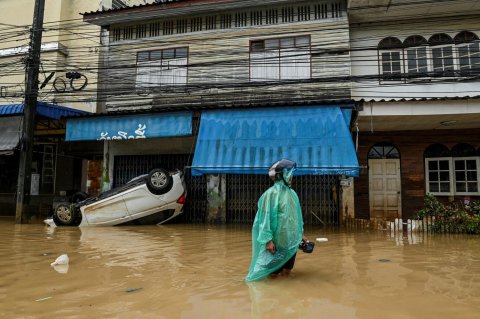
Rethinking local flood management
News, Peerasit Kamnuansilpa, Published on 12/12/2025
» As global temperatures rise, extreme rainfall and severe flooding are happening around the world. The science is clear; with every 1 degree Celsius increase, the atmosphere will hold 7% more water vapour. This may explain why storms are more intense as the world warms.

From FDI to homegrown growth
Oped, Peerasit Kamnuansilpa, Published on 11/09/2025
» For decades, Thailand has leaned heavily on foreign direct investment (FDI) as the engine of growth. That strategy once delivered jobs and exports, but today it yields diminishing returns. Inflows are volatile, competitiveness is slipping, and dependence on external capital leaves the economy vulnerable to global shocks. Thailand must change course.

Thailand still has chance to shine
Oped, Peerasit Kamnuansilpa, Published on 31/07/2025
» Thailand's economy is losing momentum. Growth rates have steadily declined, from 7.2% in 2012 to just 1.9% in 2023. Without a new vision for development, the country faces the real possibility of becoming stuck in permanent stagnation. The absence of bold leadership and structural reform has left Thailand vulnerable, while its regional peers -- Singapore, China, and South Korea -- surge ahead. These countries have demonstrated that visionary and compassionate leadership, combined with political reform and good governance, can transform the economic fortunes of an entire nation.

Drug crisis deepens our economic woes
Oped, Peerasit Kamnuansilpa, Published on 11/12/2024
» Thailand faces a dual crisis that threatens the foundation of its future economic development: declining fertility rates, leading to a shrinking population and a simultaneous surge in drug addiction rates.

Harnessing Thailand's human capital
News, Peerasit Kamnuansilpa, Published on 28/06/2024
» Thailand is currently on a distressing trajectory towards depopulation, with the number of deaths each year surpassing the number of births. The latest available data from the Department of Provincial Administration paints a grim picture, showing over 48,000 more deaths than births last year. This number is set to escalate as the number of births continues to plummet and death rates surge. Should the current trend persist, by 2083, Thailand's population is projected to shrink by half to 33 million. The leading cause of this demographic dynamic is the decline in fertility rates among Thai women. These declining fertility rates have severe repercussions and thus warrant the attention and actions of national leaders.

Thailand's development model splutters
Oped, Peerasit Kamnuansilpa, Published on 16/03/2023
» Location-based economic development (LED) strategies, defined as government efforts to improve a particular area's economic and social conditions, were implemented in economically advanced countries long before they were in Thailand.

Less local control a threat to Thai democracy
Oped, Peerasit Kamnuansilpa, Published on 19/11/2021
» After an almost seven-year suspension, Thailand held its first local elections for chief executive officers (CEO) and council members of provincial administrative organisations (PAO) on Dec 20, 2020, followed by the election of mayors and city council members on March 28 of this year.

PAO polls: An illusion of democracy?
Oped, Peerasit Kamnuansilpa, Published on 24/12/2020
» Last Sunday, Thailand had a long-overdue election of the chairs and council members of all Provincial Administration Organisations (PAO). Are these elections really meaningful?

The quest for equity in Thai university rankings
News, Peerasit Kamnuansilpa, Published on 15/10/2018
» In his recent article, "Rankings not be-all, end-all for Thai unis", Mike Hayes astutely addressed the problems in the international university ranking systems vis-à-vis Thai universities, and there is little point in rehashing the faults he correctly brought to light. In his final paragraph, however, he offered an alternative ranking system that would incorporate official rankings but seems to be far more applicable to Thailand by incorporating Thai universities' contribution to local communities, national development and a democratic society.