



Showing 1 - 10 of 78

AI learning versus human creativity is a real battle
Life, James Hein, Published on 25/02/2026
» If you’ve been reading these columns long enough, you’ll probably know that I write music and I’ve written some books. With the advent of artificial intelligence, the concept of copyright and private property has blurred. The standard rule was, what you have worked hard on to create, belongs to you. As musicians and authors, ideally, we create, we write and we invent. In the world of AI, it will draw a picture, write a book and create music for you based on a simple text prompt that itself may have also been written for you by AI.

Marketeers have simple choices
Life, James Hein, Published on 18/02/2026
» If you use a mobile phone for playing any games, then typically along with that comes all of the advertisements and marketing presentations. First however, there is the "free download", this means you can download it for free, install and run it. After that, things may not be free at all. This is to be expected as advertising is one of the few ways to make any income from the games being played by millions of people across the planet.

We know they know we know about privacy
Life, James Hein, Published on 03/12/2025
» Strap in, because today I'm covering what is going to be happening over the next few months to get even more data about you and what you are doing on the internet. Let's start with the recent exposure of around 3.5 billion phone numbers from WhatsApp, the private platform.

Microsoft put on the naughty step by Aussie regulator
Life, James Hein, Published on 05/11/2025
» Microsoft has been at it again. The Competition & Consumer Commission in Australia has started a legal process against the Redmond giant for apparently misleading users of the policies for its Microsoft 365 bundle. Microsoft advised users with a Personal and Family plan that "to maintain their subscription they must accept the integration of Copilot and pay higher prices for their plan, or, alternatively, cancel their subscription".

Understanding an AI's 'thinking'
Life, James Hein, Published on 22/10/2025
» Over the past couple of weeks, I dived deep into the Alice In Wonderland-like rabbit hole of chatbots and AI systems. This was not your typical "ask a few questions", but more along the lines of jailbreaking the AI to get behind the scenes. You may remember earlier commentary on the code behind the query. This is where the guardrails and biases of the model are coded and why the majority of all AI systems are currently leaning to the Left of the political spectrum.

The hidden dangers of AI
Life, James Hein, Published on 24/09/2025
» There's going to be a lot on artificial intelligence topics this week so let's get started. For the time being, the most common way to leverage an AI product is using a prompt of some kind. To that end, you will see lots of posts on platforms declaring that they have the best god-level prompts for large language models (LLMs). A prompt is something like, "What are the top ten songs from Depeche Mode?", or "Draw me a picture of a frog on a toadstool in the style of Alice In Wonderland with vivid colours". The more detailed and nuanced the prompt, the better the desired outcome tends to be. As with everything in the computer world, there are bad actors looking to take advantage of this.
Will Tesla's camera-only autonomy prove its mettle?
Life, James Hein, Published on 02/07/2025
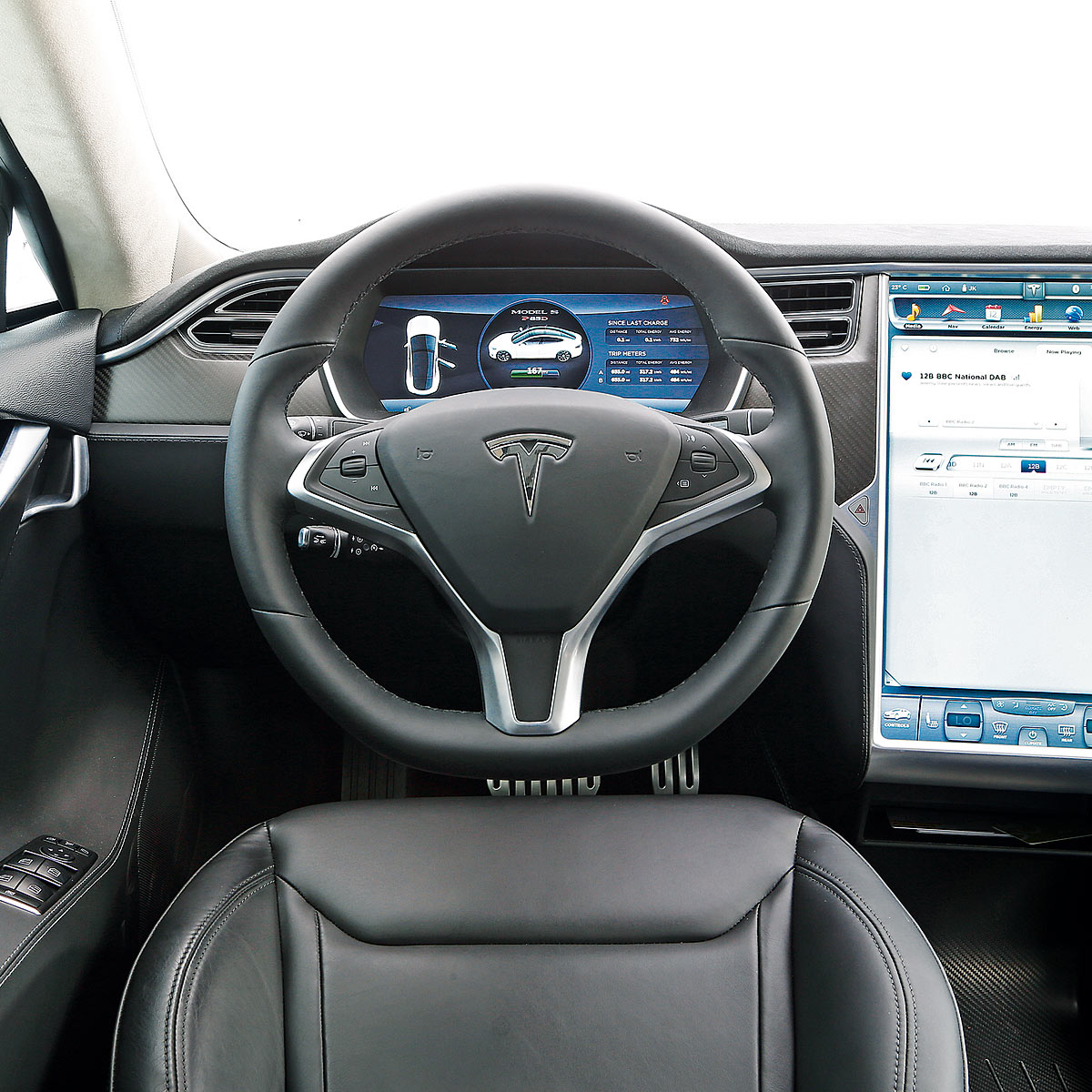
» I'm still not convinced that Tesla's camera-only approach will work well in all situations. According to a quick AI search, Elon doesn't like Lidar based on "cost, complexity, and philosophical disagreement with its necessity". Other manufacturers seem to have no problem with the first two of these and I challenge his last reason. I would have thought that a combination of available technologies would give you the safest options for all circumstances.

LLMs are left-leaning models
Life, James Hein, Published on 07/05/2025
» A while back I wrote about the political bias in Large Language Models (LLMs). Since then the models have evolved and David Rozado has conducted more recent tests based on four of the popular political orientation tests. Using the Political Compass, Political Spectrum, Political Correctness and Eysenck tests, he worked with xAI Grok 3 beta, Google's Gemini 2.5 pro, Deepseek V3, OpenAI GPT 4.1 and Meta's Llama 4 Maverick. In all but one of the tests Grok 3 was closest to the centre, and on average was the clear leader. All the models were still located in the Left Libertarian quadrant, with Grok just sneaking into a more Conservative area with the Eysenck test. These tests are of course but one way to measure the political leanings of any LLM. Overall however, it does still indicate the left-leaning bias in all models tested so far. If you want to see more details, you can visit David Rozado's substack.

Rise of fake AI content
Life, James Hein, Published on 23/04/2025
» We have unofficially entered the time of the fake AI generated content. It's not perfect yet, but it's good enough to fool many people. I use a YouTube alternative, which means I have more time to watch videos across a wide range. In the last few weeks, I've noticed an increase in AI generated product that is fake. One standout is the Got Talent franchise where people have grafted AI generated acts with cuts from responses from the panel. They look great, like a woman transforming into a lion, but it's all fake. Even some of those cute animal videos are now fake. Why? More clicks so more income all based on fabricated videos.

Is your internet speed too slow?
Life, James Hein, Published on 09/04/2025
» How important is a good internet connection? This is one of those how long is a piece of string or what computer should I get questions. Back in the day, it was a huge jump from zero bits per second to a 2400 Baud modem. People and businesses were willing to pay a large sum to get connected because it opened up a new world of possibilities, ranging from not needing to go to the library as often and being able to sell and market products online. When and how often you paid for the next upgrade depended on your use case and the capabilities it provided. The next major jumps in speed were 4800, 9600 and 14400bps and everyone jumped to one of these as a next step. During this period, the mid 90s, the T1 at 1.544Mbps was the imaginary godlike speed we all dreamed about but didn't have money to afford. That speed provided real time video conference calls and was limited to government and large business concerns that typically involved a dedicated screening room. This was also when the concept of data compression started to gain popularity as you could send more with less bits.