



Showing 1 - 10 of 13
AI learning versus human creativity is a real battle
Life, James Hein, Published on 25/02/2026
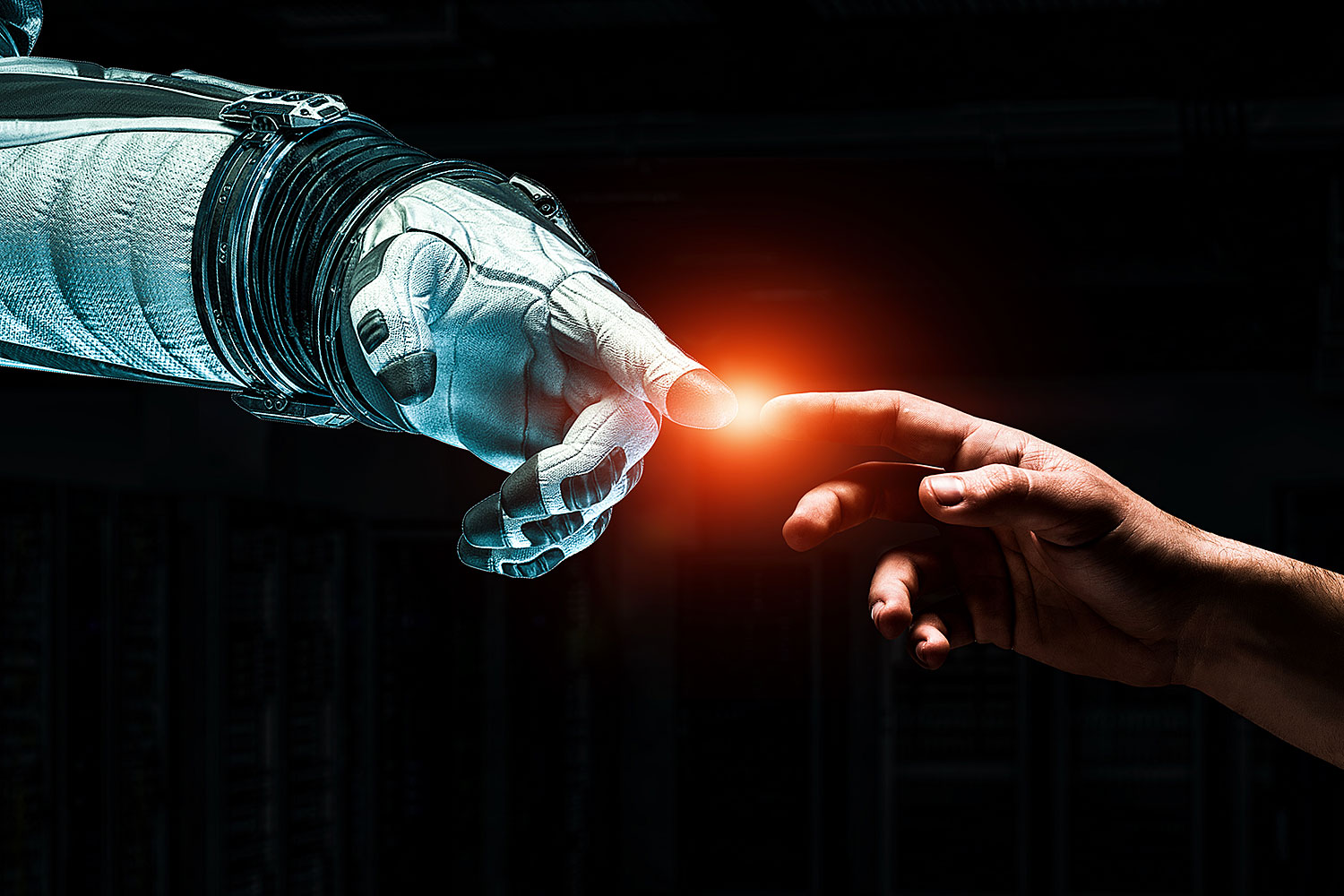
» If you’ve been reading these columns long enough, you’ll probably know that I write music and I’ve written some books. With the advent of artificial intelligence, the concept of copyright and private property has blurred. The standard rule was, what you have worked hard on to create, belongs to you. As musicians and authors, ideally, we create, we write and we invent. In the world of AI, it will draw a picture, write a book and create music for you based on a simple text prompt that itself may have also been written for you by AI.
The hidden dangers of AI
Life, James Hein, Published on 24/09/2025
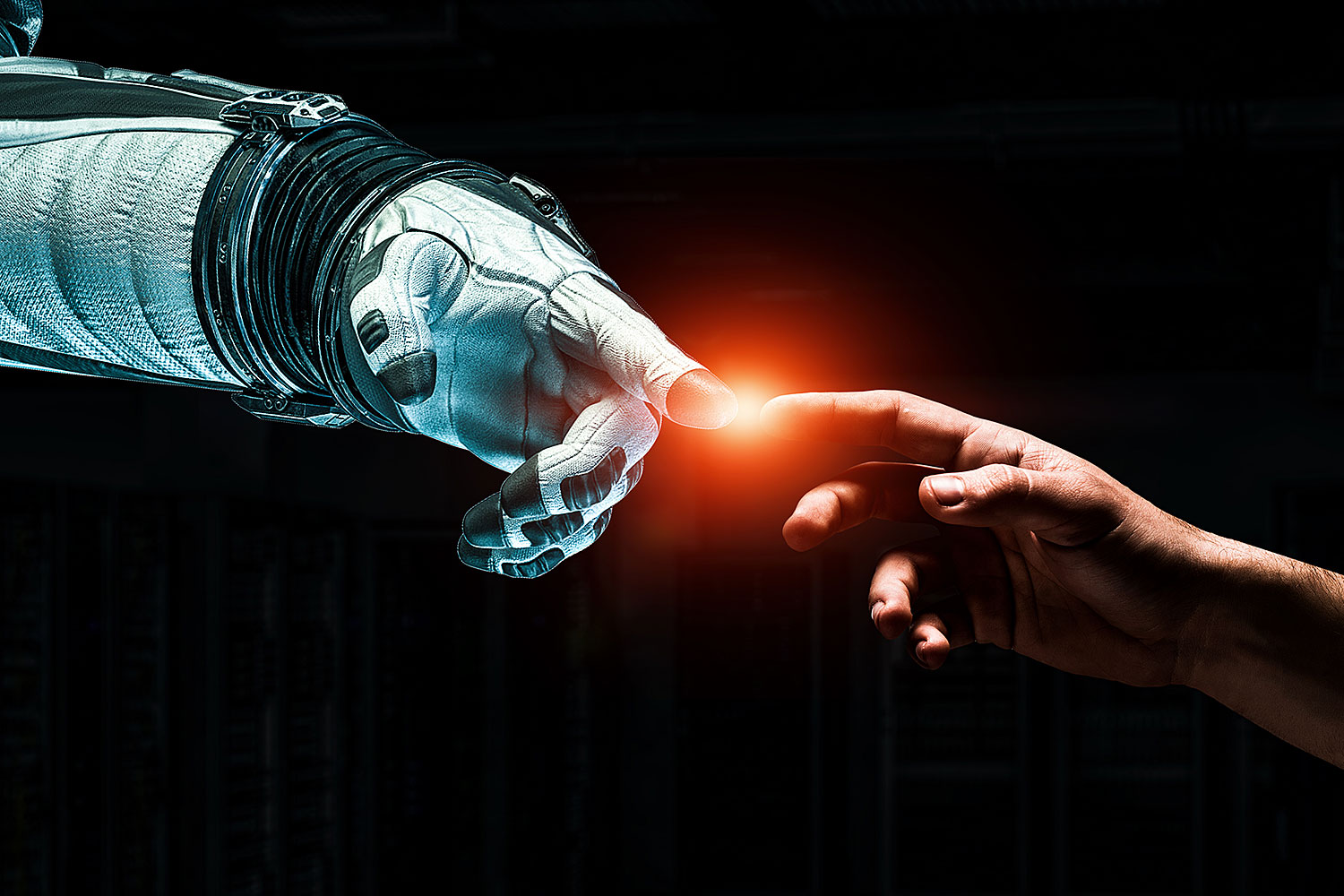
» There's going to be a lot on artificial intelligence topics this week so let's get started. For the time being, the most common way to leverage an AI product is using a prompt of some kind. To that end, you will see lots of posts on platforms declaring that they have the best god-level prompts for large language models (LLMs). A prompt is something like, "What are the top ten songs from Depeche Mode?", or "Draw me a picture of a frog on a toadstool in the style of Alice In Wonderland with vivid colours". The more detailed and nuanced the prompt, the better the desired outcome tends to be. As with everything in the computer world, there are bad actors looking to take advantage of this.

Jetsons cars finally take off
Life, James Hein, Published on 26/03/2025
» Some readers will remember the old cartoon The Jetsons. This promised a future with flying cards, robot assistants and helpful computer tools. We have or are getting very close to the robot assistants, and the latest artificial intelligence offerings seem to be the automated helpers. Missing to date are the flying cars. That may have changed with the new Jetson ONE, a single person flying car I saw a demonstration of in a recent video. It looked good, seemed to fly with good stability and landed without any issue. You can find the demos with a simple search. The craft has vertical take-off and landing capability. However, I shudder to think of what thousands of these might look like in the skies above a city without some serious improvements in driving and collision avoidance.

OpenAI's search for profit is a risk
Life, James Hein, Published on 26/02/2025
» Is Sam Altman potentially the most dangerous person on the planet? An interesting question. Sam Altman is the CEO of OpenAI, the company that made the AI that everyone knows as ChatGPT. The original aim of OpenAI back in the day, when Elon Musk was involved, was a fully open-source product that would be scrutinised and controlled by the wider population. In contrast, the focus of Altman appears to be money. OpenAI is currently looking for an injection of funds to make it a fully commercial enterprise. When that is the focus, safety is a secondary consideration and you can end up with Skynet. The current estimate for GAI or AGI (artificial general intelligence) is as soon as next year, but perhaps two to three. Readers will know my opinion on these estimates. So OpenAI may just as well now be called ClosedAI because it's all about the potential income and is really one of the potentially dangerous AI platforms available today.

X remains an influential platform
Life, James Hein, Published on 24/04/2024
» How influential is Twitter/X? Some will remember a while back when Elon Musk gave his opinion on Disney. I won't repeat it here but it was very direct. Up until recently, Disney hadn't posted anything on X but about a week before you read this, they were back with a gold checkmark. These cost about US$10,000 (368,000 baht), which while not expensive for Disney, indicates how they see X as a platform for communicating to all those potentially interested in all things Disney. Elon Musk is still supporting people like Gina Carano in suing Disney for what they did to her and others based allegedly on their political and religious views.

The future of AI is LAM
Life, James Hein, Published on 14/02/2024
» After my earlier article, I realised I was somewhat scant on what a Large Action Model (LAM), also called Large Agentic Models, are. As already mentioned, these have derived from the Large Language Models (LLM), or what people now refer generically as AI, discussed before.

AI is the new marketing buzzword
Life, James Hein, Published on 08/11/2023
» Some readers will remember back a decade or three when the big term was "turbo". Everything was turbo something. Turbo speed, turbo clearing, turbo graphics and so on. Today, the equivalent term is AI. I saw an advertisement recently for glasses described as AI technology that adapts to your sight. It was a regular lens with some design elements, perhaps from an AI, perhaps not, with claims of predictive focus. Rubbish. There was no inherent active or dynamic AI technology in the lenses to back up this claim and I don't think such a technology at that level is even available at any price in the current time. The same goes for many other claims preceded or appended by the AI moniker. Like turbo, it is the current marketing buzzword and since many don't understand it and what the current engineering and technological limitations are in 2023, it has become part of the mindscape.

The new normal of AI fakes
Life, James Hein, Published on 11/10/2023
» Following on from my last article, consider the following scenario. You've grabbed enough clear speech of someone to make a good AI model of them. You write up some text, pass it through the model and verify that the result sounds exactly the same as that individual. This is a little different from the previous example because it's a text to speech model, but essentially the same as using one voice to change to another. You now take a speech or interview from that person, change one word that will essentially change the context, and process this.

The World Wide Web turns 30
Life, James Hein, Published on 10/05/2023
» The public version of the World Wide Web turned 30 recently. Back in 1989, Tim Berners-Lee proposed a global hypertext system called Mesh. The next year he added a hypertext GUI browser and editor and called the result the WorldWideWeb. Inside CERN, people loved it and by January 1993 the world had around 50 HTTP servers. By February, the first graphic browser appeared known as Mosaic and by April of that year, CERN decided the project belonged to humanity and the public domain version of the WWW was born. The rest and billions of web pages later, is history.
The borders of security
Life, James Hein, Published on 22/05/2019
» It's becoming more common for agents at some borders to demand your device passwords so they can check what you have on them. Given the power of the modern smartphone, partially indicated by the cost of the top-end models, this makes sense, as they are basically mini notebook computers. If you really want to protect your data, keep it elsewhere.