



Showing 1 - 10 of 99

Robots get smooth moves
Life, James Hein, Published on 25/03/2026
» The subject of the week is robots. The amount of news on these keeps growing and growing. South Korea is first up here with their KAIST Humanoid. In the field test, the robot was shown running across a soccer pitch, jumping, taking shots on goal, and even doing dance moves akin to the Michael Jackson moonwalk. Many robot demonstrations still look a bit stiff but these moves were quite smooth. The robot can run at about 12kph on flat ground with the next goal at 14kph. It can climb a ladder with 40cm steps and the knees can generate 320 Newton metres of peak torque so it can push heavier objects. The current model is based on the lower human half but the goal is for a full humanoid form that can work with people in industrial environments.

Caveat emptor is undefeated in online shopping
Life, James Hein, Published on 11/03/2026
» It is becoming more common to buy things online. The majority of my shopping, not counting groceries, is now done that way. In the past I've warned about prices that are too good to be true, like a 4TB thumb drive for a few dollars from sites like Temu and AliExpress. There is now a kind of middle ground where the price could be correct and it's coming from, say, Amazon. Recently, even though I had some doubts, I bought a 5TB SSD drive from Amazon for around half of what I'd expect it to be. I did this knowing I can easily send things back to Amazon.

We know they know we know about privacy
Life, James Hein, Published on 03/12/2025
» Strap in, because today I'm covering what is going to be happening over the next few months to get even more data about you and what you are doing on the internet. Let's start with the recent exposure of around 3.5 billion phone numbers from WhatsApp, the private platform.

Microsoft put on the naughty step by Aussie regulator
Life, James Hein, Published on 05/11/2025
» Microsoft has been at it again. The Competition & Consumer Commission in Australia has started a legal process against the Redmond giant for apparently misleading users of the policies for its Microsoft 365 bundle. Microsoft advised users with a Personal and Family plan that "to maintain their subscription they must accept the integration of Copilot and pay higher prices for their plan, or, alternatively, cancel their subscription".

Sabine has the science you're after
Life, James Hein, Published on 08/10/2025
» Sabine Hossenfelder is one of the people I regularly watch on the YouTube platform. She is a physicist but also veers into other areas such as artificial intelligence and quantum computing. For her latest video -- In Which I Lose Faith In Quantum Computing -- she makes a number of interesting observations. In short, apart from some very specific applications, quantum computing, even if it is scalable from current technology, has limited application. It also has the potential of bringing down a number of current companies highly focused on this technology, or at least some of their divisions. Artificial intelligence takes up a lot of the space that quantum computing could do well in, but for the present at least, AI does it better. The next 10 years, or less, will be important to see how both of these directions develop, or not. If you are interested at all in physics, maths and occasionally quantum computing, then Sabine Hossenfelder provides some interesting perspectives.

The hidden dangers of AI
Life, James Hein, Published on 24/09/2025
» There's going to be a lot on artificial intelligence topics this week so let's get started. For the time being, the most common way to leverage an AI product is using a prompt of some kind. To that end, you will see lots of posts on platforms declaring that they have the best god-level prompts for large language models (LLMs). A prompt is something like, "What are the top ten songs from Depeche Mode?", or "Draw me a picture of a frog on a toadstool in the style of Alice In Wonderland with vivid colours". The more detailed and nuanced the prompt, the better the desired outcome tends to be. As with everything in the computer world, there are bad actors looking to take advantage of this.

Online Safety Act is a bad joke
Life, James Hein, Published on 13/08/2025
» The UK now has their Online Safety Act (OSA) and Australia is blindly following in their footsteps. In the UK it didn't take very long for the tech aware under-18s to bypass all the rules and regain access to adult content. Think about it, if China can't completely block everything do you think the UK had any chance? There were some creative solutions but the most common was a simple Virtual Private Network (VPN). In related news, some VPN companies reported a 1,400% increase in sign-ups since the OSA came into force.
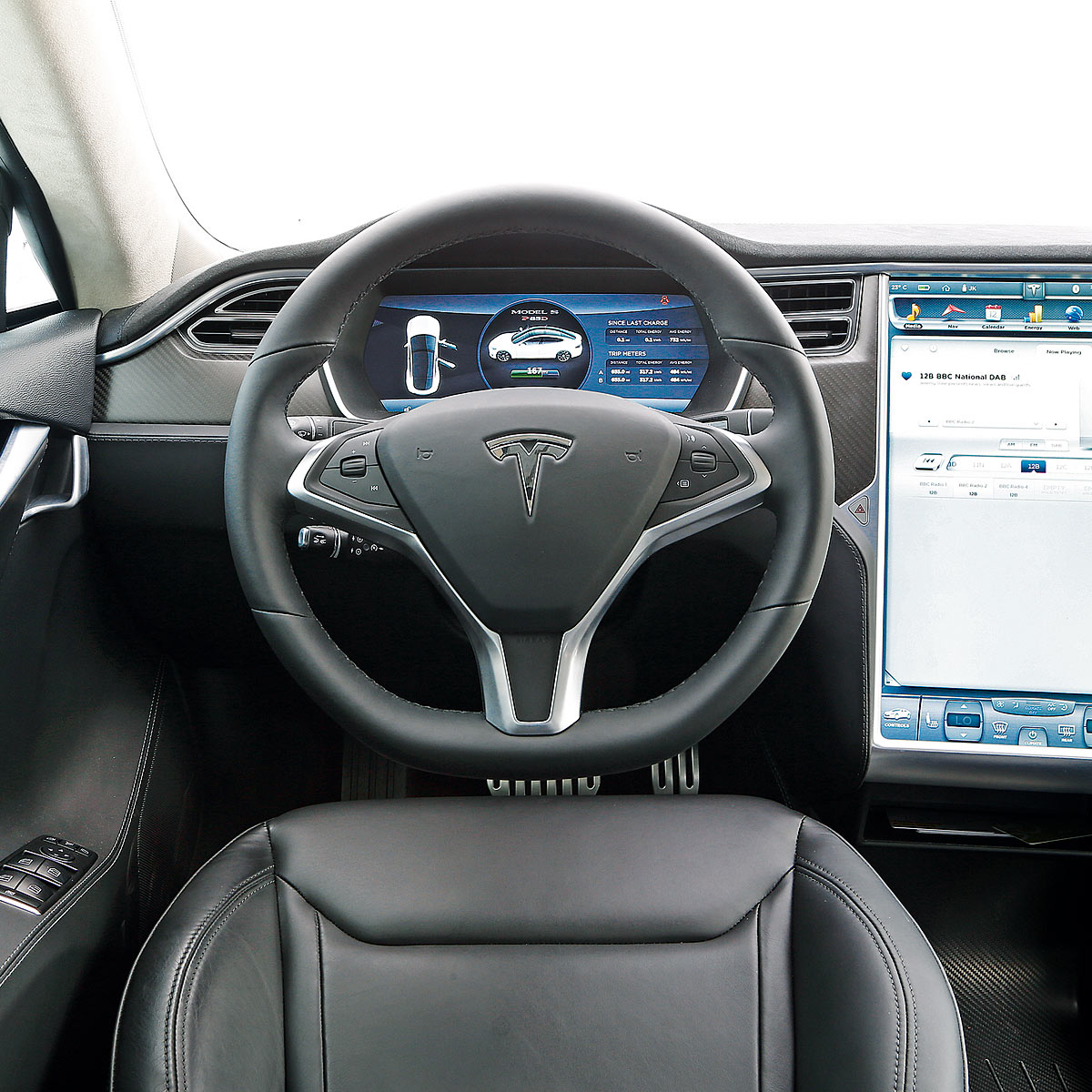
Will Tesla's camera-only autonomy prove its mettle?
Life, James Hein, Published on 02/07/2025
» I'm still not convinced that Tesla's camera-only approach will work well in all situations. According to a quick AI search, Elon doesn't like Lidar based on "cost, complexity, and philosophical disagreement with its necessity". Other manufacturers seem to have no problem with the first two of these and I challenge his last reason. I would have thought that a combination of available technologies would give you the safest options for all circumstances.

Is your internet speed too slow?
Life, James Hein, Published on 09/04/2025
» How important is a good internet connection? This is one of those how long is a piece of string or what computer should I get questions. Back in the day, it was a huge jump from zero bits per second to a 2400 Baud modem. People and businesses were willing to pay a large sum to get connected because it opened up a new world of possibilities, ranging from not needing to go to the library as often and being able to sell and market products online. When and how often you paid for the next upgrade depended on your use case and the capabilities it provided. The next major jumps in speed were 4800, 9600 and 14400bps and everyone jumped to one of these as a next step. During this period, the mid 90s, the T1 at 1.544Mbps was the imaginary godlike speed we all dreamed about but didn't have money to afford. That speed provided real time video conference calls and was limited to government and large business concerns that typically involved a dedicated screening room. This was also when the concept of data compression started to gain popularity as you could send more with less bits.

Microsoft's quantum conundrum
Life, James Hein, Published on 12/03/2025
» If you've been keeping up with quantum computer news, you will have seen the Microsoft Marketing announcement on topological q-bits and a potential quantum computer in a few years. I was planning to write about this in some detail, but it turns out the reality may not meet the marketing. Surprising, I know, but the announcement implying Microsoft has q-bit technology ready to go and scale is speculative. They don't have any physical models, just some tests and a theory that has already been challenged by the physics community. It will take a while to go through all the published data, but the Microsoft quantum computer could be decades, not years, in the future, if ever.