



Showing 1 - 10 of 40
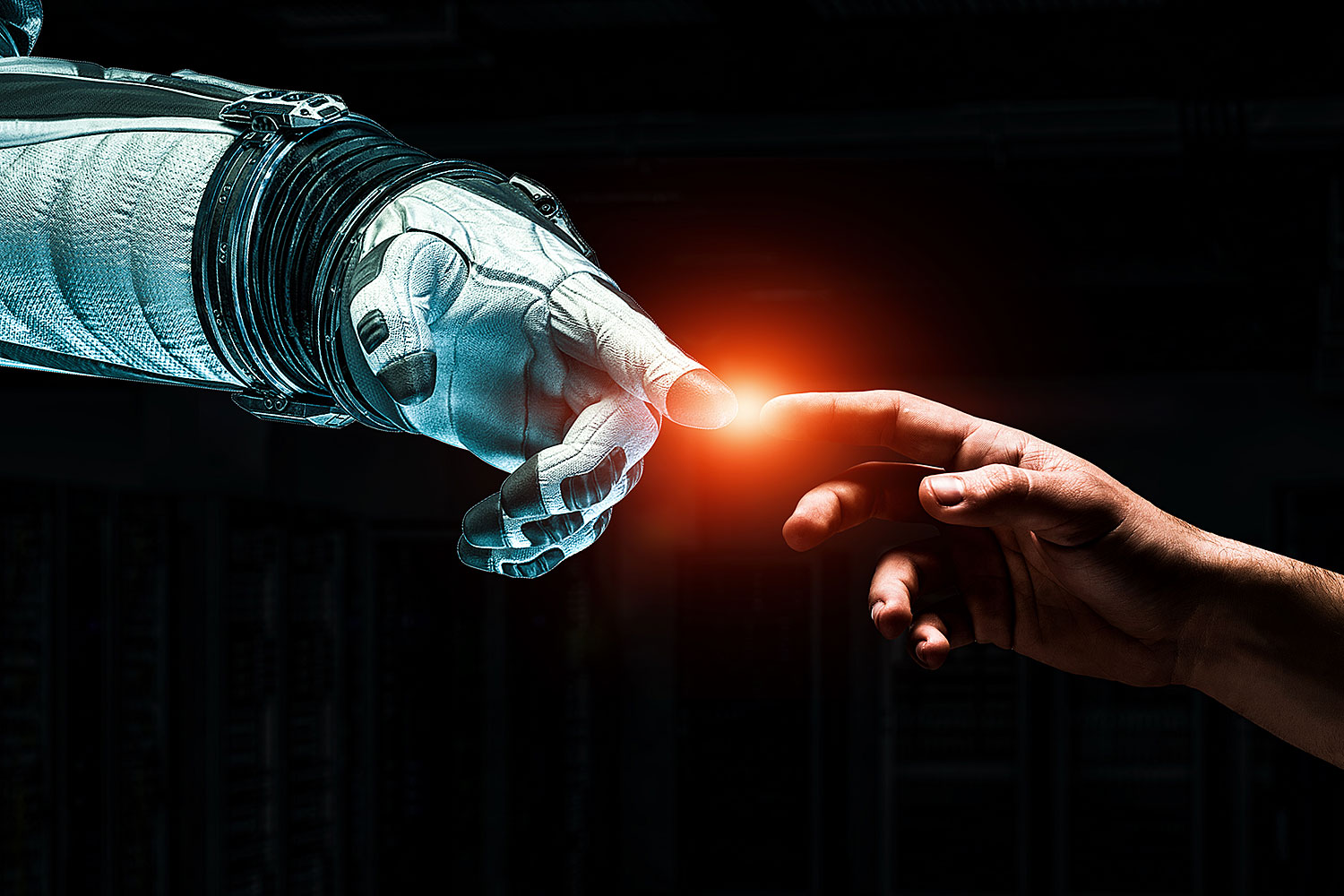
AI learning versus human creativity is a real battle
Life, James Hein, Published on 25/02/2026
» If you’ve been reading these columns long enough, you’ll probably know that I write music and I’ve written some books. With the advent of artificial intelligence, the concept of copyright and private property has blurred. The standard rule was, what you have worked hard on to create, belongs to you. As musicians and authors, ideally, we create, we write and we invent. In the world of AI, it will draw a picture, write a book and create music for you based on a simple text prompt that itself may have also been written for you by AI.

Online Safety Act is a bad joke
Life, James Hein, Published on 13/08/2025
» The UK now has their Online Safety Act (OSA) and Australia is blindly following in their footsteps. In the UK it didn't take very long for the tech aware under-18s to bypass all the rules and regain access to adult content. Think about it, if China can't completely block everything do you think the UK had any chance? There were some creative solutions but the most common was a simple Virtual Private Network (VPN). In related news, some VPN companies reported a 1,400% increase in sign-ups since the OSA came into force.

Turning smart glasses into surveillance tools
Life, James Hein, Published on 23/10/2024
» I'm sure most readers are familiar with the Apple Vision Pro, and may have also been witness to someone wearing one out in the real world, because I have. Since then, there has been a new version of the Meta Ray-Bans that look like a pair of nerd glasses from the 1970s. The latter have turned into something from the TV series Person Of Interest by a couple of Harvard undergrads. The pair, AnhPhu Nguyen and Caine Ardayfio, are known for their punch-activated flamethrower. This time they built a system that allows the Ray-Bans to scan faces of people in view, pass this to an AI system that scans the internet for identification, and builds a dossier that is passed back to the glasses. It's called I-XRAY and challenges the concept of privacy because, if available, it will even provide details like address and social security number.

Do you really own your devices?
Life, James Hein, Published on 11/09/2024
» Do you own the hardware and software you purchased? Yes, no and possibly, so let's dive into an example. A man buys a second-hand Microsoft Surface from the Internet. It is one of a batch. He uses it for a few years until one day a massage pops up on the screen advising that Mastercard has locked the device and it should be returned to Mastercard. The man does some research and finds out that Microsoft has embedded some software in the firmware and BIOS that has enabled this to occur. It also turns out that this software can be found in other Microsoft and Apple devices, is very difficult to detect and requires a high skill level to remove, or you can just install Linux.

What's the state of AI today?
Life, James Hein, Published on 28/08/2024
» Recently, I've talked with a few people about artificial intelligence and watched a few presentations. The gap between what some people think are AI capabilities and actual capabilities is a big one.

Microsoft gets more invasive
Life, James Hein, Published on 05/06/2024
» Microsoft Windows has added a new feature that will record everything you have ever done on your computer. It does this through a new AI feature called Recall for Copilot+ that allows Windows 11 to take screen snapshots every few seconds. Allegedly these are encrypted and saved to your hard drive (filling it up?). No, this is not a new episode of Black Mirror, but a disturbing change in Microsoft's attempt to track everything you do and fill up your hard drives. It may do this for your Zoom calls and meetings (it will record other people on the other end of a call without their permission). This may also include capturing the data you enter into secure forms, including passwords.

Imagining a world without cash
Life, James Hein, Published on 08/05/2024
» How safe are you in a purely digital economy? If you are carrying cash, someone can of course rob you, or you can lose it or give it to someone. You can also have a stash of it at home for emergencies or for buying something from a garage sale. For the most part, you retain control over any cash you manage. Electronic cash can still be stolen and your ability to spend it can be taken by someone else if your details get into the wrong hands. However, it's convenient, just tap and go, or in some cases, just wave your smartphone over a pad. While you have no idea where your money actually is, a small piece of plastic, your watch or a phone can retrieve it for you for a payment. You can even use it to get cash from a wall.

Latest AI reveals its bias yet again
Life, James Hein, Published on 13/03/2024
» Google's latest version of AI, once Bard but now called Gemini, is yet another indication of how biased the current batch of AI platforms are. I was going to include a bunch of examples but this has received so much coverage that everyone should have seen it by now. Basically, the product offers anything but a white-skinned person in requested pictures. This gave rise to some short-lived pub games. Many found this amusing but after a while it became obvious that Google has shut Gemini down for re-education.

Advertising ruins everything
Life, James Hein, Published on 28/02/2024
» Remember this day because I have a prediction. Recently, for the first time, I had two ads appear when watching a Rumble video. Rumble is a YouTube alternative that until now had been ad free. The platform allows those banned by YouTube for political reasons to make their presentations, along with anyone else who wants to post videos. My prediction is that the current ads, currently 30 second ones you can skip after a few seconds that appear at the start of your video, will gradually become more prevalent and longer, without being able to skip, and eventually will become as annoying as Facebook.

Graphene semiconductors mark new start
Life, James Hein, Published on 17/01/2024
» We have just started 2024 and there are already exciting announcements. The clever people at Georgia Tech in Atlanta have built the first scalable semiconductor using a graphene base. Graphene, a wonder product, is not a scalable semiconductor on its own, so they bonded silicon carbide, or what we call carborundum, to a layer of graphene creating the necessary bandgap to have a working switch. A switch means binary and from there they can make wafers like those currently used in the chip manufacturing process to make CPUs and other devices.