



Showing 1 - 8 of 8
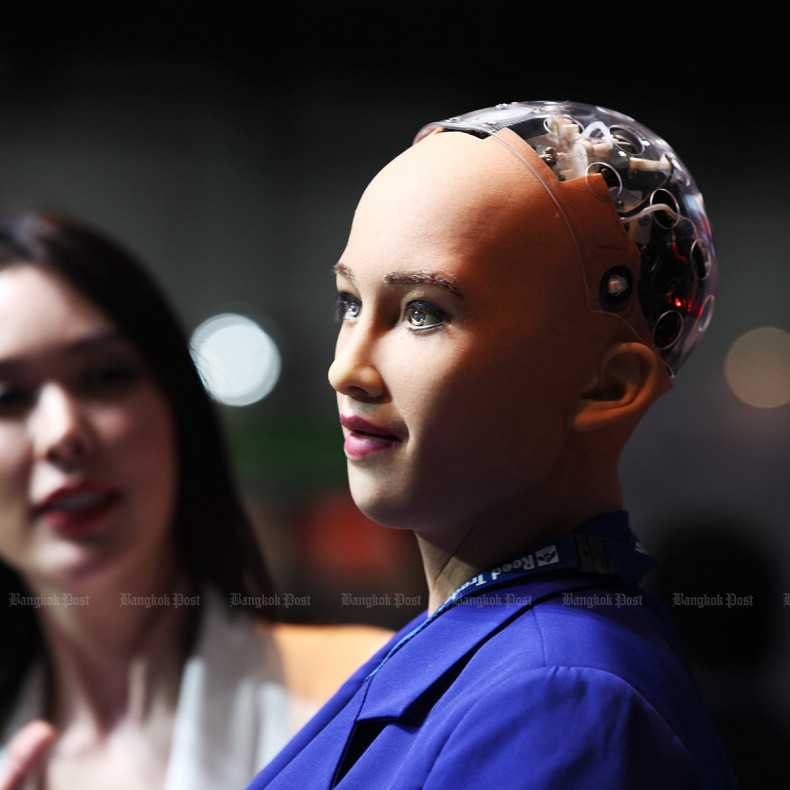
AI is the new marketing buzzword
Life, James Hein, Published on 08/11/2023
» Some readers will remember back a decade or three when the big term was "turbo". Everything was turbo something. Turbo speed, turbo clearing, turbo graphics and so on. Today, the equivalent term is AI. I saw an advertisement recently for glasses described as AI technology that adapts to your sight. It was a regular lens with some design elements, perhaps from an AI, perhaps not, with claims of predictive focus. Rubbish. There was no inherent active or dynamic AI technology in the lenses to back up this claim and I don't think such a technology at that level is even available at any price in the current time. The same goes for many other claims preceded or appended by the AI moniker. Like turbo, it is the current marketing buzzword and since many don't understand it and what the current engineering and technological limitations are in 2023, it has become part of the mindscape.

Scams on the rise as inflation bites
Life, James Hein, Published on 06/07/2022
» We start this week with a webserver with extras in a single file that runs on any x86-64 operation system. Enter redbean 2.0. Created by Justine Tunney, it uses the "Actually Portable Executable" that you can read about here, justine.lol/ape.html. When you compile a program to its native binary, in this case x86-64 code, and don't call any external code, then the only difference between a Windows and a Linux would be the file format. If you can solve this, then it could run on any platform. To do that you need Cosmopoliton libc because any real program needs to make some calls, in this case the standard C ones. So, with Cosmo and the APE format, you can write a C program and compile it to a single file that will load and run on six very different operating systems and the same binary can also be booted directly from the PC BIOS. It's not perfect, but any programmer would be scratching their heads by now. Pause for techie amazement.
Google bets on offline stores
Life, James Hein, Published on 09/06/2021
» Google is looking to venture into the area where Microsoft failed but Apple still does well, the brick-and-mortar retail store. The first of these will be opened in Chelsea, New York, allowing customers to find their devices like Pixel phones and Pixelbooks, Fitbits and Nest at a physical location. All subject to the latest Covid rules of course.

Chinese tech companies are at it again
Life, James Hein, Published on 12/05/2021
» A reminder on the importance of both scalable systems and load testing. The recent Philippines' attempt to expand its national ID programme had a number of issues when they introduced a two-factor authentication system. PhilSys, as it is known, started out just fine when registrations began in 2020, when paper forms were still used. This in itself was a little strange as the purpose of the new system was to do away with the need to present physical documents when interacting with government agencies. PhilSys the digital ID system was marketed as such and promised transformation and other buzzwords including easier opening of bank accounts. All of this would also help everyone involved during Covid times. After 28 million paper applications, the digital system was turned on and in the first hour 40,000 people tried to register. The system promptly fell over due to the load and inability to scale quickly. Most IT people will admit to a similar experience in their past, but by 2021 there are surely enough historical examples of what will happen if you don't do sufficient load testing before a major release like this.

Smartphone sales chilling like a fridge
Life, James Hein, Published on 03/02/2021
» According to the UK company CCS Insight, the smartphone trade is beginning to resemble the market for white goods. Instead of jumping on the newest model, many are now waiting until their device is broken or showing signs of age before they trade up. Not that long ago people upgraded every two years or so, this has extended to as much as five or six years for about a third of the market with the new average at around four years. Some manufacturers only provide support for three years of upgrades but Apple and Samsung are now committed to a longer support cycle.

Social media censorship the stamp of 2020
Life, James Hein, Published on 23/12/2020
» Well, it's that time of year again when I see how well my predictions for the year performed. With the advent of Covid-19, I'm not confident that many of them came to pass.
Limiting discourse, leaking borders
Life, James Hein, Published on 19/06/2019
» It is difficult to ignore the latest moves by social media providers like YouTube to change their terms and conditions so as to block individuals and groups they don't like. The shift from an open platform, where all ideas are welcome, to one more concerned with the window of discourse is disappointing, and points to the huge pressure being applied by a small number of special interest groups, mostly via advertisers. The really sad part of this is that there are already indications that Minds, a supposed open alternative, is already censoring content, so for the moment at least I need to withdraw my recommendation for that platform.
Silicon Valley is not an arbiter of free expression
Life, James Hein, Published on 15/08/2018
» It is somewhat disconcerting that Silicon Valley -- which occupies about 300 square miles, and where most think the same and have the same politics -- can determine allowable content for the rest of the planet. Some of us remember that many of the major platforms were developed using government grants and public funding. With this base they should represent all views, of all types, and not just the ones they happen to like. This was the initial declaration at least, but in the modern world, that seems to have changed. I am certainly no great fan of Alex Jones, but that a cabal of providers can effectively execute social termination is very worrying for the future of open platforms and freedom of expression.