



Showing 1 - 10 of 16
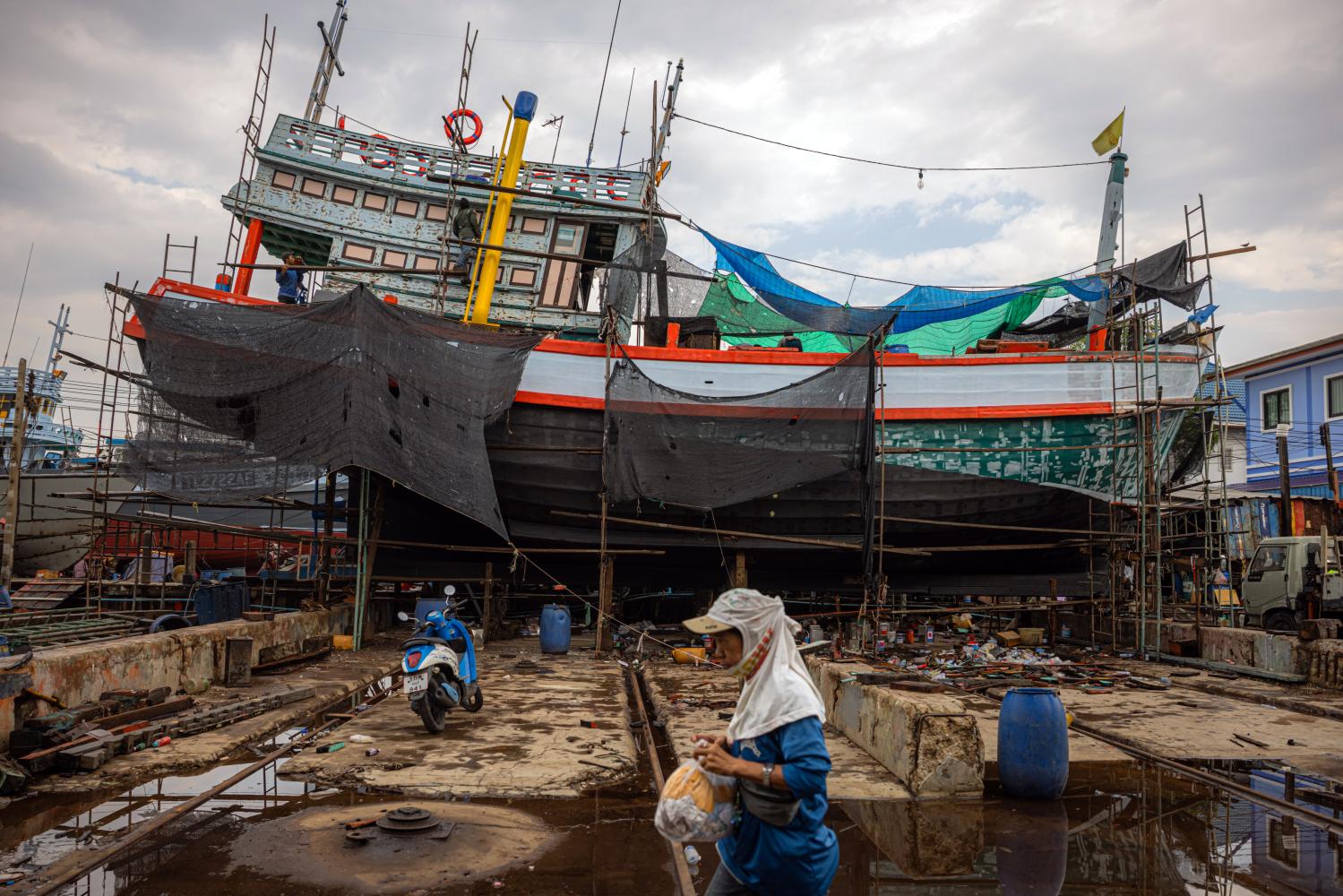
Oil shock risks wider chain reaction
Oped, Chartchai Parasuk, Published on 16/04/2026
» There is no such thing as a free lunch. When global oil prices rise sharply, as they are doing now, someone must bear the cost. Some countries choose to absorb it through government support, as in Japan, while others pass the burden on to consumers, as in Thailand. Neither approach is inherently right or wrong; each carries different economic consequences. Policymakers must decide which set of outcomes is more acceptable and act accordingly.

Financing FY 2026 deficit will fall short
News, Chartchai Parasuk, Published on 12/06/2025
» My message is short, loud and clear. There will not be enough money to finance FY 2026's 860 billion baht budget deficit. Without enough money, the budget will collapse and take the economy down with it. The government is learning the bitter lesson of drying up finance sources now, but budget financing will be in crisis in the 2026 fiscal year.

Thaksin's 'vision' might be outdated
News, Chartchai Parasuk, Published on 05/09/2024
» This article is not meant to diminish the brilliance of the spiritual leader of the Pheu Thai Party, former prime minister Thaksin Shinawatra. It is to demonstrate that, despite his immense knowledge and vast experience, Thailand's current economic problems are caused by structural deficiencies and cannot be resolved by traditional stimulus measures. One needs a good understanding of economic principles to approach the problems correctly.

Digital wallet scheme hits another snag
Oped, Chartchai Parasuk, Published on 13/06/2024
» The new financing problem of the 10,000-baht cash handout, commonly known as the Digital Wallet Scheme (DW), has not made much noise in the media. This may be because the government wants this to be a non-issue, but in reality, it is a serious one that could wreck the entire scheme.

Time to stop making empty promises
Oped, Chartchai Parasuk, Published on 07/03/2024
» The Nikkei 225 Index just broke 40,000, surpassing the record high of 1989. The stellar stock market performance happened amid the fact that Japan's economy is officially in recession after two consecutive quarters of negative GDP growth.

Will foreign investors still be wooed?
Oped, Chartchai Parasuk, Published on 28/12/2023
» This is my last article for 2023. Appropriately, I should write about the 2024 economic outlook but I have decided to postpone that to be the first article of 2024 as the analysis might be too unpleasant to digest right now. However, I will leave a "teaser" for readers to ponder over during the long holidays. As such, I am left with two choices: an article about informal debt -- I estimate outstanding debt to be over 400 billion baht and that it could have strong ties with grey money -- or an article about Thailand's ability to attract foreign investors, as our Prime Minister Srettha Thavisin travels all over the world to attract them. In the end, I opted for the latter.

A tale of liquidity and (too much) debt
Oped, Chartchai Parasuk, Published on 05/10/2023
» Before starting the article, I want to convey a message to the government. The message is "Nothing is free; everything has to be paid for". Acting like Santa Claus is nice, but the government should be aware that every handout gift comes with a price tag.

Debt crisis looms as politicians fiddle
News, Chartchai Parasuk, Published on 29/06/2023
» While politicians are fighting for power to rule this country, the economy may unknowingly be entering a debt crisis. There was a piece of news a couple of weeks ago which passed without much notice amid sizzling political stories. It was news of the automobile loan default problem.

City Hall needs a much larger budget
News, Chartchai Parasuk, Published on 30/06/2022
» This article is a welcome gift to Bangkok's new governor, Chadchart Sittipunt.

Lessons from the 1997 economic crisis
Oped, Chartchai Parasuk, Published on 01/04/2021
» Today is April Fools' day. But there is no fooling about the threat of liquidity crisis. I am sure that many readers are sceptical about the possibility of a liquidity crunch in this country. First, the government debt to GDP ratio is less than 60% which is not high by international standards. Second, Thailand now, unlike in 1997, has adopted a flexible exchange rate system which has a low risk of currency speculation. And, third, the country has international reserves equivalent to 11 months of imports of goods and services which is two times higher than IMF's suggested requirement. How could an economy this good be at risk?