



Showing 1 - 10 of 13
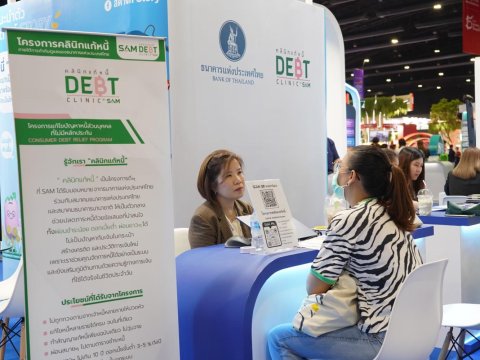
Thailand must manage debt to progress
Oped, Chartchai Parasuk, Published on 22/01/2026
» This article may be read as a continuation of my previous piece, Year of the Debt. That article focused mainly on household debt, which has already risen beyond the ability of Thai consumers to repay.

Stimulus packages need paradigm shift
Oped, Chartchai Parasuk, Published on 03/10/2024
» Ever wonder why Thailand's economic growth is consistently lower than its peers? Even with a flood of foreign tourists of 28.1 million (154.4% growth) in 2023, our GDP growth was 1.9% compared to 5.5% in the Philippines, 5% in both Indonesia and Vietnam, and 3.7% in Malaysia. The growth figure for the first half of this year of 1.9% is far worse than many of our Asean friends.

Digital wallet scheme hits another snag
Oped, Chartchai Parasuk, Published on 13/06/2024
» The new financing problem of the 10,000-baht cash handout, commonly known as the Digital Wallet Scheme (DW), has not made much noise in the media. This may be because the government wants this to be a non-issue, but in reality, it is a serious one that could wreck the entire scheme.

Reviving Thai economy is a tall order
Oped, Chartchai Parasuk, Published on 27/07/2023
» By the time readers read this article, Thailand still does not have a real government. But judging from the game being played, it is not too hard to guess which party will lead a new government.
Interest gap could spell economic peril
Oped, Chartchai Parasuk, Published on 06/10/2022
» On a recent Monday, the Fed called an emergency meeting. The discussion topics were not made known. Could it possibly be about turmoil in the UK bond market and the financial troubles of large investment banks? At this fragile time, the world cannot afford another Lehman Brothers-type disaster.
City Hall needs a much larger budget
News, Chartchai Parasuk, Published on 30/06/2022
» This article is a welcome gift to Bangkok's new governor, Chadchart Sittipunt.
If jabs don't work, we must have Plan B
Oped, Chartchai Parasuk, Published on 24/06/2021
» What would you do if you were a government facing a (rapidly) falling economy, receding tax income, ballooning public and private debts, drying up domestic liquidity, and feeble economic relief programmes?
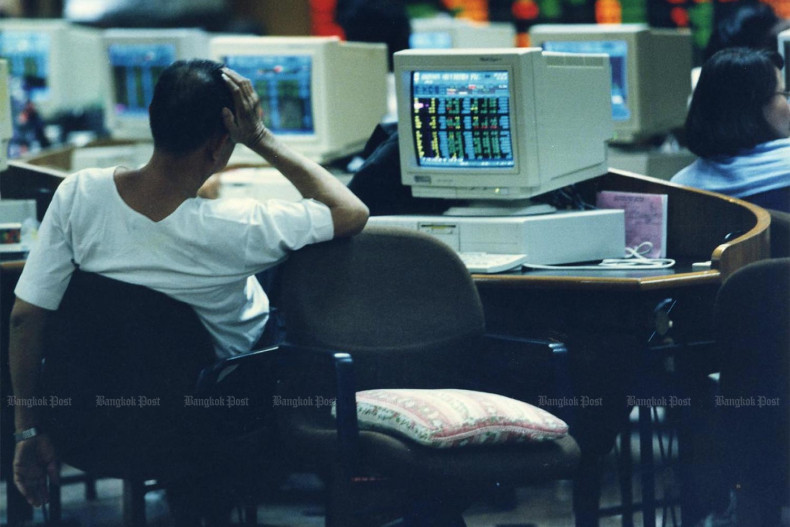
Lessons from the 1997 economic crisis
Oped, Chartchai Parasuk, Published on 01/04/2021
» Today is April Fools' day. But there is no fooling about the threat of liquidity crisis. I am sure that many readers are sceptical about the possibility of a liquidity crunch in this country. First, the government debt to GDP ratio is less than 60% which is not high by international standards. Second, Thailand now, unlike in 1997, has adopted a flexible exchange rate system which has a low risk of currency speculation. And, third, the country has international reserves equivalent to 11 months of imports of goods and services which is two times higher than IMF's suggested requirement. How could an economy this good be at risk?
THAI restructuring will not be easy
News, Chartchai Parasuk, Published on 18/06/2020
» While I was the head of the Corporate Finance Department at National Finance (now known as Thanachart Bank), I handled many cases of debt restructuring. The largest one was the 20-billion-baht debt of a hospital chain.

It's time to face grim Covid-19 reality
News, Chartchai Parasuk, Published on 07/05/2020
» At the onset of the coronavirus outbreak, there emerged an outbreak containment option called "Hurt and then ending" which in Thai is jeb tae jop. The complete lockdown of Wuhan was a prime example of that. In Thailand, the lockdown measure was first implemented in Buri Ram before it become a standard practice nationwide. The effectiveness of the measures varies across the globe -- from a seemingly complete success story in Wuhan to a not-yet sustained success in Spain, to a success and then failure in Singapore. I do not think anybody doubts the effectiveness of the lockdown on controlling the outbreak, but many, including myself, are starting to come out and question the cost of lockdown, which I have previously mentioned.