



Showing 1 - 10 of 21
Navigating between global superpowers
News, Vitit Muntarbhorn, Published on 14/02/2026
» Both China and the US issued new national security policies over the past year. At first glance, they seem to diverge markedly, portending a deep rupture in the world order. Yet, they may also bear some similarities in terms of self-interest and self-advancement. Collateral to that, other countries seeking to forge a middle path may wish to navigate a perspicacious route towards global equilibrium.

Should non-medicinal weed be legal?
Oped, Vitit Muntarbhorn, Published on 09/06/2025
» The issue of narcotics is not only a law enforcement and medical issue. It is also a historical, political and economic issue. A recurrent dilemma is whether personal, non-medical use of "weed" or cannabis (which is generally seen as a softer drug, when compared with harder drugs such as methamphetamine), should be legal. Thailand is still in the quest for a balanced answer, and this is shaped by political and economic ambivalence.
Clearer policy on Myanmar is needed
Oped, Vitit Muntarbhorn, Published on 18/04/2025
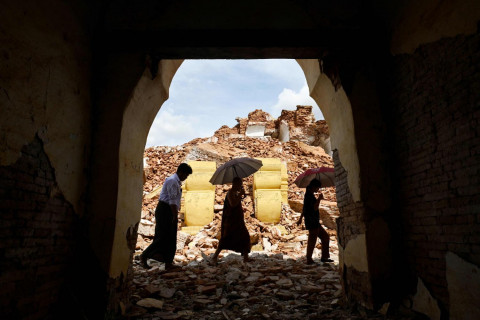
» Regrettably, the recent earthquake in Myanmar compounds the longstanding pain and suffering inflicted on the people of the country due to authoritarianism and human rights violations. Can such a catastrophe also be a catalyst for transformative, constructive change?

Anti-torture push needs serious review
News, Vitit Muntarbhorn, Published on 06/01/2025
» Back in 2007, the government agreed to be a party to the Convention against Torture and Other Cruel, Inhuman or Degrading Treatment or Punishment, otherwise known as the "CAT".

Unpacking China's global influence
Oped, Vitit Muntarbhorn, Published on 29/08/2024
» Is China an enigma? If it is difficult to decipher the country on some fronts, there are other elements which are more accessible. While it might be easy to look at its impressive growth in recent decades as diverging from other global players in key areas, there are other areas which are mutually convergent. From the multidimensional panorama of a complex world -- the "multiplex" world, a preferred approach is not to generalise too much but to analyse the specifics of our times for possible confluence.
Gender gaps in politics and business
Oped, Vitit Muntarbhorn, Published on 30/03/2024
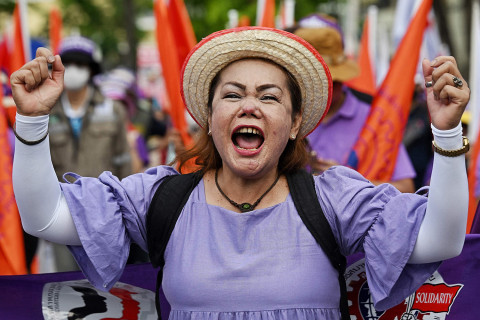
» Thailand's most recent report on women's rights -- available on the United Nations' website -- is part of the eighth cycle of reporting under the Convention on the Elimination of All Forms of Discrimination Against Women (CEDAW), to which the country became a party in 1985.

Reconfiguring Thailand's constitution
Oped, Vitit Muntarbhorn, Published on 18/01/2024
» A key debate this year will be the question of constitutional reform. The current constitution -- the 20th -- is the product of a coup d'etat.
Building a rights protection framework
Oped, Vitit Muntarbhorn, Published on 10/11/2023
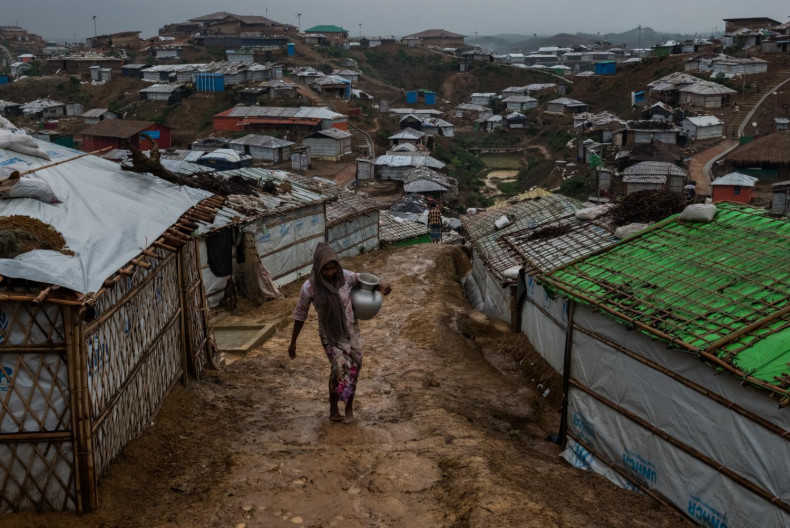
» The Asia-Pacific region is a vast conglomeration of large and small countries with a wealth of inter-generational wisdom. Yet, the region does not have a regional inter-governmental human rights protection system. What, then, are some possibilities for the future?

Time travelling with human rights
Oped, Vitit Muntarbhorn, Published on 03/07/2023
» If humanity had to travel with human rights (past, present and future), what might be pivotal dates interplaying with our destiny? 1993, 2005, 2023 and 2033 might well be candidates for testing our recent chronology.
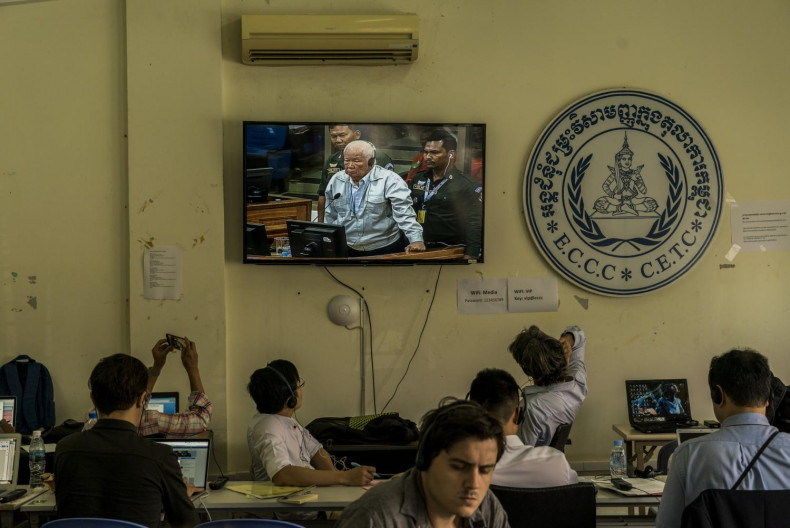
Lessons from the Khmer Rouge tribunal
Oped, Vitit Muntarbhorn, Published on 18/02/2023
» One of the saddest episodes of Southeast Asian history was the period during the 1970s that witnessed the rule of the Khmer Rouge in Cambodia. The group was driven by a warped ideology, and it perpetrated myriad crimes against the general population. Millions were killed and displaced through a range of atrocities. Decades later, an internationally supported tribunal, the Extraordinary Chambers in the Courts of Cambodia (ECCC), or the Khmer Rouge Tribunal, was set up to prosecute the leaders of the group, and it is now ending its work. What are some of the key lessons the global community can learn from this?