



Showing 1 - 10 of 23

Navigating between global superpowers
News, Vitit Muntarbhorn, Published on 14/02/2026
» Both China and the US issued new national security policies over the past year. At first glance, they seem to diverge markedly, portending a deep rupture in the world order. Yet, they may also bear some similarities in terms of self-interest and self-advancement. Collateral to that, other countries seeking to forge a middle path may wish to navigate a perspicacious route towards global equilibrium.
Re-energising higher education in Asean
News, Vitit Muntarbhorn, Published on 22/12/2025
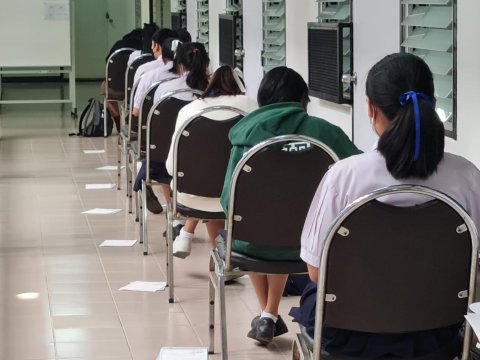
» Higher education, implying the tertiary level associated with universities and parallel institutions, is at an inflexion point in Southeast Asia, where the trajectory of socio-political, economic and cultural development is changing rapidly.

Introducing the new cybercrime treaty
News, Vitit Muntarbhorn, Published on 27/09/2025
» Next month, a key Asean nation will host a raft of countries for the signing ceremony for a new cybercrime treaty. Its full (and rather wordy) title is: the "United Nations Convention against Cybercrime; Strengthening International Cooperation for Combating Certain Crimes Committed by Means of Information and Communications Technology Systems and for the Sharing of Evidence in Electronic Form of Serious Crimes".

Labour and the dynamics of change
Oped, Vitit Muntarbhorn, Published on 25/07/2025
» The fluctuating international context compels countries in this region and beyond to recalibrate their labour laws, policies and practices. This is particularly critical at a time of great demographic changes, such as declining and ageing population in parts of the globe, compromised by a more transactional and conditional world of "quid pro quo". Thailand faces an inflection point on this front, requiring dynamic adjustments.

China's interface with AI development
News, Vitit Muntarbhorn, Published on 21/10/2024
» With intense competition between the superpowers on the development of and interface with artificial intelligence (AI), does China favour some commitments which can converge with other countries?

Reimagining human rights and China?
News, Vitit Muntarbhorn, Published on 23/09/2024
» Should human rights be reimagined, especially in the context of China? From one angle, the answer is obvious. Plenty of norms are already agreed upon globally without the need for reimagination, and China is part of that universality. Yet given the situation on the ground level and the evolving nature of human rights, there might be room for some innovative reimagination, and this deserves balanced reflection.

Refugees flee to find further repression
News, Vitit Muntarbhorn, Published on 17/06/2024
» Transnational repression is emerging as a critical concern for the world community, including the Asean region. Basically, it encompasses actions by state authorities and their agents to intimidate, harass and or harm those deemed to be dissidents -- usually their nationals -- who have sought shelter or are present in other countries.

Handle Myanmar influxes with care
Oped, Vitit Muntarbhorn, Published on 19/04/2024
» 'Preparedness" and "humane response" offer keywords for handling the various mass influxes from Myanmar. Those influxes might range from civilians in search of refuge to fighters ("combatants") in flight, all the more poignant today because of the armed conflagration in that country and the precarious border situation.

Time travelling with human rights
Oped, Vitit Muntarbhorn, Published on 03/07/2023
» If humanity had to travel with human rights (past, present and future), what might be pivotal dates interplaying with our destiny? 1993, 2005, 2023 and 2033 might well be candidates for testing our recent chronology.
Overcoming statelessness in Thailand
News, Vitit Muntarbhorn, Published on 05/06/2023
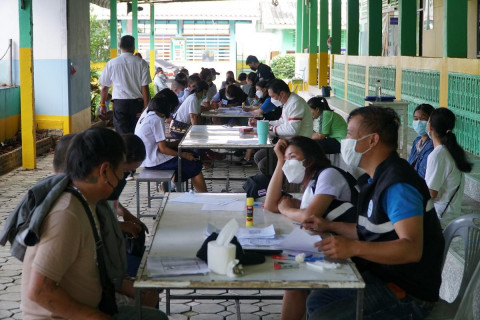
» There are about 500,000 stateless people in Thailand, of whom over 100,000 are children. Recently, various national agencies, supported by UNHCR and Unicef, hosted a national consultation on statelessness. It was a timely opportunity to identify preferred directions.