



Showing 1 - 10 of 19

Navigating between global superpowers
News, Vitit Muntarbhorn, Published on 14/02/2026
» Both China and the US issued new national security policies over the past year. At first glance, they seem to diverge markedly, portending a deep rupture in the world order. Yet, they may also bear some similarities in terms of self-interest and self-advancement. Collateral to that, other countries seeking to forge a middle path may wish to navigate a perspicacious route towards global equilibrium.
Should non-medicinal weed be legal?
Oped, Vitit Muntarbhorn, Published on 09/06/2025
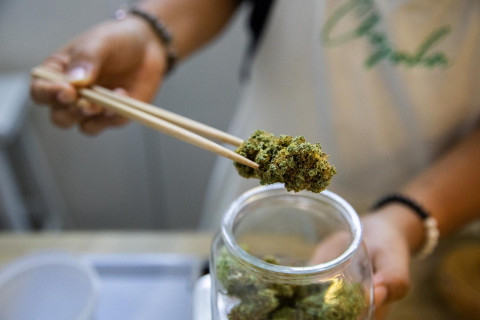
» The issue of narcotics is not only a law enforcement and medical issue. It is also a historical, political and economic issue. A recurrent dilemma is whether personal, non-medical use of "weed" or cannabis (which is generally seen as a softer drug, when compared with harder drugs such as methamphetamine), should be legal. Thailand is still in the quest for a balanced answer, and this is shaped by political and economic ambivalence.

China's interface with AI development
News, Vitit Muntarbhorn, Published on 21/10/2024
» With intense competition between the superpowers on the development of and interface with artificial intelligence (AI), does China favour some commitments which can converge with other countries?

Respect democracy and human rights
News, Vitit Muntarbhorn, Published on 16/08/2024
» The judiciary is a critically important pillar of the state. It is often cited as one of the three pillars, with the others being the executive branch of government and parliament. From a broader angle, the people of the land are the key fourth pillar that should not be overlooked. While some judges are emblematic of justice personified, others are of a more questionable quality, with extreme cases embodying the toxic. What then is to be done to offer a sobering tonic?
Multilateralism in a fractured world
News, Vitit Muntarbhorn, Published on 06/06/2024
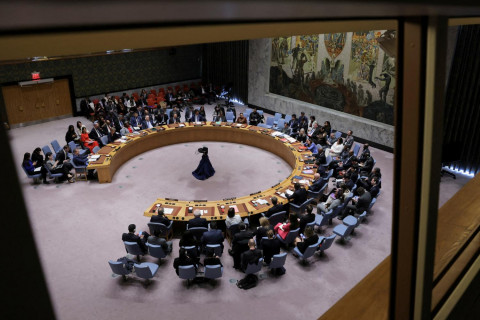
» Multilateralism lies at the heart of international relations as an enabler of states to converge in an ever-changing world. It is closely linked with the United Nations (UN), setting in motion a rules-based system, embracing international peace and security anchored on international law.

Govt kindles same-sex marriage hopes
News, Vitit Muntarbhorn, Published on 23/11/2023
» The top of the executive branch has given a welcome signal that it will fast-track in parliament a law to recognise same-sex marriage in Thailand.

Navigating the uncharted territory of AI
Oped, Vitit Muntarbhorn, Published on 30/08/2023
» Artificial Intelligence (AI), alias robots, has captured the public imagination. Yet, the term "AI" can cover more than robots. Not only does AI embody technology that learns and digests data, exhibiting intelligence paralleling humans, but it is also now a major creative force. Generative AI can offer projections, predictions and propositions, potentially surpassing human intelligence. This leads to the question -- should AI be regulated, and how?

Poll outcome invites shared wisdom
News, Vitit Muntarbhorn, Published on 22/05/2023
» That was the week that was, beginning on May 14, 2023, Thailand's monumental and momentous national election day. The results of the election were historically in favour of democratic change, with the Move Forward Party (MFP) gaining the most seats in the Lower House. It is leading a coalition of parties, aspiring to form the next government and winning over 310 seats in total, despite shenanigans from arch-conservatives.

Between rule of law and law of rule(r)s
Oped, Vitit Muntarbhorn, Published on 14/12/2022
» The term "rule of law" has a resonant ring which sounds both familiar and distant. It seems familiar because it is employed frequently by lawyers to analyse the makings of a legal system. Yet, it is distant because it sounds "legalese", harbouring both the thin version and the thick version of its intrinsic self. The thin version covers various legal safeguards for litigants and accused persons, such as a fair trial, accompanied by the advocacy of an independent judiciary. The thicker version demands more, namely: adherence to human rights and democracy.
Rights under threat from emerging tech
News, Vitit Muntarbhorn, Published on 16/11/2022
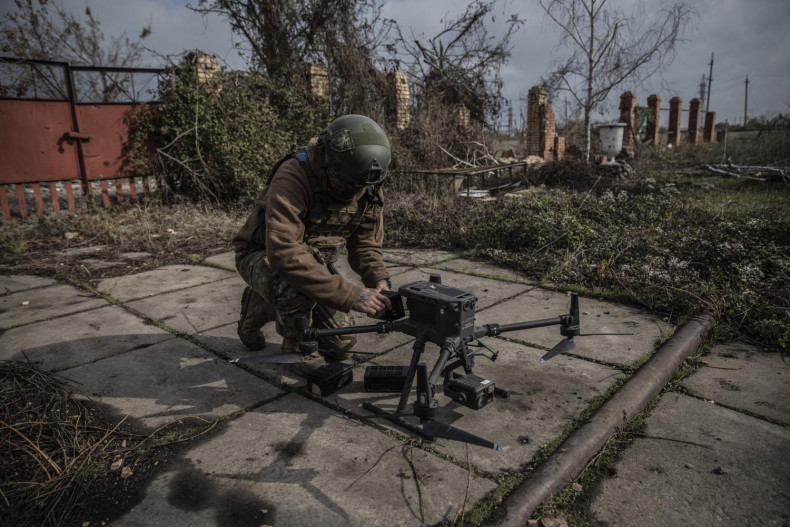
» A key challenge facing human rights globally today is the advent of emerging technologies that mutate rapidly and potentially beyond human control. The UN Human Rights Council in Geneva has thus singled out for special study during the next couple of years four areas of concern: autonomous weaponry, neurotechnology, cyberbullying, and green technology (inevitably linked with climate change). What are the prospects for enjoying the fruits of such technologies and pre-empting their negative implications?