



Showing 1 - 10 of 10

Navigating between global superpowers
News, Vitit Muntarbhorn, Published on 14/02/2026
» Both China and the US issued new national security policies over the past year. At first glance, they seem to diverge markedly, portending a deep rupture in the world order. Yet, they may also bear some similarities in terms of self-interest and self-advancement. Collateral to that, other countries seeking to forge a middle path may wish to navigate a perspicacious route towards global equilibrium.

Is being born as an LGBTI person a medical issue?
Oped, Vitit Muntarbhorn, Published on 30/06/2025
» June is a propitious time to remember the history of lesbian, gay, transgender and intersex (LGBTI) people and their struggles to overcome discrimination and violence. One of the difficulties confronting them throughout the ages has been how the medical sector and related science view them, and how they should be treated by medical classifications. What is the situation today both locally and globally?

Reconfiguring Asean rights declaration
News, Vitit Muntarbhorn, Published on 13/12/2024
» It has been 12 years since the Asean Human Rights Declaration (AHRD) was adopted in 2012 by the 10-member regional grouping, the Association of Southeast Asian Nations, embodying the key standards of human rights for the Southeast Asian region. How has it fared after all these years?

Respect democracy and human rights
News, Vitit Muntarbhorn, Published on 16/08/2024
» The judiciary is a critically important pillar of the state. It is often cited as one of the three pillars, with the others being the executive branch of government and parliament. From a broader angle, the people of the land are the key fourth pillar that should not be overlooked. While some judges are emblematic of justice personified, others are of a more questionable quality, with extreme cases embodying the toxic. What then is to be done to offer a sobering tonic?

Deep dive into Indo-Pacific dreamscape
Oped, Vitit Muntarbhorn, Published on 02/08/2024
» Is the term "Indo-Pacific" an illusion? Or is it a defined concept, a geographical configuration, a channel for connectivity, and/or a confining strategy? Perhaps it embodies an all-embracing blend, waiting for the onlooker to dive deep into political undercurrents. It may also be time to move beyond the landscape and the seascape and even leave the dreamscape behind.

Oceanic ripples as our common heritage
Oped, Vitit Muntarbhorn, Published on 05/04/2023
» There are currently three key issues pertaining to the marine environment: climate change, loss of biodiversity and pollution. The world's oceans are affected by the degradation of the land, sea and air, which have enormous consequences for the well-being of all living beings, including marine life. The advent of a new international agreement on the protection of the oceans is thus welcome and needs to be followed up effectively.

Between rule of law and law of rule(r)s
Oped, Vitit Muntarbhorn, Published on 14/12/2022
» The term "rule of law" has a resonant ring which sounds both familiar and distant. It seems familiar because it is employed frequently by lawyers to analyse the makings of a legal system. Yet, it is distant because it sounds "legalese", harbouring both the thin version and the thick version of its intrinsic self. The thin version covers various legal safeguards for litigants and accused persons, such as a fair trial, accompanied by the advocacy of an independent judiciary. The thicker version demands more, namely: adherence to human rights and democracy.
Stop deporting Cambodian refugees
Oped, Vitit Muntarbhorn, Published on 01/12/2021
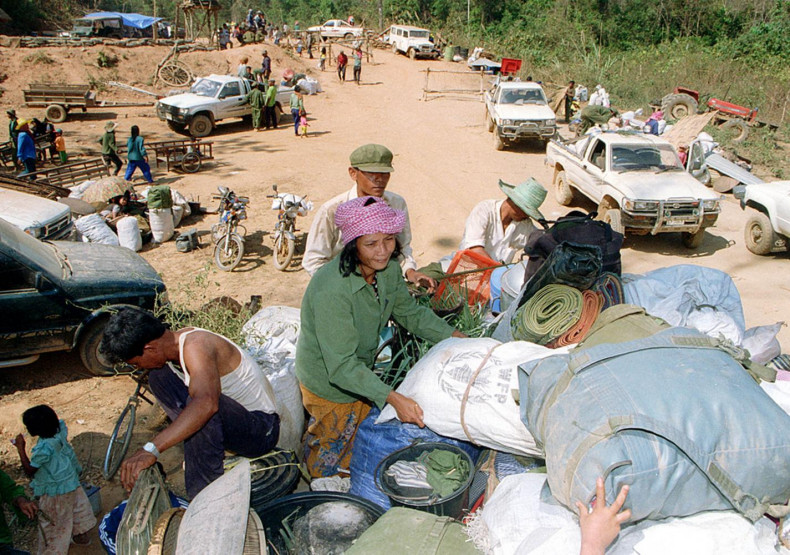
» The recent deportation of three internationally recognised Cambodian refugees provoked an international outcry, much to Thailand's embarrassment. The first two were deported from Thailand on Nov 9, while the third was sent back home on Nov 20 to also face the risk of political persecution. Such efforts to "push back" refugees have regrettably tarnished Thailand's generally commendable policy and practice of offering refuge to persons fleeing persecution and other dangers from foreign territories. This is all the more poignant since Thailand's human rights record is in the middle of being assessed in Geneva under the UN's Universal Periodic Review (UPR).
UN review shows human rights flaws
Oped, Vitit Muntarbhorn, Published on 17/11/2021
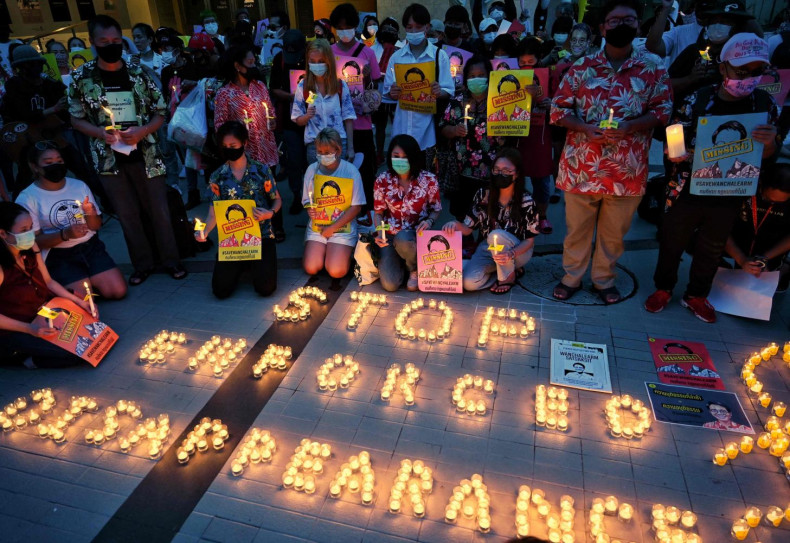
» The international human rights system consists primarily of two parts: international human rights treaties to which countries are invited to become parties on the basis of their consent, and the UN's own jurisdiction, through the UN Human Rights Council, covering all countries even if they do not consent to the coverage. The Universal Periodic Review (UPR) belongs to the latter part of the system and Thailand's recent appearance before this process on Nov 10, in public and online, was eye-opening.
Protecting migrants, refugees in our age of conflict
News, Vitit Muntarbhorn, Published on 07/01/2020
» There are about 270 million international migrants today who cross borders in search of new vistas. Many such as "expatriates" do well. However, many, particularly those who are pushed out of their homes, are caught in a trap of dislocation, dispossession and coercion, often due to armed conflicts, discrimination and violence. The number of forced migrants now stands at about 70 million people globally -- some 30 million who cross borders as "refugees" and some 40 million forced to move in their country of origin as "internally displaced persons".