



Showing 1 - 10 of 20

Navigating between global superpowers
News, Vitit Muntarbhorn, Published on 14/02/2026
» Both China and the US issued new national security policies over the past year. At first glance, they seem to diverge markedly, portending a deep rupture in the world order. Yet, they may also bear some similarities in terms of self-interest and self-advancement. Collateral to that, other countries seeking to forge a middle path may wish to navigate a perspicacious route towards global equilibrium.
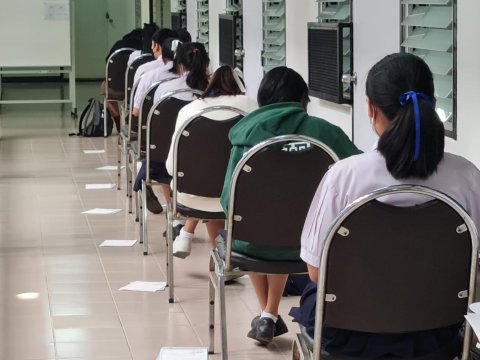
Re-energising higher education in Asean
News, Vitit Muntarbhorn, Published on 22/12/2025
» Higher education, implying the tertiary level associated with universities and parallel institutions, is at an inflexion point in Southeast Asia, where the trajectory of socio-political, economic and cultural development is changing rapidly.

Vitalising pathways for Thai-US ties
News, Vitit Muntarbhorn, Published on 30/08/2025
» Tariffs have certainly been in the news lately, in the face of exponential increases imposed by the US on other parts of the world.
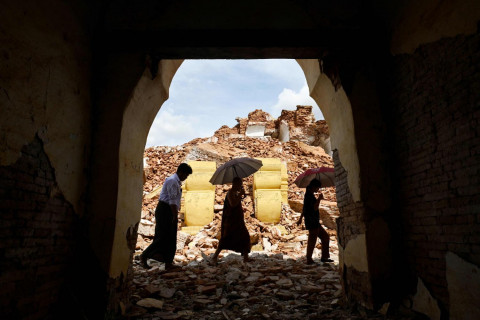
Clearer policy on Myanmar is needed
Oped, Vitit Muntarbhorn, Published on 18/04/2025
» Regrettably, the recent earthquake in Myanmar compounds the longstanding pain and suffering inflicted on the people of the country due to authoritarianism and human rights violations. Can such a catastrophe also be a catalyst for transformative, constructive change?

Reconfiguring Asean rights declaration
News, Vitit Muntarbhorn, Published on 13/12/2024
» It has been 12 years since the Asean Human Rights Declaration (AHRD) was adopted in 2012 by the 10-member regional grouping, the Association of Southeast Asian Nations, embodying the key standards of human rights for the Southeast Asian region. How has it fared after all these years?

Reimagining human rights and China?
News, Vitit Muntarbhorn, Published on 23/09/2024
» Should human rights be reimagined, especially in the context of China? From one angle, the answer is obvious. Plenty of norms are already agreed upon globally without the need for reimagination, and China is part of that universality. Yet given the situation on the ground level and the evolving nature of human rights, there might be room for some innovative reimagination, and this deserves balanced reflection.
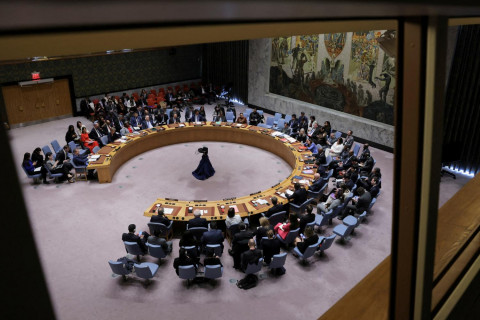
Multilateralism in a fractured world
News, Vitit Muntarbhorn, Published on 06/06/2024
» Multilateralism lies at the heart of international relations as an enabler of states to converge in an ever-changing world. It is closely linked with the United Nations (UN), setting in motion a rules-based system, embracing international peace and security anchored on international law.
Thai Human Rights Council aspirations
Oped, Vitit Muntarbhorn, Published on 17/05/2024
» Thailand's quest for membership of the UN Human Rights Council (HRC), Geneva, for the period 2025-2027, is rightly gaining interest among the general public. With a new foreign minister today, it is intriguing to prospect whether there will be more (or less) momentum in the competition towards the winning post -- with elections for the HRC due in New York in October.

Thailand's interface with new FTAs
News, Vitit Muntarbhorn, Published on 21/12/2023
» The power of data in the expanding panorama of digital trade is becoming an essential component of commercial relations, especially recent free trade areas (FTAs). As Thailand is now exploring new agreements on its western flank (such as with South Asia, Gulf countries and Europe) and on its eastern flank (such as with Pacific rim countries, interlinking with the Indian Ocean), what are some of the stakes deserving careful reflection?
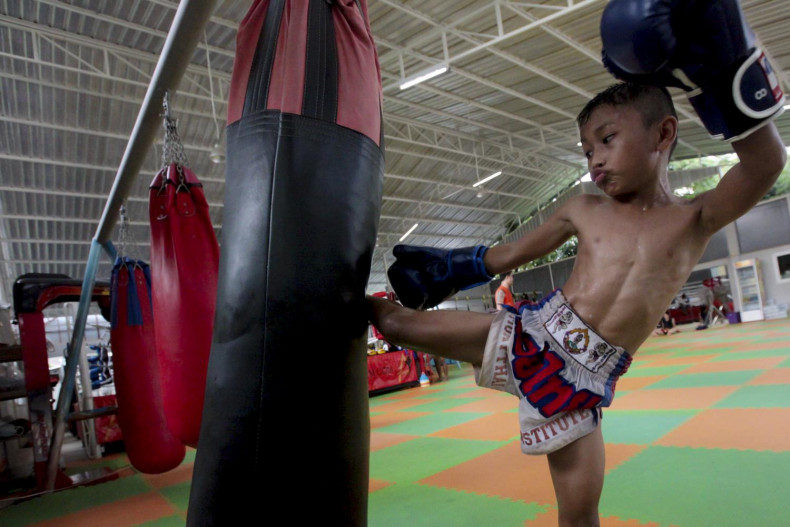
Soft power charms, with a Thai ripple
News, Vitit Muntarbhorn, Published on 04/12/2023
» The term "soft power" has seeped into international relations and it is now a catchphrase with its own global momentum. Yet it should be recalled that in the 1980s, it was used to describe the nature of a weaker state confronted by the "hard power" embodied by a stronger state.