



Showing 1 - 10 of 43

Navigating between global superpowers
News, Vitit Muntarbhorn, Published on 14/02/2026
» Both China and the US issued new national security policies over the past year. At first glance, they seem to diverge markedly, portending a deep rupture in the world order. Yet, they may also bear some similarities in terms of self-interest and self-advancement. Collateral to that, other countries seeking to forge a middle path may wish to navigate a perspicacious route towards global equilibrium.
Re-energising higher education in Asean
News, Vitit Muntarbhorn, Published on 22/12/2025
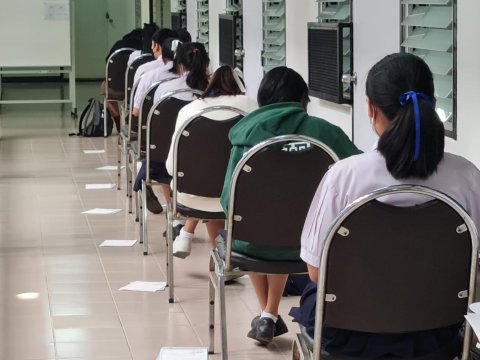
» Higher education, implying the tertiary level associated with universities and parallel institutions, is at an inflexion point in Southeast Asia, where the trajectory of socio-political, economic and cultural development is changing rapidly.
Labour and the dynamics of change
Oped, Vitit Muntarbhorn, Published on 25/07/2025
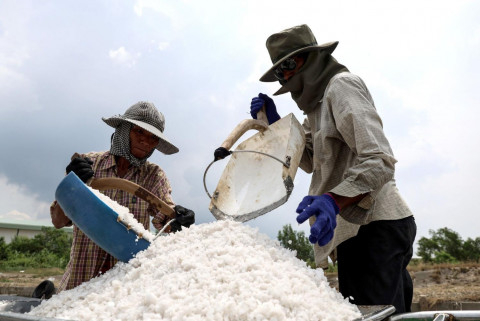
» The fluctuating international context compels countries in this region and beyond to recalibrate their labour laws, policies and practices. This is particularly critical at a time of great demographic changes, such as declining and ageing population in parts of the globe, compromised by a more transactional and conditional world of "quid pro quo". Thailand faces an inflection point on this front, requiring dynamic adjustments.

Should non-medicinal weed be legal?
Oped, Vitit Muntarbhorn, Published on 09/06/2025
» The issue of narcotics is not only a law enforcement and medical issue. It is also a historical, political and economic issue. A recurrent dilemma is whether personal, non-medical use of "weed" or cannabis (which is generally seen as a softer drug, when compared with harder drugs such as methamphetamine), should be legal. Thailand is still in the quest for a balanced answer, and this is shaped by political and economic ambivalence.
Shifting from tolerance to real inclusion
Oped, Vitit Muntarbhorn, Published on 23/05/2025
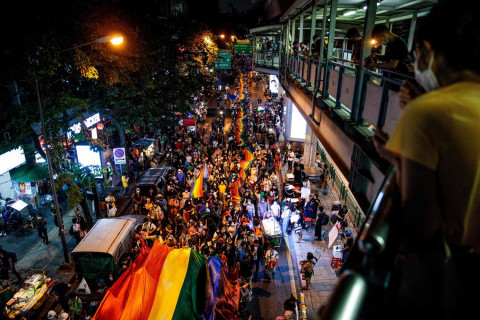
» On the occasion of the International Day against Homophobia, Biphobia, and Transphobia on May 17, UN human rights experts recently called for countries to work with LGBTI communities and not to police them. This was an apt message that has to resonate at the national and local levels, especially when the world is witnessing regression in regard to policies on diversity, equity, and inclusion.
Supporting women as bridge-builders
Oped, Vitit Muntarbhorn, Published on 28/03/2025
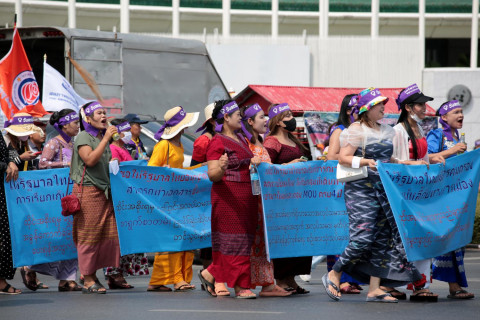
» How is the situation of women's rights and their role as bridge-builders today, connecting the multilateral and local settings? A recent seminar at the Thai Ministry of Foreign Affairs, hosted by its International Studies Center, elaborated upon the situation in a world that is witnessing tumultuous changes.
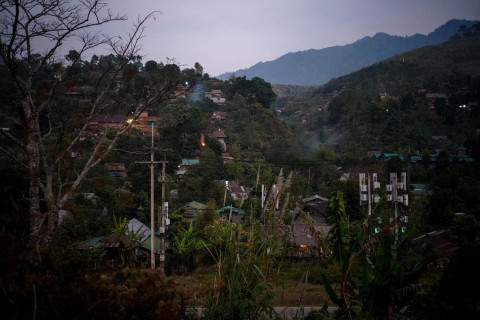
Streamlining Myanmar refugee policy
Oped, Vitit Muntarbhorn, Published on 13/02/2025
» Thailand's record on sheltering a multitude of refugees has generally been commendable throughout the years. Yet at times there are paradoxes, exemplified by the push-back of Cambodian refugees recently, the current threat to send back a Vietnamese Montagnard refugee, and the ominous clouds pressing insidiously for the forced return of Uyghur refugees.

What's next after same-sex marriage?
Oped, Vitit Muntarbhorn, Published on 20/01/2025
» Jan 23, 2025 will be remembered as a historic day for both Thailand and Southeast Asia. As a result of the amendments to the Thai Civil and Commercial Code -- which will come into effect on that day, 120 days after it was royally endorsed in the final months of 2024 -- same-sex couples will be able to register their marriage, and enjoy the rights of spouses under the law, regardless of their gender, without discrimination.

Respect democracy and human rights
News, Vitit Muntarbhorn, Published on 16/08/2024
» The judiciary is a critically important pillar of the state. It is often cited as one of the three pillars, with the others being the executive branch of government and parliament. From a broader angle, the people of the land are the key fourth pillar that should not be overlooked. While some judges are emblematic of justice personified, others are of a more questionable quality, with extreme cases embodying the toxic. What then is to be done to offer a sobering tonic?

From Asian values to Asian narratives?
News, Vitit Muntarbhorn, Published on 01/07/2024
» A debate is emerging over whether Asia should claim its own "narratives". The humble onlooker might well ask whether this is another version, a cliché, of the "Asian values" of the 1990s.