



Showing 1 - 10 of 32

Navigating between global superpowers
News, Vitit Muntarbhorn, Published on 14/02/2026
» Both China and the US issued new national security policies over the past year. At first glance, they seem to diverge markedly, portending a deep rupture in the world order. Yet, they may also bear some similarities in terms of self-interest and self-advancement. Collateral to that, other countries seeking to forge a middle path may wish to navigate a perspicacious route towards global equilibrium.

What's next after same-sex marriage?
Oped, Vitit Muntarbhorn, Published on 20/01/2025
» Jan 23, 2025 will be remembered as a historic day for both Thailand and Southeast Asia. As a result of the amendments to the Thai Civil and Commercial Code -- which will come into effect on that day, 120 days after it was royally endorsed in the final months of 2024 -- same-sex couples will be able to register their marriage, and enjoy the rights of spouses under the law, regardless of their gender, without discrimination.

Unpacking China's global influence
Oped, Vitit Muntarbhorn, Published on 29/08/2024
» Is China an enigma? If it is difficult to decipher the country on some fronts, there are other elements which are more accessible. While it might be easy to look at its impressive growth in recent decades as diverging from other global players in key areas, there are other areas which are mutually convergent. From the multidimensional panorama of a complex world -- the "multiplex" world, a preferred approach is not to generalise too much but to analyse the specifics of our times for possible confluence.

Deep dive into Indo-Pacific dreamscape
Oped, Vitit Muntarbhorn, Published on 02/08/2024
» Is the term "Indo-Pacific" an illusion? Or is it a defined concept, a geographical configuration, a channel for connectivity, and/or a confining strategy? Perhaps it embodies an all-embracing blend, waiting for the onlooker to dive deep into political undercurrents. It may also be time to move beyond the landscape and the seascape and even leave the dreamscape behind.

Gender diversity is good for business
News, Vitit Muntarbhorn, Published on 11/03/2024
» A timely issue raised by a recent forum of key businesses, political leaders and civil society was the potential for more inclusion of LGBTI (lesbian, gay, bisexual, transgender and intersex) people in the workplace. This is complementary to the other critically important issue of the day: the role of women in business and employment.

Key portals to Global Digital Compact
Oped, Vitit Muntarbhorn, Published on 09/02/2024
» This year will witness the formulation and adoption of the UN-backed Global Digital Compact if all goes as planned. It will provide a policy framework for digital relations worldwide, although not yet equivalent to a binding treaty. What, then, are the stakes, the key portals to the digital future?

Thailand's interface with new FTAs
News, Vitit Muntarbhorn, Published on 21/12/2023
» The power of data in the expanding panorama of digital trade is becoming an essential component of commercial relations, especially recent free trade areas (FTAs). As Thailand is now exploring new agreements on its western flank (such as with South Asia, Gulf countries and Europe) and on its eastern flank (such as with Pacific rim countries, interlinking with the Indian Ocean), what are some of the stakes deserving careful reflection?
Building a rights protection framework
Oped, Vitit Muntarbhorn, Published on 10/11/2023
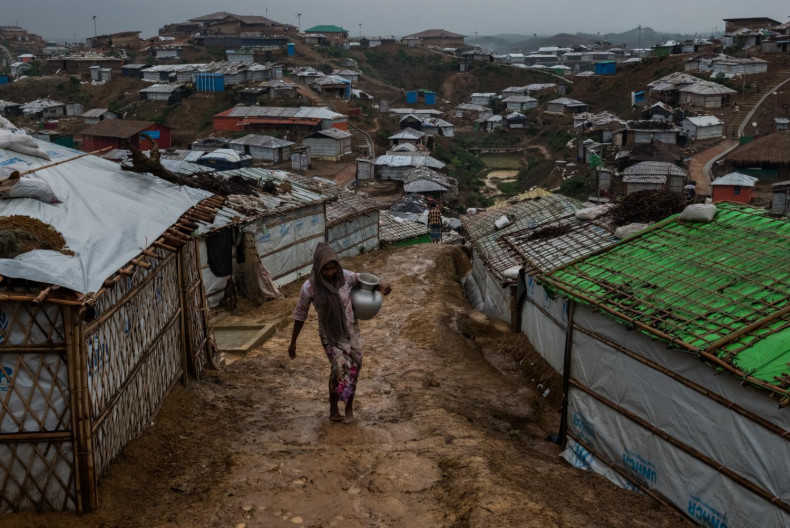
» The Asia-Pacific region is a vast conglomeration of large and small countries with a wealth of inter-generational wisdom. Yet, the region does not have a regional inter-governmental human rights protection system. What, then, are some possibilities for the future?

Fight for the right to clean environment
News, Vitit Muntarbhorn, Published on 11/09/2023
» A year ago, the international community was heartened by the UN General Assembly's proclamation of the right to a clean, healthy and sustainable environment as a human right to be enjoyed by all, universally. In essence, what does the right mean?

Navigating the uncharted territory of AI
Oped, Vitit Muntarbhorn, Published on 30/08/2023
» Artificial Intelligence (AI), alias robots, has captured the public imagination. Yet, the term "AI" can cover more than robots. Not only does AI embody technology that learns and digests data, exhibiting intelligence paralleling humans, but it is also now a major creative force. Generative AI can offer projections, predictions and propositions, potentially surpassing human intelligence. This leads to the question -- should AI be regulated, and how?