



Showing 1 - 10 of 12

Navigating between global superpowers
News, Vitit Muntarbhorn, Published on 14/02/2026
» Both China and the US issued new national security policies over the past year. At first glance, they seem to diverge markedly, portending a deep rupture in the world order. Yet, they may also bear some similarities in terms of self-interest and self-advancement. Collateral to that, other countries seeking to forge a middle path may wish to navigate a perspicacious route towards global equilibrium.

Vitalising pathways for Thai-US ties
News, Vitit Muntarbhorn, Published on 30/08/2025
» Tariffs have certainly been in the news lately, in the face of exponential increases imposed by the US on other parts of the world.

Sustaining healthcare in volatile times
Oped, Vitit Muntarbhorn, Published on 18/08/2025
» Health care is pivotal for human well-being. Yet in today's precarious world, it is pressured by diminishing resources, demographic variables, warfare and violence, and environmental degradation. Sustaining health care thus requires insightful planning and implementation, no less for Thailand and the Association of Southeast Asian Nations (Asean) regions.

Should non-medicinal weed be legal?
Oped, Vitit Muntarbhorn, Published on 09/06/2025
» The issue of narcotics is not only a law enforcement and medical issue. It is also a historical, political and economic issue. A recurrent dilemma is whether personal, non-medical use of "weed" or cannabis (which is generally seen as a softer drug, when compared with harder drugs such as methamphetamine), should be legal. Thailand is still in the quest for a balanced answer, and this is shaped by political and economic ambivalence.

Reimagining human rights and China?
News, Vitit Muntarbhorn, Published on 23/09/2024
» Should human rights be reimagined, especially in the context of China? From one angle, the answer is obvious. Plenty of norms are already agreed upon globally without the need for reimagination, and China is part of that universality. Yet given the situation on the ground level and the evolving nature of human rights, there might be room for some innovative reimagination, and this deserves balanced reflection.

Thailand's interface with new FTAs
News, Vitit Muntarbhorn, Published on 21/12/2023
» The power of data in the expanding panorama of digital trade is becoming an essential component of commercial relations, especially recent free trade areas (FTAs). As Thailand is now exploring new agreements on its western flank (such as with South Asia, Gulf countries and Europe) and on its eastern flank (such as with Pacific rim countries, interlinking with the Indian Ocean), what are some of the stakes deserving careful reflection?
Celebrating human rights in 2023
Oped, Vitit Muntarbhorn, Published on 02/02/2023
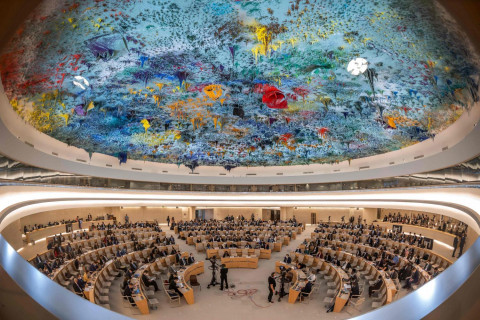
» This year is a time to remember and reiterate two key instruments which have shaped responses to human rights implementation since the end of World War II in 1945. It was the task of the Universal Declaration of Human Rights (UDHR), based on a Resolution of the UN General Assembly adopted in 1948, to identify and list a number of key rights of a global nature.
Migration and climate change in Asia
Oped, Vitit Muntarbhorn, Published on 17/03/2022
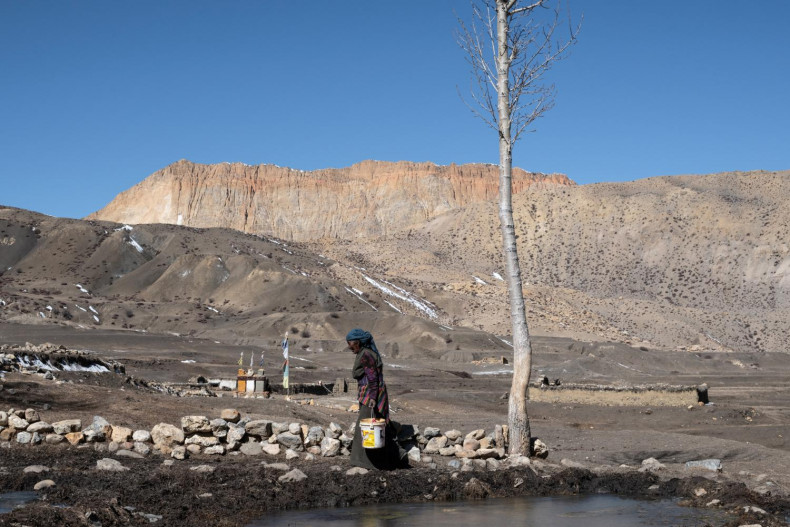
» The close connection between migration, human rights and climate change is increasingly self-evident, as "natural disasters" related to that linkage loom in many parts of the world. The Office of the UN High Commissioner for Human Rights (OHCHR) estimates that about 22.5 million people migrate each year within and across borders because of climate change and weather-linked disasters. These are all compounded by the spread of Covid-19 in terms of lockdowns and other restrictive measures.

The crafting of Asean's 'protector' role
Oped, Vitit Muntarbhorn, Published on 04/08/2021
» The Asean Intergovernmental Commission on Human Rights (AICHR) was established just over a decade ago to promote and protect human rights in the Association of Southeast Asian Nations (Asean). Yet, its activities, to date, have been more to do with promotion activities, such as workshops, rather than protection measures, such as to receive complaints and to provide remedies.
Slowly moving away from the death penalty
Oped, Vitit Muntarbhorn, Published on 22/04/2021
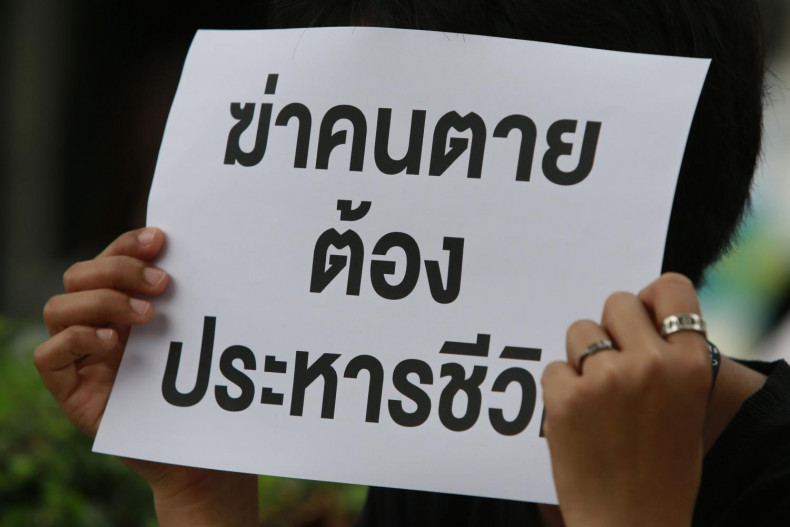
» One of the interesting developments in Thailand is that official circles are gradually moving away from the death penalty as a sanction against crimes. This is witnessed by the Ministry of Justice's campaign to invite the public to look at options beyond the death penalty. What if there is a large proportion of the population in the country which still favours its retention rather than abolition? There is a need to balance with the international trend and the country's obligations.