



Showing 1 - 10 of 16
Navigating between global superpowers
News, Vitit Muntarbhorn, Published on 14/02/2026
» Both China and the US issued new national security policies over the past year. At first glance, they seem to diverge markedly, portending a deep rupture in the world order. Yet, they may also bear some similarities in terms of self-interest and self-advancement. Collateral to that, other countries seeking to forge a middle path may wish to navigate a perspicacious route towards global equilibrium.
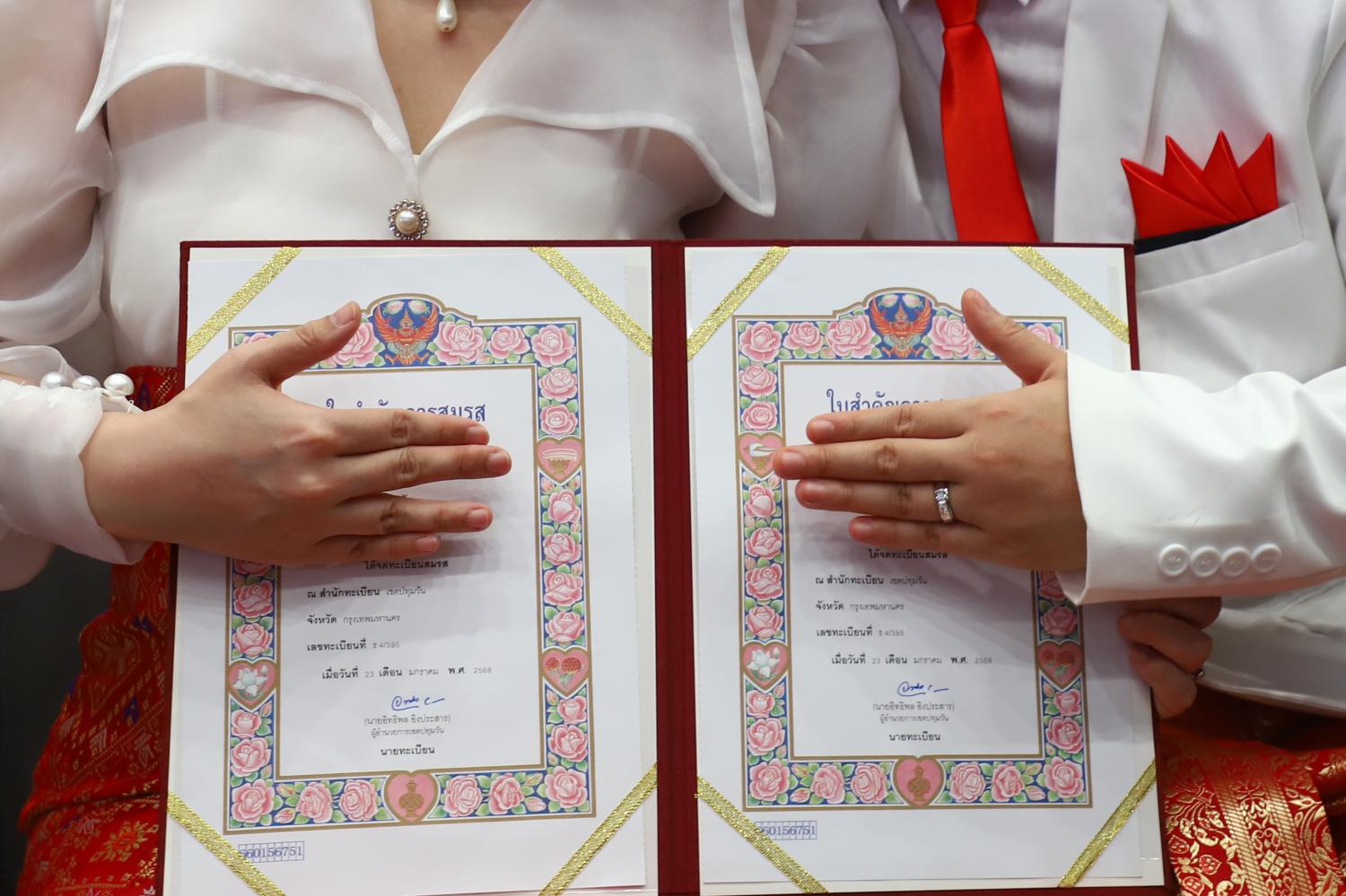
Legal hurdles after same-sex marriage
Oped, Vitit Muntarbhorn, Published on 06/11/2025
» With the great news of the same-sex marriage law in Thailand comes another question -- how to facilitate the lives of couples, especially when one of them is not a Thai national. Two lingering and nagging issues concern the acquisition of nationality and the channels for adopting a child.

Supporting women as bridge-builders
Oped, Vitit Muntarbhorn, Published on 28/03/2025
» How is the situation of women's rights and their role as bridge-builders today, connecting the multilateral and local settings? A recent seminar at the Thai Ministry of Foreign Affairs, hosted by its International Studies Center, elaborated upon the situation in a world that is witnessing tumultuous changes.

Streamlining Myanmar refugee policy
Oped, Vitit Muntarbhorn, Published on 13/02/2025
» Thailand's record on sheltering a multitude of refugees has generally been commendable throughout the years. Yet at times there are paradoxes, exemplified by the push-back of Cambodian refugees recently, the current threat to send back a Vietnamese Montagnard refugee, and the ominous clouds pressing insidiously for the forced return of Uyghur refugees.

What's next after same-sex marriage?
Oped, Vitit Muntarbhorn, Published on 20/01/2025
» Jan 23, 2025 will be remembered as a historic day for both Thailand and Southeast Asia. As a result of the amendments to the Thai Civil and Commercial Code -- which will come into effect on that day, 120 days after it was royally endorsed in the final months of 2024 -- same-sex couples will be able to register their marriage, and enjoy the rights of spouses under the law, regardless of their gender, without discrimination.

Thailand has human rights role to play
News, Vitit Muntarbhorn, Published on 04/11/2024
» The recent election of Thailand to the UN Human Rights Council (HRC) is, in a sense, a cause for elation. Yet it also comes with the responsibility of proving to the global/local community that the country can set an example for good practices and propel the HRC to take effective action on key matters based on international standards. This is daunting in a world of multi-and-mini polarities and poly-crises.

Unpacking China's global influence
Oped, Vitit Muntarbhorn, Published on 29/08/2024
» Is China an enigma? If it is difficult to decipher the country on some fronts, there are other elements which are more accessible. While it might be easy to look at its impressive growth in recent decades as diverging from other global players in key areas, there are other areas which are mutually convergent. From the multidimensional panorama of a complex world -- the "multiplex" world, a preferred approach is not to generalise too much but to analyse the specifics of our times for possible confluence.

Overcoming statelessness in Thailand
News, Vitit Muntarbhorn, Published on 05/06/2023
» There are about 500,000 stateless people in Thailand, of whom over 100,000 are children. Recently, various national agencies, supported by UNHCR and Unicef, hosted a national consultation on statelessness. It was a timely opportunity to identify preferred directions.

Building bridges from Asia to Africa the right way
Oped, Vitit Muntarbhorn, Published on 29/04/2023
» The quest to build bridges between Asia and Africa is longstanding. A Chinese Admiral -- Zheng He -- led a series of voyages from East Asia to East Africa, down to Kenya and possibly Zanzibar, from the year 1405. The ships he navigated were enormous -- about 400 feet long and 100 feet wide (122 metres by 30.5m) -- especially when compared with Christopher Columbus' Santa Maria, which was about 70 feet long. For centuries, people have also migrated and traded between the two regions.

Rights under threat from emerging tech
News, Vitit Muntarbhorn, Published on 16/11/2022
» A key challenge facing human rights globally today is the advent of emerging technologies that mutate rapidly and potentially beyond human control. The UN Human Rights Council in Geneva has thus singled out for special study during the next couple of years four areas of concern: autonomous weaponry, neurotechnology, cyberbullying, and green technology (inevitably linked with climate change). What are the prospects for enjoying the fruits of such technologies and pre-empting their negative implications?