



Showing 1 - 10 of 10
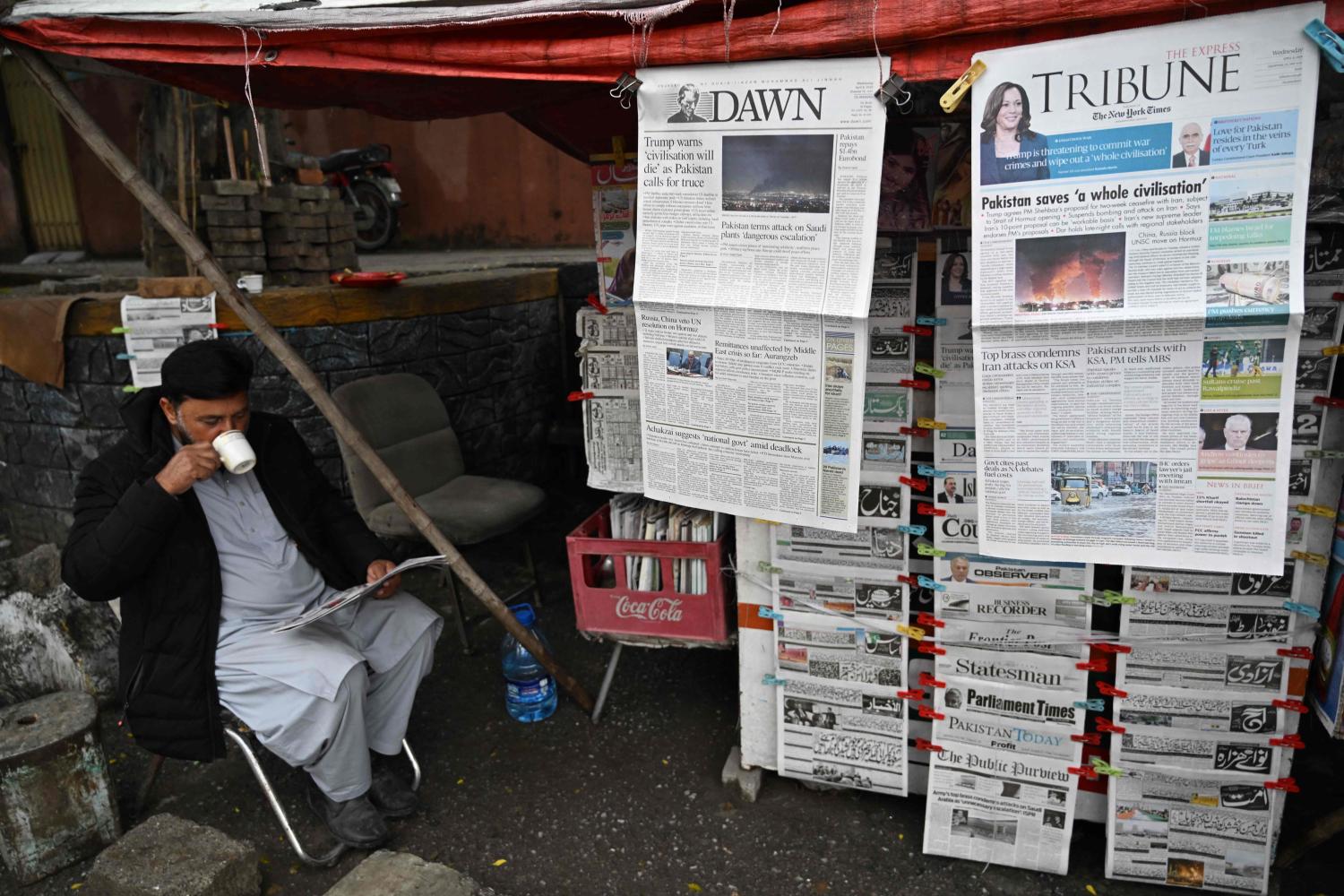
Projecting hope for a world in turmoil
Oped, Vitit Muntarbhorn, Published on 10/04/2026
» Today, the world is witnessing the most explosive situation since World War II, all too visible in conflicts such as the Iran war.

Supporting women as bridge-builders
Oped, Vitit Muntarbhorn, Published on 28/03/2025
» How is the situation of women's rights and their role as bridge-builders today, connecting the multilateral and local settings? A recent seminar at the Thai Ministry of Foreign Affairs, hosted by its International Studies Center, elaborated upon the situation in a world that is witnessing tumultuous changes.

Rights, freedoms hang in balance
Oped, Vitit Muntarbhorn, Published on 30/12/2023
» The Universal Declaration of Human Rights (UDHR) capped 2023 by celebrating its 75th birthday just before the year's end. As the seminal UN document on human rights, it is closely linked with the four freedoms: namely, freedom of expression, freedom of worship, freedom from want and freedom from fear. Where are we in that long march towards their realisation?

Overcoming statelessness in Thailand
News, Vitit Muntarbhorn, Published on 05/06/2023
» There are about 500,000 stateless people in Thailand, of whom over 100,000 are children. Recently, various national agencies, supported by UNHCR and Unicef, hosted a national consultation on statelessness. It was a timely opportunity to identify preferred directions.

Lessons from the Khmer Rouge tribunal
Oped, Vitit Muntarbhorn, Published on 18/02/2023
» One of the saddest episodes of Southeast Asian history was the period during the 1970s that witnessed the rule of the Khmer Rouge in Cambodia. The group was driven by a warped ideology, and it perpetrated myriad crimes against the general population. Millions were killed and displaced through a range of atrocities. Decades later, an internationally supported tribunal, the Extraordinary Chambers in the Courts of Cambodia (ECCC), or the Khmer Rouge Tribunal, was set up to prosecute the leaders of the group, and it is now ending its work. What are some of the key lessons the global community can learn from this?

Celebrating human rights in 2023
Oped, Vitit Muntarbhorn, Published on 02/02/2023
» This year is a time to remember and reiterate two key instruments which have shaped responses to human rights implementation since the end of World War II in 1945. It was the task of the Universal Declaration of Human Rights (UDHR), based on a Resolution of the UN General Assembly adopted in 1948, to identify and list a number of key rights of a global nature.

How to invigorate multilateralism
Oped, Vitit Muntarbhorn, Published on 15/09/2022
» Multilateralism, embodied in the United Nations (UN) as the world’s primary body for fostering international relations and international law among all countries, has been the mainstay of global history since the World War II.

UN General Assembly must assert itself
Oped, Vitit Muntarbhorn, Published on 20/04/2022
» The recent vote in the UN General Assembly (GA) suspending Russia from the UN Human Rights Council (HRC), due to its conduct in Ukraine, in early April 2022 is a rare instance of the GA asserting its powers with binding force. Generally, only the UN Security Council (SC) can adopt measures; these are exemplified by sanctions adopted by the SC periodically against errant states, non-government armed groups and individuals. Is there then room for a more assertive GA, especially when the SC is dysfunctional?

Heed the global messages against discrimination
News, Vitit Muntarbhorn, Published on 03/02/2022
» The past couple of months have seen two global developments sending strong messages against discrimination and exclusion. On Jan 13, the UN General Assembly adopted by consensus a key resolution against denial of the Holocaust, advocating stronger action against such a refutation on an international level.
Protecting migrants, refugees in our age of conflict
News, Vitit Muntarbhorn, Published on 07/01/2020
» There are about 270 million international migrants today who cross borders in search of new vistas. Many such as "expatriates" do well. However, many, particularly those who are pushed out of their homes, are caught in a trap of dislocation, dispossession and coercion, often due to armed conflicts, discrimination and violence. The number of forced migrants now stands at about 70 million people globally -- some 30 million who cross borders as "refugees" and some 40 million forced to move in their country of origin as "internally displaced persons".