



Showing 1 - 10 of 38
Will poll be breakout or more of same?
Oped, Thitinan Pongsudhirak, Published on 06/02/2026
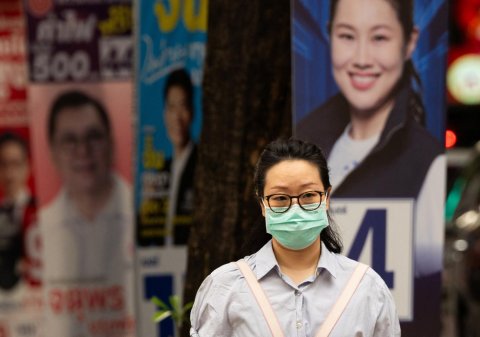
» As Thais go to the polls this Sunday, the most consequential question is whether Thailand will finally break out of its debilitating cycle of political instability and economic underperformance that has marked the past two decades. The signs and signals suggest otherwise -- at least not yet.
Thailand's political trajectory in 2026
Oped, Thitinan Pongsudhirak, Published on 09/01/2026
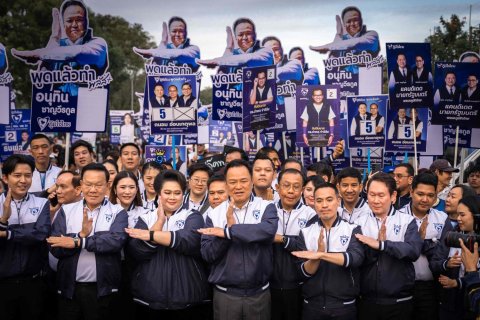
» What happens in Thai politics this year and the immediate horizon will be determined by the upcoming election on Feb 8. While contesting political parties are in full campaign mode, the contemporary history of Thai polls so far in the 21st century is not encouraging. Only once in the past 25 years have voting results went the way they were meant to, in accordance with the popular will. Whether the vote in four weeks will follow the same pattern will depend on whether the conservative establishment gets its preferred outcome.
Thailand hit by a confluence of crises
Oped, Thitinan Pongsudhirak, Published on 05/12/2025
» Thailand is currently facing multiple crises of unprecedented proportions in the highest corridors of power that will pose adversity for the economy and political stability next year and beyond.
Southeast Asia amid the US-China rift
Oped, Thitinan Pongsudhirak, Published on 03/10/2025
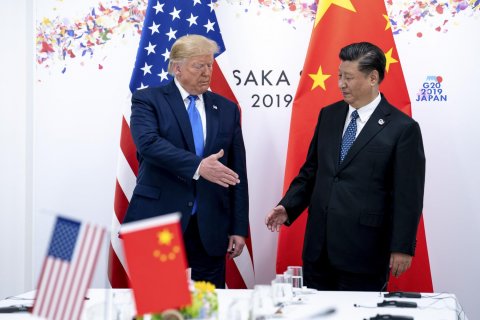
» The rivalry between the United States and China has become the defining contest of the 21st century. Barely two decades ago, Washington and Beijing were partners in prosperity. America's support for China's entry into the World Trade Organization in 2001 epitomised the high-water mark of engagement, reflecting the belief that economic integration would lead to greater political cooperation. Today, that partnership has morphed into suspicion and confrontation. Relations between the United States and China have deteriorated so swiftly that many observers now describe them as locked in a "new Cold War". The more pressing question, however, is not whether this analogy holds, but whether confrontation can be managed short of outright conflict.

Signs and symptoms of Thai stagnation
Oped, Thitinan Pongsudhirak, Published on 18/07/2025
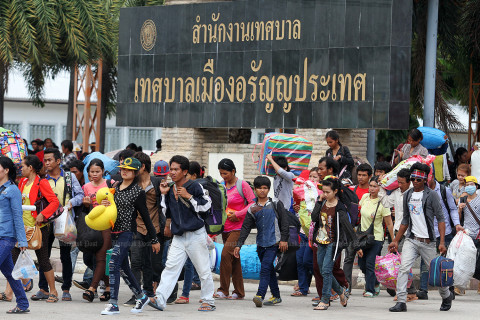
» That Thailand is faring poorly in the world is no longer in dispute. Not so long ago, many were in denial and adamant that Thailand could still bring a good game to engage abroad, that "Teflon" Thailand could bounce back. Now, just about all indicators are pointing south. The causes of this country's decline and stagnation are not singular but multifaceted over a two-decade period. As Thailand's situation is likely to worsen before hopes for a better future can arise, it is instructive to start counting the costs.
Thailand needs a geostrategic rebalance
Oped, Thitinan Pongsudhirak, Published on 06/06/2025
» With two military coups and multiple judicial interventions that combined to subvert election results and weaken democratic institutions over the past two decades, it is unsurprising that Thailand's geostrategic position has leaned increasingly towards China. Naturally, the more Thailand becomes autocratic, the more it will be estranged from established democracies in Europe and North America, as well as Japan and South Korea, with nowhere to turn but to Beijing. But this China orientation is a geostrategic mistake at this time. Thailand should correct its course until clearer signs emerge as to which side of the superpower struggle will come out on top.
Myanmar's civil war after four years
Oped, Thitinan Pongsudhirak, Published on 31/01/2025
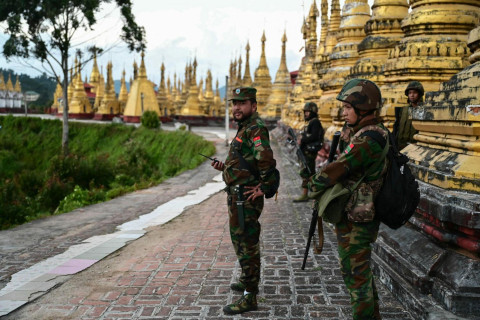
» Four years after its military coup and consequent civil war, Myanmar's spotlight in global headlines continues to dim as geostrategic reorientations and realignments among the major powers take centre stage. Dramatic and drastic foreign policy changes are afoot in the United States under the second administration of President Donald J Trump, while the European Union faces an existential threat from Russia's aggression in Ukraine, and Japan is mired in political sclerosis at home. Myanmar's fate and future will thus likely be determined by the course and outcome of its civil war, China's expanding influence in the country and Asean member states' manoeuvres to a lesser extent.

Thai foreign policy needs new rudder
Oped, Thitinan Pongsudhirak, Published on 27/09/2024
» Thailand's foreign policy posture and projection under Foreign Minister Maris Sangiampongsa and the new government of Prime Minister Paetongtarn Shinawatra is off to a good start under severe structural constraints. Given the widespread consensus both at home and abroad that Thailand has fallen behind its peers over the past two decades, the imperative of regaining its international standing is undisputed. But doing so under what the foreign minister has outlined as a "neutral stance" under "non-alignment" among the great powers is moot and misguided. What Thai foreign policy needs is multi-alignments and omni-directionality under a new rudder.

Move Forward case reveals autocracy
Oped, Thitinan Pongsudhirak, Published on 07/06/2024
» The Constitutional Court's announcement that it will consider the Move Forward Party's (MFP) written defence in its dissolution case on June 12 appears ominous. After several attempts to make its argument that a campaign pledge to amend the lese majeste law against royal insult is not tantamount to "overthrowing Thailand's democratic regime with the King as head of state", the party's time is up. As the biggest election winner in May 2023, the MFP's dissolution is perceived as a foregone conclusion. Such a revelation might risk Thailand being perceived as an autocratic regime based on legal manoeuvres, and power plays that do not derive from voter preferences.
Reshuffle cements Srettha's grip
News, Thitinan Pongsudhirak, Published on 06/05/2024
» After eight months at the helm, Prime Minister Srettha Thavisin staged a much-anticipated cabinet reshuffle with unexpected drama and unsurprising consolidation. As head of a coalition government, Mr Srettha appears more "prime ministerial" as the reshuffle has strengthened his hand to implement the ruling Pheu Thai Party's flagship policies.