



Showing 1 - 10 of 11
Impacts of Iran war on Southeast Asia
Oped, Thitinan Pongsudhirak, Published on 20/03/2026
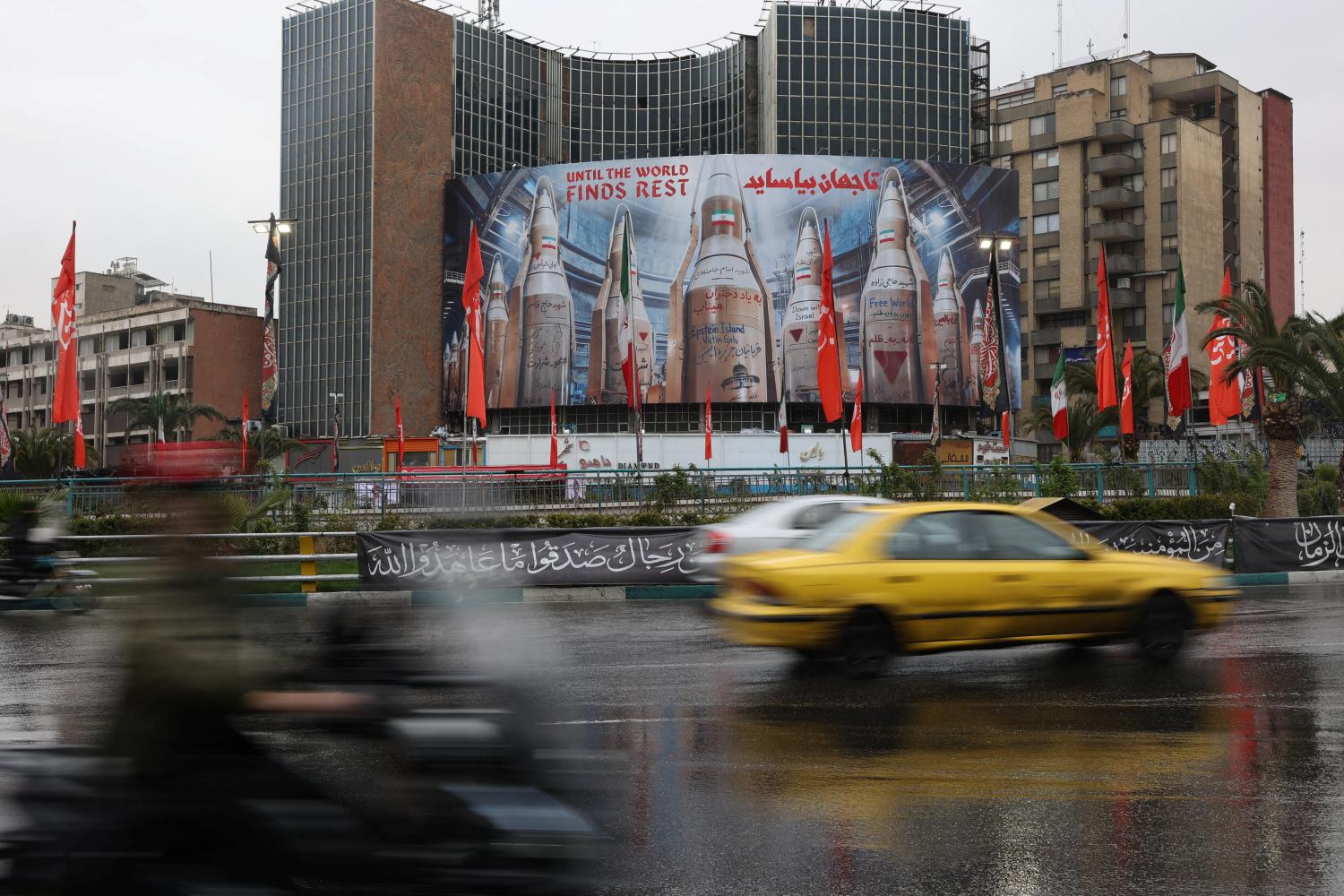
» For the most part, Southeast Asia as a region has taken a neutral stance toward the joint attack between the United States and Israel against the Islamic Republic of Iran. Even the Philippines and Thailand, two formal US treaty allies, have distanced themselves, calling for restraint and de-escalation.

Remembering a journo like no other
Oped, Thitinan Pongsudhirak, Published on 04/04/2025
» Gwen Robinson was a quintessential journalist who probed for the best scoop and pried for the juiciest gossip, an old-style old hand the likes of which we are unlikely to see again. In the new contentious era of geopolitical conflict and geoeconomic tension underpinned by American economic nationalism, Robinson's journalist craft over more than four decades explaining and linking Asia and the West will be sorely missed.

A Thai view on the Hamas-Israel war
Oped, Thitinan Pongsudhirak, Published on 20/10/2023
» The Palestinians' longstanding and legitimate grievances have been irrevocably subverted by Hamas' brazen attack against Israel on Oct 7. Unlike previous rounds of conflicts and clashes between Israel and the Palestinians on the one hand and neighbouring Arab states on the other, Thailand has become a direct casualty like never before, as 30 Thai workers have been killed to date, with at least 16 injured and 17 taken hostage. As a militant political movement motivated by Islamic fundamentalism using methods of terrorism to achieve its objectives, Hamas has made a bad name for the Palestinian cause, eliciting condemnation and opposition all the way over here in Thailand.

Asean role stuck on Myanmar coup
Oped, Thitinan Pongsudhirak, Published on 25/08/2023
» President Joe Biden's decision to skip Asean-related summits in the Indonesian capital Jakarta on Sept 5-7 in favour of the G-20 leaders' meeting in India just two days later has been greeted with howls of disappointment and criticism around Southeast Asian capitals and elsewhere that are concerned about America's role in the region.

Myanmar's military takeover falters
Oped, Thitinan Pongsudhirak, Published on 03/02/2023
» Global news headlines this month will be focused on the one-year anniversary of Russia's invasion of Ukraine, which falls on Feb 24. This external aggression, where a bigger state unilaterally takes territory from a smaller neighbour by force, can be juxtaposed to an internal subjugation in Myanmar, where a military coup took place two years ago this week. Whether the aggression is externally between states, or internally within a state, the oppressors behave the same way and pursue similar objectives of conquest and dominance. Reversing an internal subjugation is as morally compelling as turning back an external aggression. What Myanmar's civilian-led resistance coalition needs is a fraction of the aid the Ukrainians have been receiving.

Myanmar takes lead in autocratic race
Oped, Thitinan Pongsudhirak, Published on 12/03/2021
» In the aftermath of the military coup on Feb 1, Myanmar's armed forces have evidently taken the lead in Southeast Asia's authoritarian race to the bottom. For its speed and depth of reversal from a fragile democracy to a hard dictatorship within six weeks, Myanmar currently ranks top among developing states worldwide. At stake now is not just Myanmar's political future and the well-being of its people but the fate of developing democracies elsewhere.

Myanmar coup poses many dilemmas
Oped, Thitinan Pongsudhirak, Published on 19/02/2021
» Myanmar's military coup on Feb 1 and the popular anger and ongoing local protests in reaction to it inside the country pose multiple and multi-layered dilemmas for all parties involved. The Tatmadaw, as Myanmar's armed forces are known, led by junta leader Senior General Min Aung Hlaing, is now mired in repercussions and consequences well beyond its original intent. Whether the Tatmadaw prevails or not, Myanmar is unlikely to regain the traction of reform and progress that has been on track in the past decade.

Thai political order being contested
Oped, Thitinan Pongsudhirak, Published on 21/08/2020
» It has happened every time in contemporary Thai politics since the 1970s. When genuine dissent takes place against the established political order, incumbent centres of power strike back with all the means at their disposal. Each time in the past, they prevailed. This time, as political storm clouds gather again, similar campaigns and tactics are in motion to suppress dissent. Yet the final outcome may be profoundly different compared to the past.

HK protests in a regional perspective
News, Thitinan Pongsudhirak, Published on 11/10/2019
» When Hong Kong's protest movement against the Extradition Law Amendment Bill began on March 30, few could have anticipated that it would become a full-blown popular revolt. The protesters initially opposed the bill because it would allow the Hong Kong government to detain and extradite fugitives to mainland China. Despite the suspension and subsequent withdrawal of the bill by Hong Kong's Chief Executive Carrie Lam, the protest movement has taken on a life of its own. As its end goals of universal suffrage, an independent inquiry into police conduct and Ms Lam's resignation harden, its endgame appears fraught with risks of intensifying confrontation and violence.

Global turmoil and Thailand's political reset
News, Thitinan Pongsudhirak, Published on 21/12/2018
» As the world moves into 2019, there is a consensus that the roughly seven-decade-old rules-based liberal international order no longer works. Either it has to be fundamentally revamped to suit new realities and the international distribution of power and wealth, or it will be increasingly violated and marginalised. In a remarkable parallel, Thailand's hitherto political order that lasted about seven decades also requires adjustment and recalibration.