



Showing 1 - 10 of 30
Myanmar's robbery of a democracy
Oped, Thitinan Pongsudhirak, Published on 24/04/2026
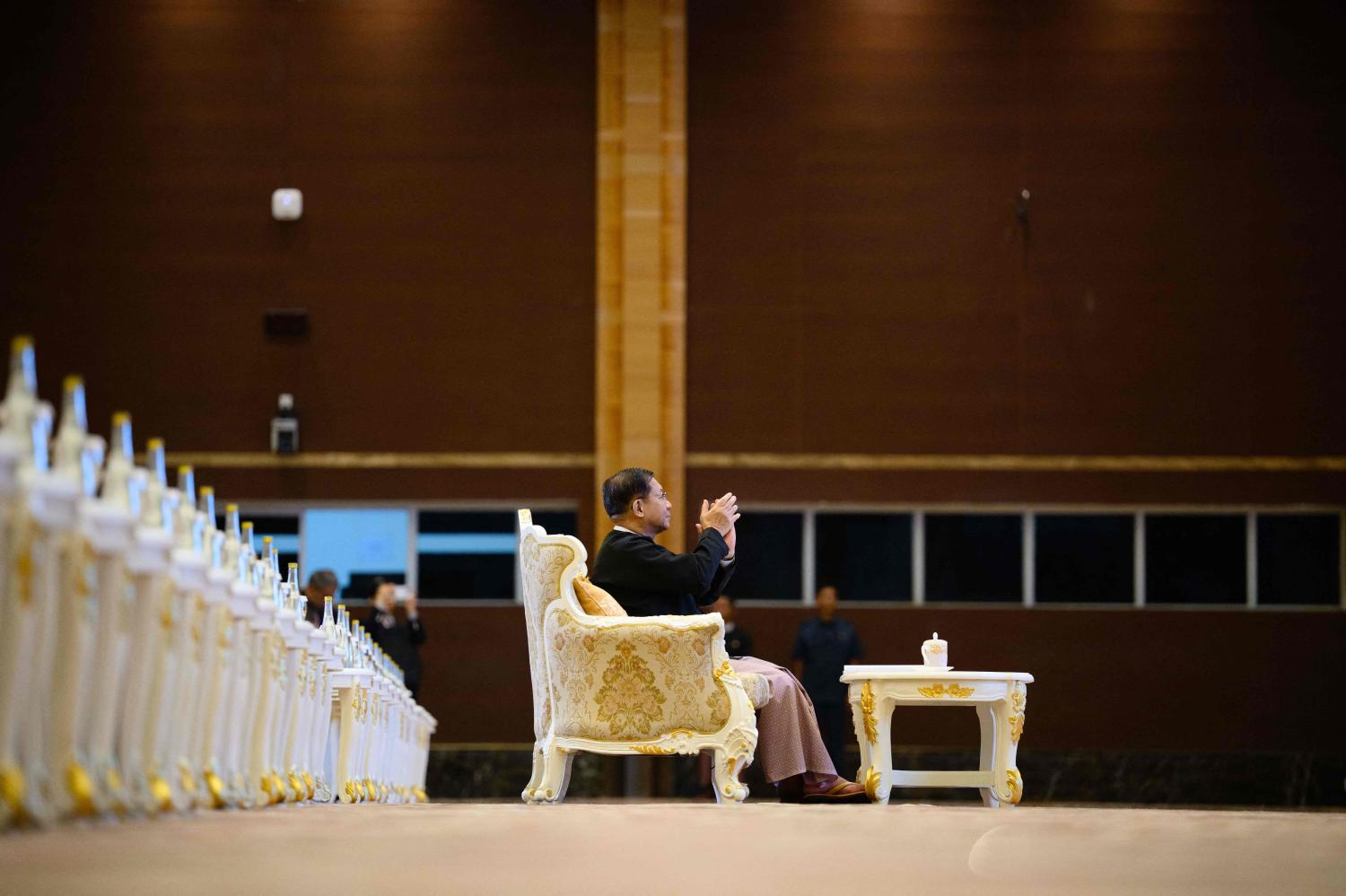
» Five long years after Myanmar's military seized power on 1 Feb 2021, what has taken place in recent weeks amounts to a delayed fait accompli. Led by Senior General Min Aung Hlaing, then commander-in-chief of the armed forces, the coup diverged from its traditional playbook seen in 1962 and 1988, when tanks rolled and the military ruled by brute force. This time, the takeover nearly unravelled amid a nationwide uprising that evolved into a civil war, waged by an armed and determined resistance comprising the civilian-led National Unity Government (NUG), the People's Defence Forces (PDFs), and a constellation of Ethnic Armed Organisations (EAOs).
Flawed Asean needs to regain footing
Oped, Thitinan Pongsudhirak, Published on 10/10/2025
» Nearly six decades after its founding, the Association of Southeast Asian Nations (Asean) finds itself back where it began -- divided, uncertain, and vulnerable to the influence of major powers. Once hailed as a model for regional cooperation in the developing world, Asean now faces a crisis of purpose. Unless it can rediscover the unity and collective way forward that defined its early decades, Southeast Asia's flagship institution risks slipping into irrelevance.

Myanmar's civil war after four years
Oped, Thitinan Pongsudhirak, Published on 31/01/2025
» Four years after its military coup and consequent civil war, Myanmar's spotlight in global headlines continues to dim as geostrategic reorientations and realignments among the major powers take centre stage. Dramatic and drastic foreign policy changes are afoot in the United States under the second administration of President Donald J Trump, while the European Union faces an existential threat from Russia's aggression in Ukraine, and Japan is mired in political sclerosis at home. Myanmar's fate and future will thus likely be determined by the course and outcome of its civil war, China's expanding influence in the country and Asean member states' manoeuvres to a lesser extent.

Myanmar as interim 'non-state' state
Oped, Thitinan Pongsudhirak, Published on 01/03/2024
» Myanmar, also known as Burma, has become a de facto state that is dominated by non-state entities. Contrary to facile claims, Myanmar is not a failed state like some that beset parts of Africa and the Middle East. The ethnically diverse country of 55 million still functions despite widespread violence in an ongoing civil war. Unless and until Myanmar is understood and re-conceptualised as an interim state comprising non-state entities, it will be difficult to move forward to remake and reconstitute a new country after the civil war and the passing of the military junta that seized power on Feb 1, 2021, led by Senior General Min Aung Hlaing.

Myanmar revolts against dictatorship
Oped, Thitinan Pongsudhirak, Published on 02/02/2024
» When Myanmar's military coup took place three years ago, few thought it would turn out this way. Never has a military in Southeast Asia staged a successful coup and then failed to consolidate power afterwards. Yet this is precisely what's happening in Myanmar. A fierce and determined coalition of resistance forces is in the process of prevailing over Myanmar's battle-hardened army.

Asean role stuck on Myanmar coup
Oped, Thitinan Pongsudhirak, Published on 25/08/2023
» President Joe Biden's decision to skip Asean-related summits in the Indonesian capital Jakarta on Sept 5-7 in favour of the G-20 leaders' meeting in India just two days later has been greeted with howls of disappointment and criticism around Southeast Asian capitals and elsewhere that are concerned about America's role in the region.

Thailand's policy on Myanmar stinks
Oped, Thitinan Pongsudhirak, Published on 23/06/2023
» The latest move to coddle and recognise Myanmar's junta government by caretaker Prime Minister Prayut Chan-o-cha's outgoing regime does not add up. Sanctioned and supported by Gen Prayut, Foreign Minister Don Pramudwinai arranged an Asean-wide ministerial meeting in Pattaya on June 18 with Myanmar's junta-appointed Foreign Minister Than Swe with unusual haste. Shrouded in controversy and desperation, both the PM's and the FM's clichéd explanations just do not wash. It begs the question of whether there are vested interests involved, above and beyond Thailand's national interest, in the outgoing government's seeming acceptance of Myanmar's military regime that took power by force on Feb 1, 2021.

The tide of history shifts in Thai politics
Oped, Thitinan Pongsudhirak, Published on 02/06/2023
» Notwithstanding the ongoing political shenanigans by appointed agencies to shape final outcomes after the May 14 poll, Thailand already will never be the same again. The Move Forward Party's (MFP) victory as the largest winning side, with 151 out of 500 parliamentary seats, is profound but not unprecedented. Together with the Pheu Thai Party's 141 MPs, these two opposition parties are unwittingly sending a message to each other and to the broader political establishment that the curve of Thai history is shifting tectonically. Failing to grasp and adjust to this evolving tide of history could marginalise Pheu Thai and challenge the establishment to its core foundations.

Thai global standing at all-time low
Oped, Thitinan Pongsudhirak, Published on 17/02/2023
» Although it will not lead to a no-confidence vote, the general debate in Thailand's parliament this week has further weakened the coalition government of Prime Minister Prayut Chan-o-cha, undermining its chances of re-election as the next general election looms. Among the many bombshell allegations of corruption, cronyism and sheer incompetence tabled by opposition parties, Thailand's international credibility and reputation have come into focus. Compared to its past role and performance, it appears that Thailand's global standing is at an all-time low.

Reversing Myanmar's internal strife
Oped, Thitinan Pongsudhirak, Published on 10/02/2023
» This month marks two anniversaries of ongoing conflicts in Europe and Southeast Asia, namely 12 months after Russia invaded Ukraine and two years since Myanmar's military seized power by toppling a democratically elected and civilian-led government under Aung San Suu Kyi.