



Showing 1 - 10 of 90
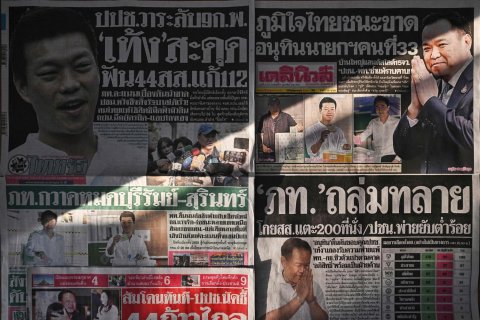
Implications of conservative triumph
Oped, Thitinan Pongsudhirak, Published on 13/02/2026
» The incumbent and conservative Bhumjaithai (BJT) Party has surprisingly swept Thailand's Feb 8 election with a commanding win. With the previously poll-leading and progressive People's Party (PP) coming in a distant second, Thailand appears headed for a conservative coalition government revolving around BJT and like-minded junior partners. Known for its conservative stance and being pro-status quo, it would not be surprising if the BJT-led coalition government, led by Prime Minister-elect Anutin Charnvirakul, were not challenged by the Constitutional Court, the Election Commission, and other supervisory agencies, which have derailed and dissolved reform-minded winning parties in the past.
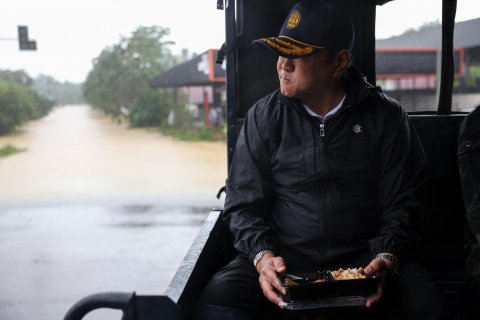
Thailand hit by a confluence of crises
Oped, Thitinan Pongsudhirak, Published on 05/12/2025
» Thailand is currently facing multiple crises of unprecedented proportions in the highest corridors of power that will pose adversity for the economy and political stability next year and beyond.

Asean's regroup requires deep reforms
Oped, Thitinan Pongsudhirak, Published on 17/10/2025
» If Asean's 58 years thus far have been about resilience and playing a central organising role in promoting regional security and stability, its next decade will determine whether the Southeast Asian bloc can adapt and remain relevant. After the crises in Myanmar and along the Thai-Cambodian border, Asean's credibility has never been more in doubt. To regain its effectiveness as Southeast Asia's one and only agency, Asean needs to move away from the ritualistic diplomacy of mundane meetings to far-reaching reforms that chart new ways of making things work.
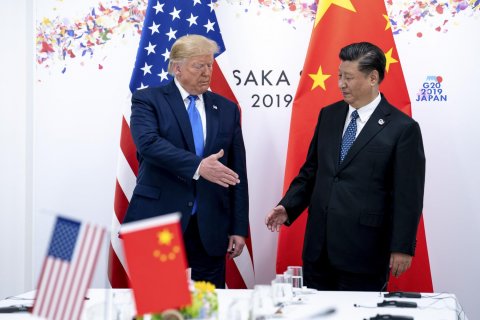
Southeast Asia amid the US-China rift
Oped, Thitinan Pongsudhirak, Published on 03/10/2025
» The rivalry between the United States and China has become the defining contest of the 21st century. Barely two decades ago, Washington and Beijing were partners in prosperity. America's support for China's entry into the World Trade Organization in 2001 epitomised the high-water mark of engagement, reflecting the belief that economic integration would lead to greater political cooperation. Today, that partnership has morphed into suspicion and confrontation. Relations between the United States and China have deteriorated so swiftly that many observers now describe them as locked in a "new Cold War". The more pressing question, however, is not whether this analogy holds, but whether confrontation can be managed short of outright conflict.
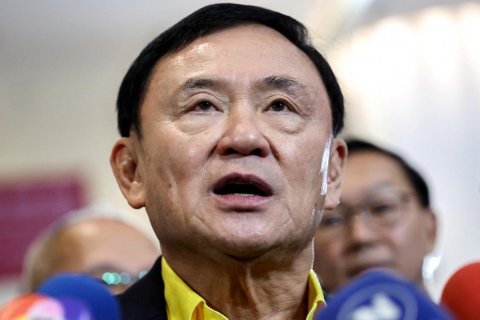
Thaksin chapter closes, another opens
Oped, Thitinan Pongsudhirak, Published on 19/09/2025
» In yet another dramatic twist in Thai politics, erstwhile anti-establishment political juggernaut and former prime minister Thaksin Shinawatra accepted a one-year jail sentence and began serving his time behind bars on Sept 9. After his return from a 15-year self-imposed exile in August 2023 and a concomitant royal pardon that reduced his eight-year imprisonment on corruption convictions to just one year, Thaksin cited his gravely ill health and spent the time comfortably at the Police General Hospital before being released on parole. The Supreme Court's ruling that his get-out-of-jail health card was invalid means Thaksin's renewed imprisonment and its aftermath are likely to reshape and realign Thailand's political landscape ahead of the next election, due by mid-2027.
Thai-Cambodian feud is Asean's worst
Oped, Thitinan Pongsudhirak, Published on 15/08/2025
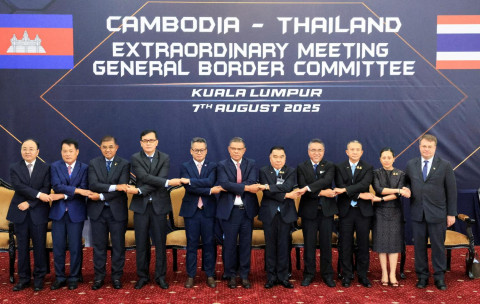
» The border dispute and consequent military conflict between Cambodia and Thailand in recent weeks have become Asean's worst crisis in its 58 years of existence. Ironically, it was an intra-regional war between Indonesia and Malaysia that gave rise to Asean in 1967, but now an intra-Asean military clash is undermining the Southeast Asian organisation's core reason for being and its main claim to credibility and prominence. Unless Asean, under Malaysia as its rotational chair this year, moves fast to contain the bilateral dispute and reinforce a delicate ceasefire agreement, Southeast Asia will be looked upon increasingly as a region and less as an organisation of member states.

Singapore turns 60 with much to show
Oped, Thitinan Pongsudhirak, Published on 08/08/2025
» No country turns 60 like Singapore. In a neighbourhood of political dynasties and varying shades of autocracies and flawed democracies, the little island state of six million got lucky with its strongman rule. When he died in 2015, Singapore's patriarchal founder Lee Kuan Yew left a great country behind. This weekend, Singaporeans can take stock of what's gone by and rightly celebrate its milestone with much to show for.
Thai politics back at the brink (again)
Oped, Thitinan Pongsudhirak, Published on 04/07/2025
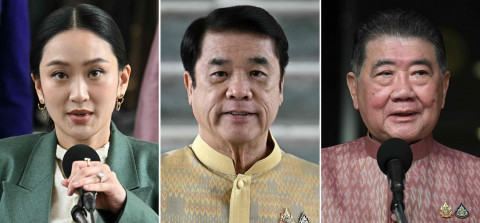
» The Constitutional Court's suspension of Paetongtarn Shinawatra from the premiership is déjà vu, exposing a pattern of systematic manipulation and concoction of political outcomes. After so many dissolutions of leading political parties and repeated bans of elected representatives over two decades, it is time to call a spade a spade. Thailand is a faux democracy. Its core foundations constitute an autocratic regime that does not really care about the country's future and the collective will of its people.
Trump tariffs sow divisions in Asean
Oped, Thitinan Pongsudhirak, Published on 02/05/2025
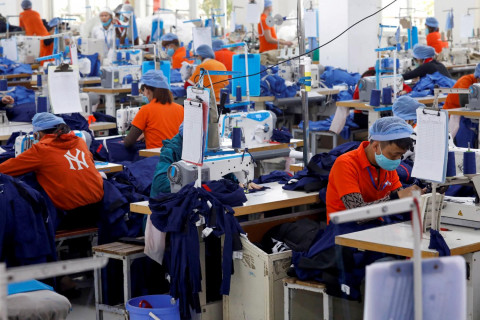
» President Donald Trump's unilateral imposition of tariffs across the United States' economic chessboard poses a critical test for Asean. As the regional organisation of Southeast Asia, Asean has weathered many geopolitical and geoeconomic storms in its 58-year existence, but no adversity like the Trump tariffs. Unless Asean reorganises and regroups, the ten-member body risks further divisions and increasing irrelevance.
A perilous era of absolute advantage
News, Thitinan Pongsudhirak, Published on 25/04/2025
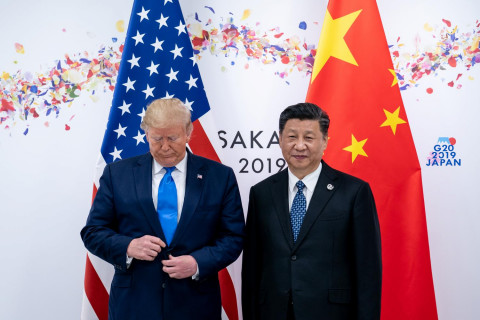
» If a date had to be pinpointed, the post-Second World War international system came to an unmistakable end on April 2 -- the so-called "Liberation Day" -- when US President Donald Trump announced comprehensive "reciprocal" tariffs to a bewildered global audience. The blatantly protectionist move was equivalent to the United States' abrogation and abandonment of the rules-based international order that it ironically and instrumentally constructed and upheld over nearly eight decades. What comes now is a dangerous era of absolute advantage in global trade, investment, and finance, bent on unilateralism over multilateralism, competition over cooperation, nationalism over interdependence, and the singular quest to dominate and reshape the global pecking order under the rubric of making America "great again".