



Showing 1 - 7 of 7

Asean's regroup requires deep reforms
Oped, Thitinan Pongsudhirak, Published on 17/10/2025
» If Asean's 58 years thus far have been about resilience and playing a central organising role in promoting regional security and stability, its next decade will determine whether the Southeast Asian bloc can adapt and remain relevant. After the crises in Myanmar and along the Thai-Cambodian border, Asean's credibility has never been more in doubt. To regain its effectiveness as Southeast Asia's one and only agency, Asean needs to move away from the ritualistic diplomacy of mundane meetings to far-reaching reforms that chart new ways of making things work.
The politics of post-poll govt formation
Oped, Thitinan Pongsudhirak, Published on 21/04/2023
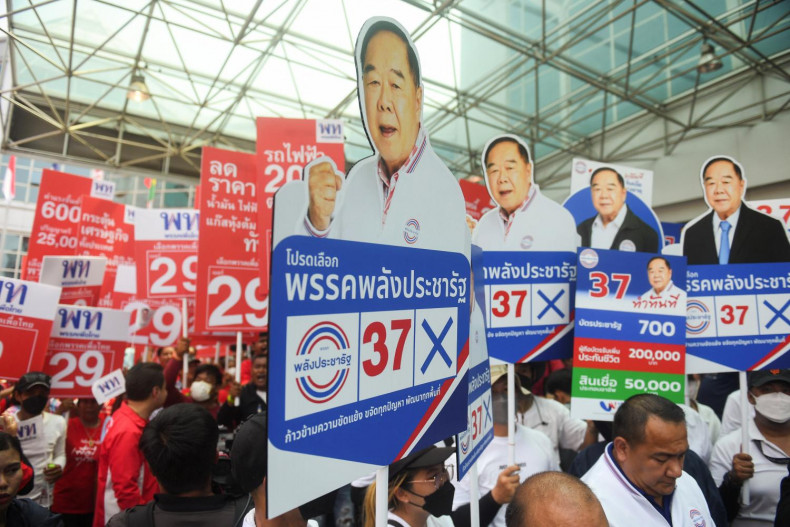
» As the campaign season heats up ahead of Thailand's poll on May 14, voter surveys have consistently indicated that the momentum favours the opposition Pheu Thai (PTP) and Move Forward (MFP) parties well ahead of the government side, comprising Palang Pracharath (PPRP), United Thai Nation (UTN), Bhumjaithai (BJP) and Democrat (DP) parties. On the personal popularity of prime minister candidates, survey results similarly suggest that the MFP's Pita Limjaroenrat and the PTP's Paetongtarn Shinawatra are neck and neck, followed by the PTP's Srettha Thavisin and the UTN's and incumbent premier Prayut Chan-o-cha.
Thailand's political charade exposed
Oped, Thitinan Pongsudhirak, Published on 27/01/2023
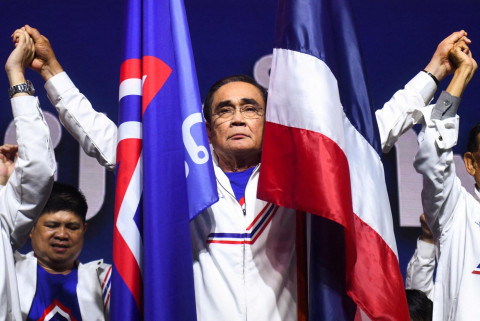
» On the face of it, Prime Minister Prayut Chan-o-cha for eight years, has touted himself as "an outsider" who was above the political fray, seizing power in a military coup and taking top office to help Thailand in its hour of need amid debilitating protests and polarisation in 2013-14. Now that the general has thrown his hat in the ring under the United Thai Nation (UTN) Party locally known as "Ruam Thai Sang Chart" to contest the upcoming election, the charade is over.
The anatomy of waning youth protests
Oped, Thitinan Pongsudhirak, Published on 19/03/2021
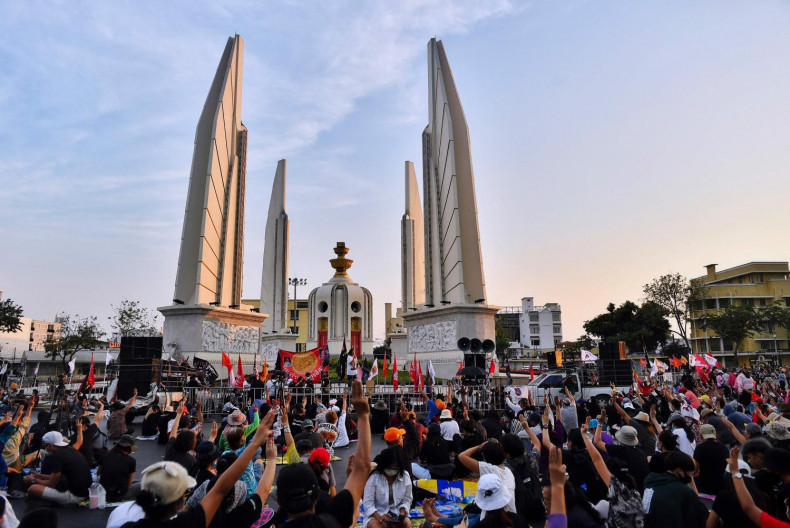
» By all accounts, Thailand's youth protest movement over the past year has lost steam. Its key leaders have been charged on anti-monarchy grounds and jailed without bail, while the rank-and-file are demoralised, still on the move but in thin numbers. On the other side, the incumbent centres of power have reasserted control and put down what at its peak was the most vociferous and vigorous anti-establishment movement Thailand had seen in decades.
The 'salim' phenomenon in Thai politics
Oped, Thitinan Pongsudhirak, Published on 18/12/2020
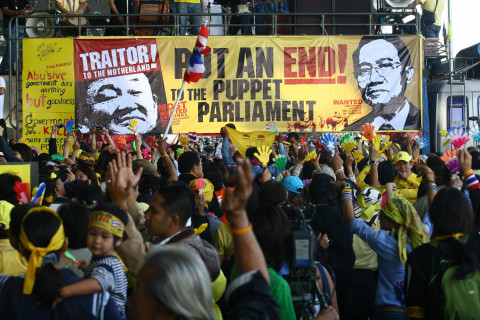
» Few phenomena explain and underpin Thai politics more than the rise and decline of what is known pejoratively these days as salim, a metaphorical variation of salim, a Thai dessert comprising multi-coloured thin noodles served in coconut milk with crushed ice. Once socially attractive and politically fashionable, salim have gone out of vogue, looked down upon in a new era of anti-establishment protest for pro-democracy reforms under the new reign. What becomes of these pro-military royalist-conservative salim will have much to say about what will happen to Thailand's political future.
Where to start Thai reform and change?
Oped, Thitinan Pongsudhirak, Published on 02/10/2020
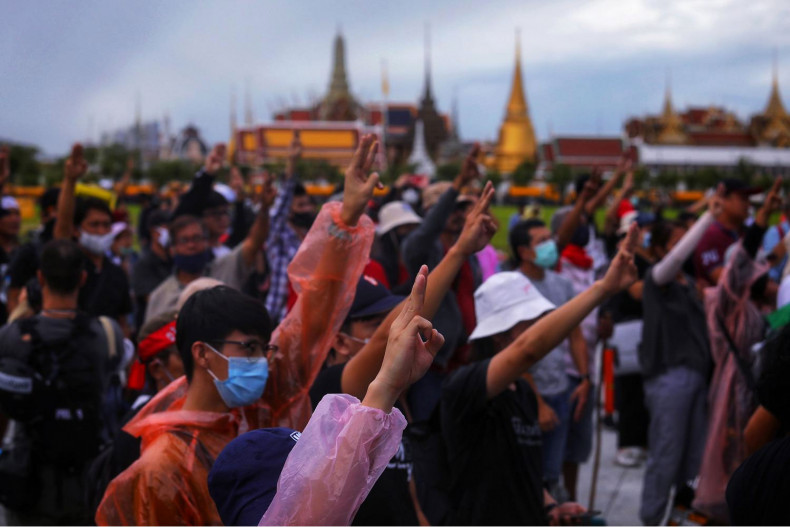
» In Thailand's new era under a new reign, reform and change can hardly be formulated and implemented fast enough because much of what ails the country has been suppressed and swept under the rug for years. The most consequential question now is not whether Thailand needs to change but where to start. Getting the starting point wrong will end up causing more grief and pain after so much suffering that has already transpired.
Context is decisive in Thai high politics
News, Thitinan Pongsudhirak, Published on 28/02/2020
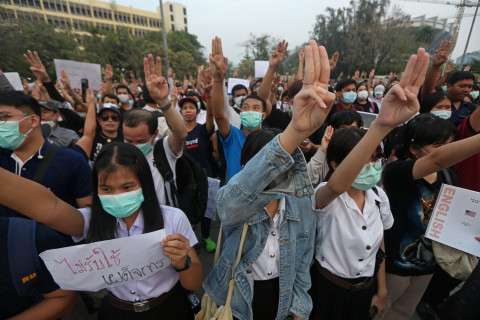
» In Thailand's high politics where governments survive or succumb, context is everything. After two decades of a political merry-go-round, marked by a series of elections, street protests, military coups, and judicial interventions only to end up with a problematic post-election rule under military domination, no deep expertise is needed to understand what has been happening in this land.