



Showing 1 - 8 of 8
Thailand's costly political shenanigans
Oped, Thitinan Pongsudhirak, Published on 22/08/2025
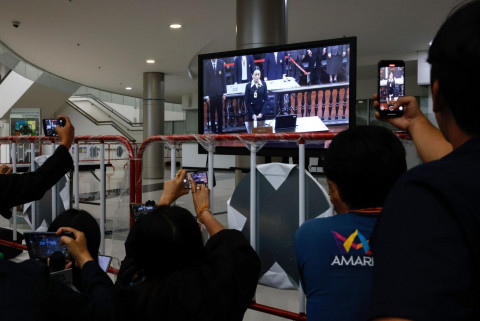
» In a country of 70 million where a handful of men can remove an elected government time and again, there can be no stability and progress, only tension and regression. This is how Thailand can be characterised over the past two decades. It is now going through yet another cycle of heightened political instability with the potential collapse of the government under suspended Prime Minister Paetongtarn Shinawatra in the footsteps of previous leaders who were similarly ousted by the Constitutional Court.
Thai-Cambodian feud is Asean's worst
Oped, Thitinan Pongsudhirak, Published on 15/08/2025
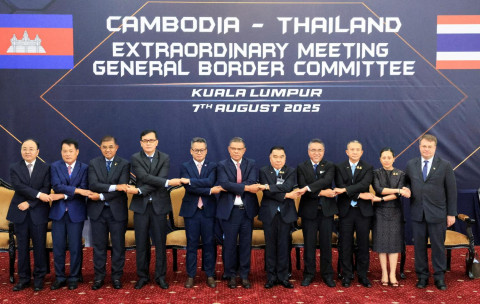
» The border dispute and consequent military conflict between Cambodia and Thailand in recent weeks have become Asean's worst crisis in its 58 years of existence. Ironically, it was an intra-regional war between Indonesia and Malaysia that gave rise to Asean in 1967, but now an intra-Asean military clash is undermining the Southeast Asian organisation's core reason for being and its main claim to credibility and prominence. Unless Asean, under Malaysia as its rotational chair this year, moves fast to contain the bilateral dispute and reinforce a delicate ceasefire agreement, Southeast Asia will be looked upon increasingly as a region and less as an organisation of member states.

Signs and symptoms of Thai stagnation
Oped, Thitinan Pongsudhirak, Published on 18/07/2025
» That Thailand is faring poorly in the world is no longer in dispute. Not so long ago, many were in denial and adamant that Thailand could still bring a good game to engage abroad, that "Teflon" Thailand could bounce back. Now, just about all indicators are pointing south. The causes of this country's decline and stagnation are not singular but multifaceted over a two-decade period. As Thailand's situation is likely to worsen before hopes for a better future can arise, it is instructive to start counting the costs.
Thai politics back at the brink (again)
Oped, Thitinan Pongsudhirak, Published on 04/07/2025
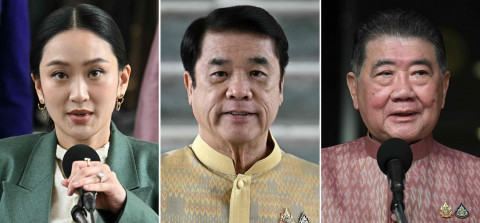
» The Constitutional Court's suspension of Paetongtarn Shinawatra from the premiership is déjà vu, exposing a pattern of systematic manipulation and concoction of political outcomes. After so many dissolutions of leading political parties and repeated bans of elected representatives over two decades, it is time to call a spade a spade. Thailand is a faux democracy. Its core foundations constitute an autocratic regime that does not really care about the country's future and the collective will of its people.
Myanmar's civil war after four years
Oped, Thitinan Pongsudhirak, Published on 31/01/2025
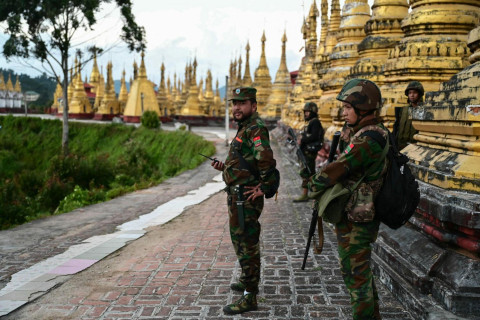
» Four years after its military coup and consequent civil war, Myanmar's spotlight in global headlines continues to dim as geostrategic reorientations and realignments among the major powers take centre stage. Dramatic and drastic foreign policy changes are afoot in the United States under the second administration of President Donald J Trump, while the European Union faces an existential threat from Russia's aggression in Ukraine, and Japan is mired in political sclerosis at home. Myanmar's fate and future will thus likely be determined by the course and outcome of its civil war, China's expanding influence in the country and Asean member states' manoeuvres to a lesser extent.

Thai police graft highlights bigger issues
Oped, Thitinan Pongsudhirak, Published on 26/04/2024
» There is no bigger news on the current Thai political scene than corruption among the top echelons of the police force. At issue is the tussle between Thailand's two senior-most cops, Pol Gen Surachate Hakparn and Pol Gen Torsak Sukvimol, both accusing each other of being on the take. Their high-stakes feud would normally be a run-of-the-mill story for the infamously shady Thai police but this case has become a mirror and microcosm of structural graft that is corroding the highest corridors of politics, economy, and society.

The tide of history shifts in Thai politics
Oped, Thitinan Pongsudhirak, Published on 02/06/2023
» Notwithstanding the ongoing political shenanigans by appointed agencies to shape final outcomes after the May 14 poll, Thailand already will never be the same again. The Move Forward Party's (MFP) victory as the largest winning side, with 151 out of 500 parliamentary seats, is profound but not unprecedented. Together with the Pheu Thai Party's 141 MPs, these two opposition parties are unwittingly sending a message to each other and to the broader political establishment that the curve of Thai history is shifting tectonically. Failing to grasp and adjust to this evolving tide of history could marginalise Pheu Thai and challenge the establishment to its core foundations.
HK protests in a regional perspective
News, Thitinan Pongsudhirak, Published on 11/10/2019
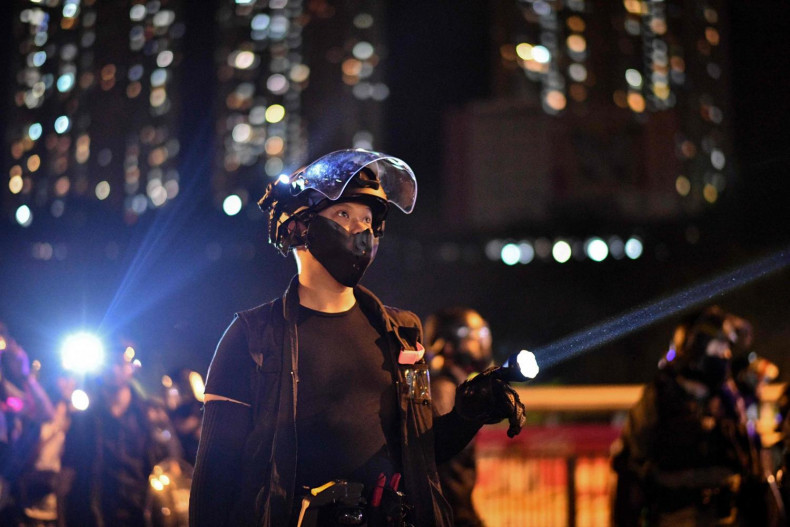
» When Hong Kong's protest movement against the Extradition Law Amendment Bill began on March 30, few could have anticipated that it would become a full-blown popular revolt. The protesters initially opposed the bill because it would allow the Hong Kong government to detain and extradite fugitives to mainland China. Despite the suspension and subsequent withdrawal of the bill by Hong Kong's Chief Executive Carrie Lam, the protest movement has taken on a life of its own. As its end goals of universal suffrage, an independent inquiry into police conduct and Ms Lam's resignation harden, its endgame appears fraught with risks of intensifying confrontation and violence.