



Showing 1 - 10 of 14
No-confidence and poll date in flux
Oped, Thitinan Pongsudhirak, Published on 14/11/2025
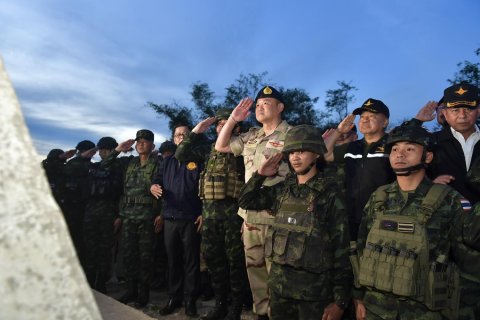
» Amid the drumbeats of military conflict with Cambodia, Thailand's political environment is evidently unruly and unsettled. The minority government of Anutin Charnvirakul, the third prime minister from the third largest-winning party since the latest national election in May 2023, is hard-pressed to stay in office beyond the four-month "Memorandum of Agreement" between his Bhumjaithai Party (BJT) and the People's Party (PP), the largest camp in the national assembly.
Populism triumphs as election looms
Oped, Thitinan Pongsudhirak, Published on 24/03/2023
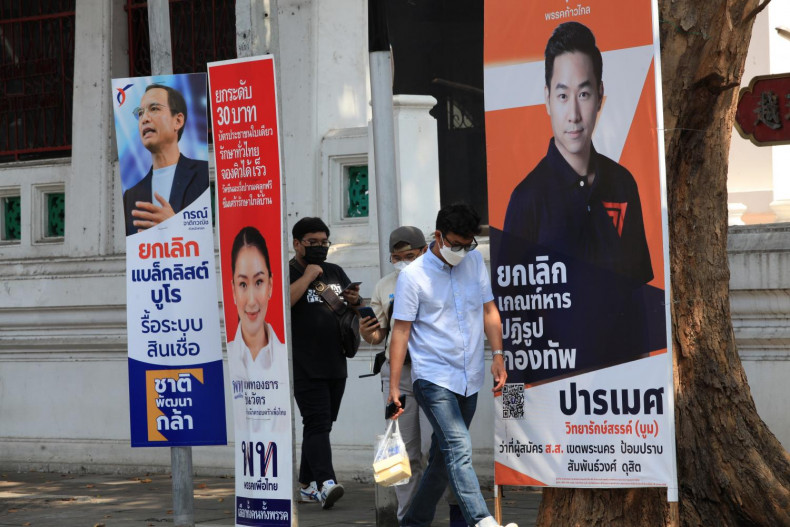
» Although the campaign season for Thailand's much-anticipated election has only just begun, populism has already become the runaway winner. All of the contesting parties have come up with a plethora of populist pledges to woo voters. That populism has triumphed in Thai politics bears multiple longer-term implications.
Thai global standing at all-time low
Oped, Thitinan Pongsudhirak, Published on 17/02/2023
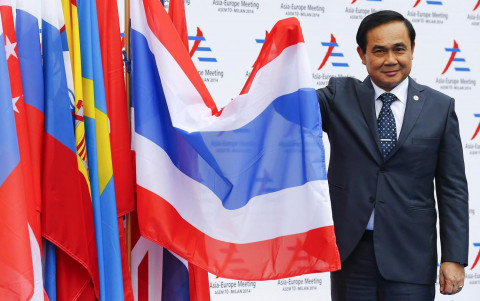
» Although it will not lead to a no-confidence vote, the general debate in Thailand's parliament this week has further weakened the coalition government of Prime Minister Prayut Chan-o-cha, undermining its chances of re-election as the next general election looms. Among the many bombshell allegations of corruption, cronyism and sheer incompetence tabled by opposition parties, Thailand's international credibility and reputation have come into focus. Compared to its past role and performance, it appears that Thailand's global standing is at an all-time low.
Keeping democratic institutions weak
Oped, Thitinan Pongsudhirak, Published on 22/07/2022
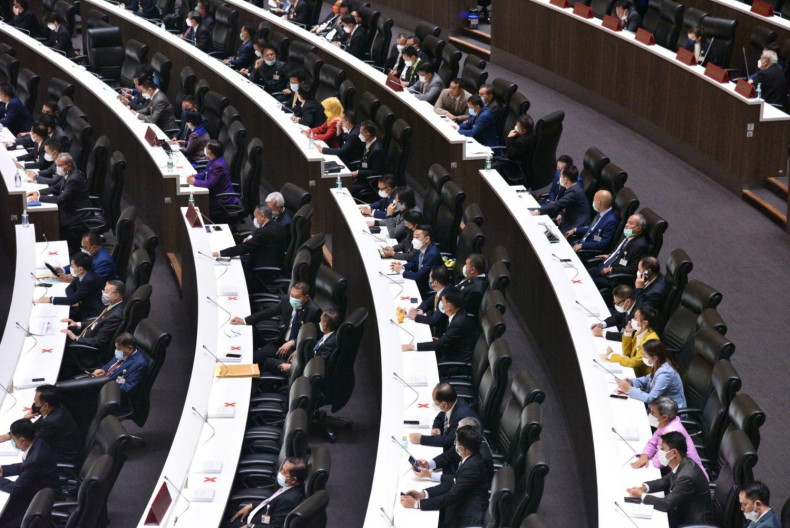
» The worst thing one can do in Thai politics is to run for office and win by a landslide. When this happens, the knives will come out and the massive election winner will be overthrown before long -- one way or another -- because the real source of power in Thailand is unelected. Such was the fate of Thaksin Shinawatra when he spearheaded the Thai Rak Thai Party to win two landslide poll victories in January 2001 and February 2005, first a near majority and later a thumping 75% of the lower house of parliament.
Thai charter changes without reform
Oped, Thitinan Pongsudhirak, Published on 25/06/2021
» In view of the ongoing parliamentary debate about constitutional revisions, it has become the consensus that the 2017 charter is flawed and in need of change. At issue is the nature and extent of charter amendments. What is being proposed can be categorised into three positions -- those favouring amendments without fundamental reforms and others who want reforms with all necessary amendments, with some advocating measures in between. Owing to the powers of incumbency, status quo proponents aligned with the coalition government of Prime Minister Prayut Chan-o-cha are likely to carry the day, thereby stoking political tensions to manifest on the horizon.
History not on the side of Gen Prayut
Oped, Thitinan Pongsudhirak, Published on 23/10/2020
» In the face of sustained and broad-based student-led street protests demanding his resignation, Prime Minister Prayut Chan-o-cha remains defiant and determined to soldier on. He has even admonished his critics and detractors by flatly rejecting resignation and asking "What have I done wrong?" Such a provocative and self-righteous question deserves a frontal answer.
Government's competence in question
News, Thitinan Pongsudhirak, Published on 24/01/2020
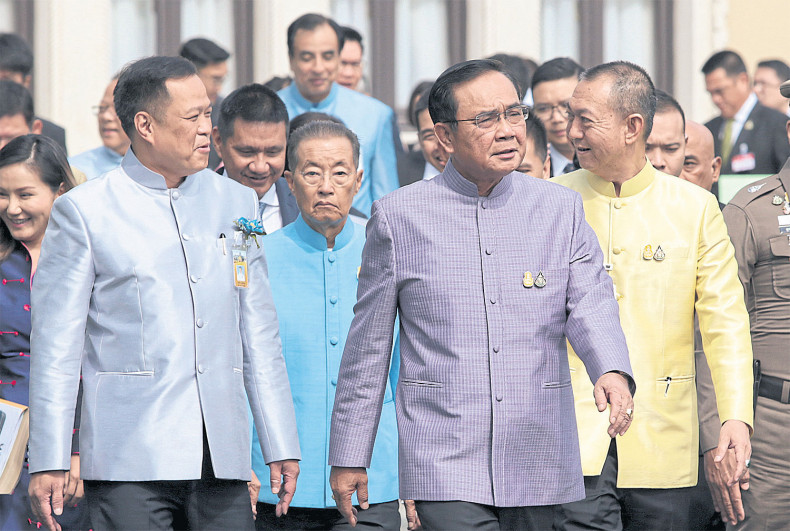
» It's just about official. Despite having a government, Thailand is rudderless. Approaching six years under more or less junta rule and military influence, irrespective of an election last year, this once up-and-coming country has degenerated into an authoritarian-bureaucratic state that is unsuited and unfit to address public grievances and demands of the 21st century. Yet Thailand's biggest problem is that this government, a motley coalition propped up by a crooked constitution and led by former junta chief Prayut Chan-o-cha, intends to stay for the long haul despite its growing incompetence. Unless the Thai people's world-famous patience and tolerance are boundless, political tensions will likely mount in the foreseeable future.
HK protests in a regional perspective
News, Thitinan Pongsudhirak, Published on 11/10/2019
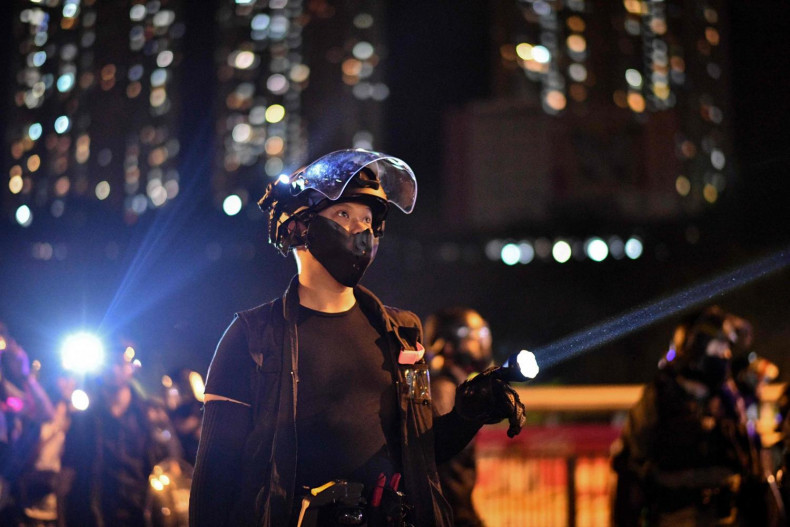
» When Hong Kong's protest movement against the Extradition Law Amendment Bill began on March 30, few could have anticipated that it would become a full-blown popular revolt. The protesters initially opposed the bill because it would allow the Hong Kong government to detain and extradite fugitives to mainland China. Despite the suspension and subsequent withdrawal of the bill by Hong Kong's Chief Executive Carrie Lam, the protest movement has taken on a life of its own. As its end goals of universal suffrage, an independent inquiry into police conduct and Ms Lam's resignation harden, its endgame appears fraught with risks of intensifying confrontation and violence.
Woeful Senate will worsen political woes
News, Thitinan Pongsudhirak, Published on 10/05/2019
» Since it first took office in 1947, Thailand's Senate has mostly comprised appointees as mandated by more than a dozen constitutions over the past seven decades. Only in the 1997 and 2007 charters was the Senate elected and half elected, respectively. The 2017 constitution has reverted to a wholly appointed upper chamber but this time the 250-member Senate has been given wider authority, particularly the selection of the prime minister.
Election Commission must assert itself
News, Thitinan Pongsudhirak, Published on 25/01/2019
» Thailand is supposed to have an independent Election Commission (EC) that oversees all electoral contests from local polls to national referendums. But as Thailand heads towards a general election on March 24, the seven-member EC has appeared less than eager and enthusiastic and too beholden to government preferences in staging what will be Thailand's first election in nearly nine years.