



Showing 1 - 10 of 61
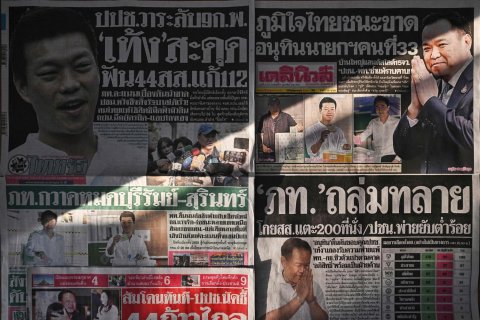
Implications of conservative triumph
Oped, Thitinan Pongsudhirak, Published on 13/02/2026
» The incumbent and conservative Bhumjaithai (BJT) Party has surprisingly swept Thailand's Feb 8 election with a commanding win. With the previously poll-leading and progressive People's Party (PP) coming in a distant second, Thailand appears headed for a conservative coalition government revolving around BJT and like-minded junior partners. Known for its conservative stance and being pro-status quo, it would not be surprising if the BJT-led coalition government, led by Prime Minister-elect Anutin Charnvirakul, were not challenged by the Constitutional Court, the Election Commission, and other supervisory agencies, which have derailed and dissolved reform-minded winning parties in the past.
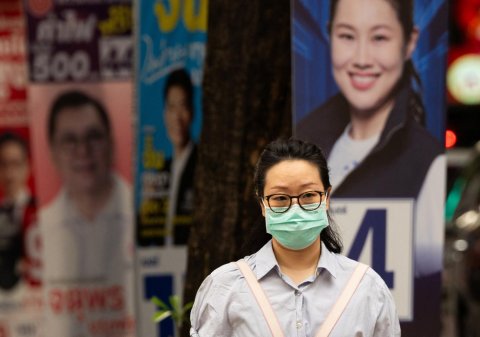
Will poll be breakout or more of same?
Oped, Thitinan Pongsudhirak, Published on 06/02/2026
» As Thais go to the polls this Sunday, the most consequential question is whether Thailand will finally break out of its debilitating cycle of political instability and economic underperformance that has marked the past two decades. The signs and signals suggest otherwise -- at least not yet.
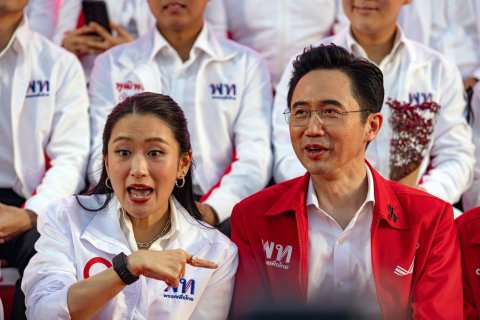
Three main parties and two directions
Oped, Thitinan Pongsudhirak, Published on 16/01/2026
» Although Thailand's election campaign is reaching fever pitch ahead of voting day on Feb 8, the dynamics and contours of its final outcome can be gleaned from past polls over the last 25 years. Only once in January 2001, as was indicated in this space last week, were voter results fully honoured and carried out. Other elections were either upended by military coups or manipulated by judicial interventions.

Asean's regroup requires deep reforms
Oped, Thitinan Pongsudhirak, Published on 17/10/2025
» If Asean's 58 years thus far have been about resilience and playing a central organising role in promoting regional security and stability, its next decade will determine whether the Southeast Asian bloc can adapt and remain relevant. After the crises in Myanmar and along the Thai-Cambodian border, Asean's credibility has never been more in doubt. To regain its effectiveness as Southeast Asia's one and only agency, Asean needs to move away from the ritualistic diplomacy of mundane meetings to far-reaching reforms that chart new ways of making things work.

Signs and symptoms of Thai stagnation
Oped, Thitinan Pongsudhirak, Published on 18/07/2025
» That Thailand is faring poorly in the world is no longer in dispute. Not so long ago, many were in denial and adamant that Thailand could still bring a good game to engage abroad, that "Teflon" Thailand could bounce back. Now, just about all indicators are pointing south. The causes of this country's decline and stagnation are not singular but multifaceted over a two-decade period. As Thailand's situation is likely to worsen before hopes for a better future can arise, it is instructive to start counting the costs.

Thailand lags in the global trade war
Oped, Thitinan Pongsudhirak, Published on 11/04/2025
» Thailand is fast isolating itself from the international community and falling behind in the emerging geoeconomic warfare to the detriment of its economy and people. The elected government of Prime Minister Paetongtarn Shinawatra is ironically coming up with outcomes that resemble those of the military administration a decade ago. Thailand must now move quickly to contain policy damage and restore its international standing to navigate and come out of the intensifying geoeconomic war in as decent a shape as possible.
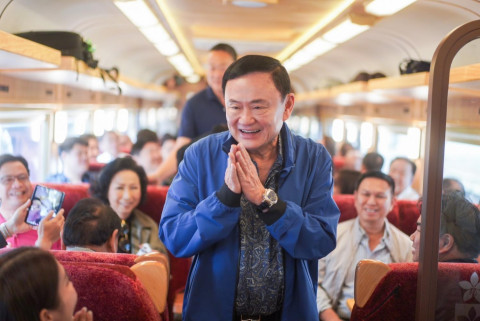
Two wasted decades in Thai politics
Oped, Thitinan Pongsudhirak, Published on 20/12/2024
» Now that Thaksin Shinawatra appears actively back in Thai politics, it is demoralising to look back at Thailand's wasted time and opportunities. Once a promising country on the way from democratic transition to consolidation in the late 1990s, Thailand has become semi-autocratic, and its rocky political trajectory over the past two decades is now structural. The traditional institutions of power that grew out of the Cold War have been calling the shots in earlier decades and are just unwilling to let the country move forward in the immediate years ahead.

Thailand needs middle power ambition
Oped, Thitinan Pongsudhirak, Published on 18/10/2024
» Having participated in the recent Asean-related summit meetings in Vientiane, Prime Minister Paetongtarn Shinawatra and her team must now work out Thailand's foreign policy priorities and posture. Foreign policy projection peaked around 20 years ago when Thailand was recognised as an emerging regional leader with the potential of a middle power. Since then, foreign policy has been patchy and hostage to polarisation and domestic political volatility. It is time to chart a way forward for Thailand's international standing and role despite ongoing political conflict at home.

Thai foreign policy needs new rudder
Oped, Thitinan Pongsudhirak, Published on 27/09/2024
» Thailand's foreign policy posture and projection under Foreign Minister Maris Sangiampongsa and the new government of Prime Minister Paetongtarn Shinawatra is off to a good start under severe structural constraints. Given the widespread consensus both at home and abroad that Thailand has fallen behind its peers over the past two decades, the imperative of regaining its international standing is undisputed. But doing so under what the foreign minister has outlined as a "neutral stance" under "non-alignment" among the great powers is moot and misguided. What Thai foreign policy needs is multi-alignments and omni-directionality under a new rudder.
New government is new wine in old bottle
Oped, Thitinan Pongsudhirak, Published on 13/09/2024
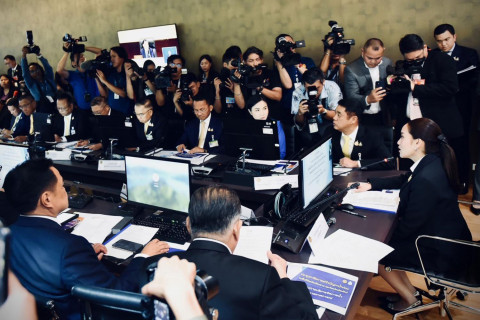
» On the face of it, the new government under Prime Minister Paetongtarn Shinawatra appears to be a generational shift and gender breakthrough. Ms Paetongtarn is the youngest prime minister ever at 38 and only the second female government leader after her aunt Yingluck Shinawatra in 2011-14. The Paetongtarn cabinet features a record eight women among 36 with more ministers in their 30s-50s and fewer above 60. Yet on closer scrutiny, the new and younger faces are largely family legacies and proxies, surrounded by old-style politicians, while the new government's policy directions sound dated not well-suited for the times ahead.