



Showing 1 - 10 of 15
The gist of Thai politics over 20 years
Oped, Thitinan Pongsudhirak, Published on 20/02/2026
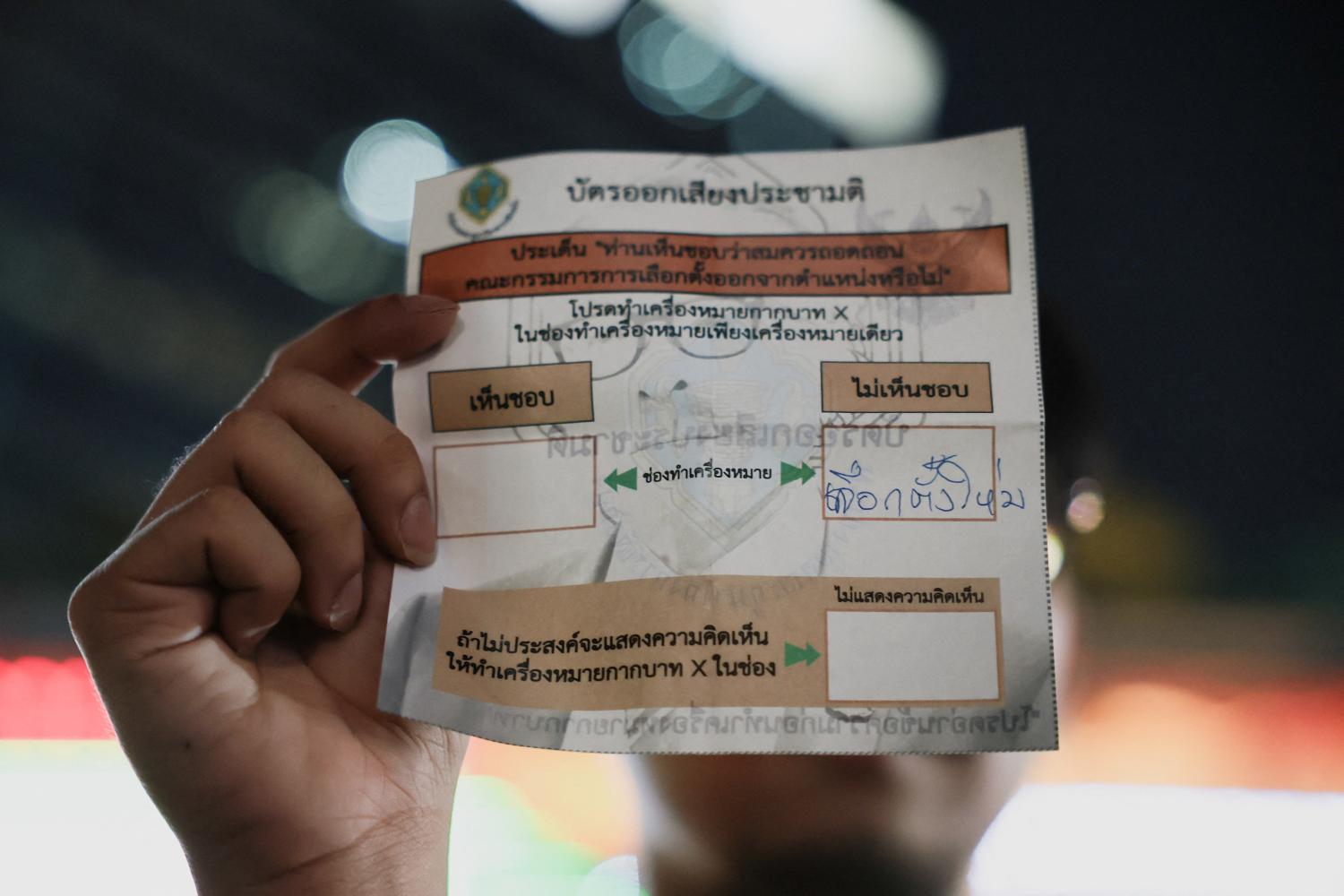
» Thailand's democratic institutions have been repressed and kept weak to the point that confusion still prevails almost two weeks after the Feb 8 election, which purportedly showed a clear victory for the ruling Bhumjaithai (BJT) Party under Prime Minister Anutin Charnvirakul. On the one hand, Mr Anutin and BJT stalwarts are busy forming a coalition government with other parties. On the other hand, fraud allegations from civil society groups and the opposition People's Party have reached a critical mass with the plausibility that the recent vote might be nullified to pave the way for a new poll.

Authentic intelligence rises with AI
Oped, Thitinan Pongsudhirak, Published on 16/05/2025
» As the cognitive power and proliferation of artificial intelligence take the world by storm, the case for authenticity and originality paradoxically becomes more compelling and carries higher premiums. It is now a widely accepted reality that AI is on its way to master human thought processes and proceed beyond them. This means that it will be more difficult for humans to differentiate between what comes from AI and what does not. As such, the time has come after nearly 40 years of being published -- including more than 25 of them with this newspaper -- that this column goes subjective.

Thailand's judiciary faces challenges
Oped, Thitinan Pongsudhirak, Published on 24/05/2024
» Thailand appears to be a country of 70 million, ultimately ruled by an unelected few. This sobering reality was on display when two connected groups of top generals seized power from democratically elected governments in September 2006 and May 2014. Unlike these blatant military coups over the past two decades, at issue now is the power and role of the judiciary. While Thailand has another democratically elected civilian government under Prime Minister Srettha Thavisin, the question that needs to be asked is whether the country is effectively under judicial rule.

Asian elections, democracy in 2024
Oped, Thitinan Pongsudhirak, Published on 29/12/2023
» Billed as the biggest election year ever as more than half of the global population goes to the polls, 2024 will be critical to the debate about democratisation and autocratisation. Asia will lead the way with elections in India, Bangladesh, Pakistan, and Indonesia, while the most recent polls in Myanmar and Thailand offer long-term lessons about democracy and dictatorship. The salient themes next year will be about the self-perpetuating tendencies of incumbent regimes and the resilience of democratic rule when authoritarianism seemed to have the upper hand.

Cambodia and Laos in the regional mix
Oped, Thitinan Pongsudhirak, Published on 30/09/2022
» As geopolitical tensions from Russian aggression in Ukraine and the ongoing United States-China rivalry intensify, Southeast Asia will be hard-pressed to maintain peace and security. Despite their relatively small size, Cambodia and Laos are two countries whose political trajectories will shape regional outcomes. While Cambodia has consolidated domestic political power with dynamic economic expansion, Laos is looking like a regional laggard facing a deep debt crisis. As Cambodia moves forward, Laos is at risk of being left behind.

The politics of the term-limit wrangle
Oped, Thitinan Pongsudhirak, Published on 19/08/2022
» Time is not on the side of Prime Minister Prayut Chan-o-cha as various groups of people want to see the back of him. Now that he has survived the last of four no-confidence votes in parliament since the March 2019 election, many are pinning their hopes that the eight-year prime ministerial term limit will upend Gen Prayut's rule.
Thai politics' murky tunnel to nowhere
Oped, Thitinan Pongsudhirak, Published on 07/01/2022
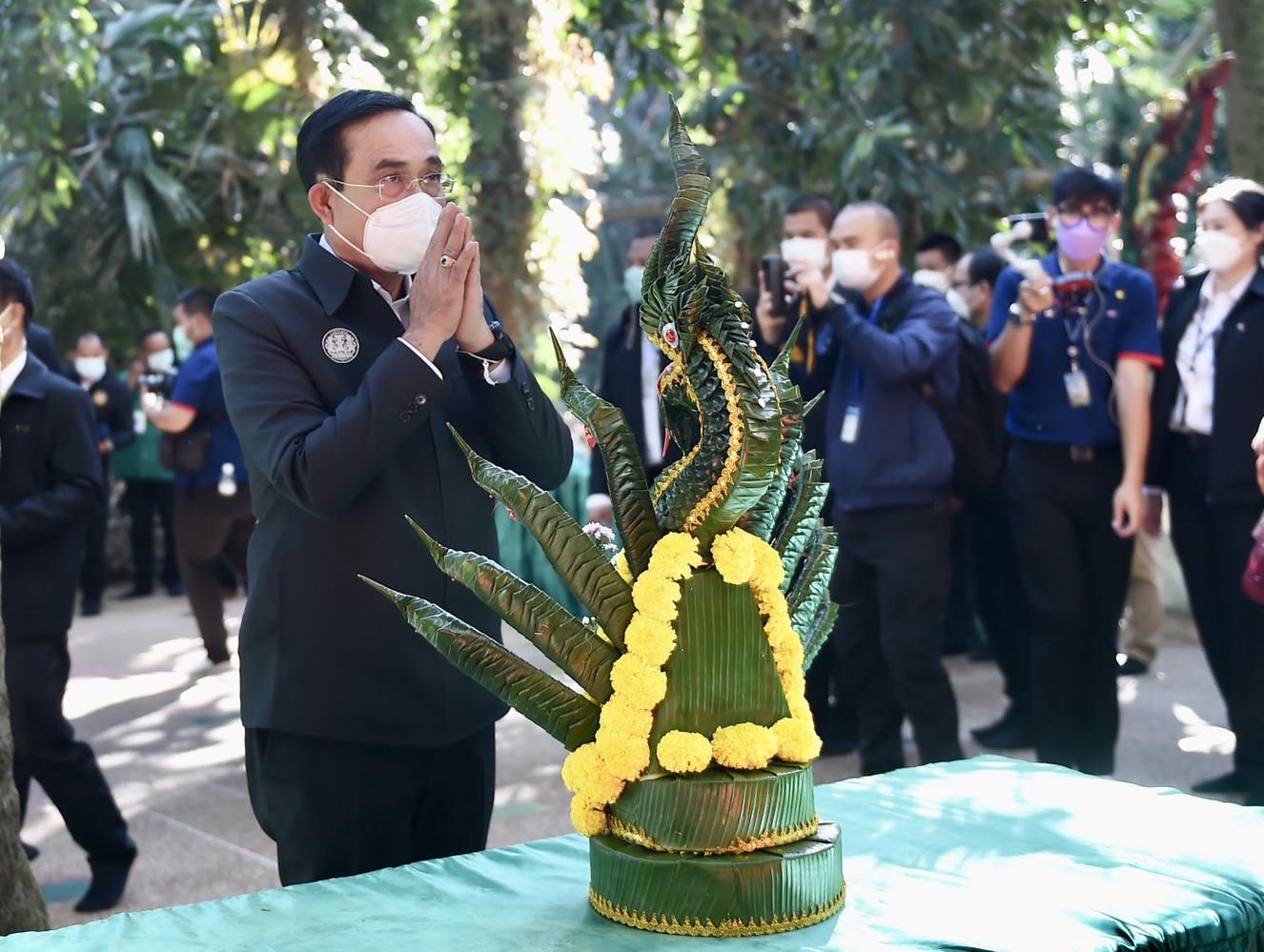
» Starting out a new year should engender a sense of hope and optimism that tomorrow can be better than yesterday. But the reality in Thailand suggests otherwise. A sense of prolonged malaise and discontent pervades the scene, where politics will likely prove murky with an economy persistently in the doldrums, underpinned by continuing societal divisions and broad-based unhappiness. Unless drastic changes and reforms take place very soon, this year is likely to further solidify the onset of a decade of decay and stagnation.

Thailand's irresponsible runaway debt
Oped, Thitinan Pongsudhirak, Published on 11/06/2021
» A major lasting damage Prime Minister Prayut Chan-o-cha will eventually leave behind is his government's co-optation and capture of autonomous agencies that used to safeguard and uphold Thailand's macroeconomic well-being and political level-playing field.

Myanmar takes lead in autocratic race
Oped, Thitinan Pongsudhirak, Published on 12/03/2021
» In the aftermath of the military coup on Feb 1, Myanmar's armed forces have evidently taken the lead in Southeast Asia's authoritarian race to the bottom. For its speed and depth of reversal from a fragile democracy to a hard dictatorship within six weeks, Myanmar currently ranks top among developing states worldwide. At stake now is not just Myanmar's political future and the well-being of its people but the fate of developing democracies elsewhere.

Undue politicisation at finance and BoT
Oped, Thitinan Pongsudhirak, Published on 03/07/2020
» Thailand's economic growth projections continue to head south as the coronavirus crisis unfolds in the second half of the year. In its most recent forecast, the Bank of Thailand anticipates a sharp contraction of 8.1% this year, worse than the 5.3% it predicted in March. Downside macroeconomic risks are substantial as the Covid-19 pandemic could still degenerate and cause further global health and economic havoc. In this dire environment, Thailand will need steady and seasoned hands to oversee macroeconomic levers. Yet both the finance ministry portfolio and the BoT governorship now face uncertainty and potential politicisation that bode ill for effective and autonomous fiscal and monetary policies.