



Showing 1 - 7 of 7
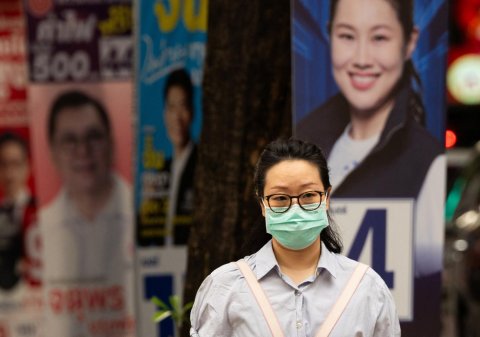
Will poll be breakout or more of same?
Oped, Thitinan Pongsudhirak, Published on 06/02/2026
» As Thais go to the polls this Sunday, the most consequential question is whether Thailand will finally break out of its debilitating cycle of political instability and economic underperformance that has marked the past two decades. The signs and signals suggest otherwise -- at least not yet.
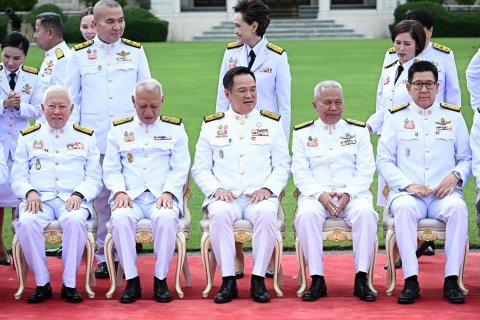
Anutin's new cabinet is a mixed bag
Oped, Thitinan Pongsudhirak, Published on 26/09/2025
» The composition and size of Prime Minister Anutin Charnvirakul's 36-member cabinet suggest that he intends to stay in office for as long as possible, clinging to the terms of the government-enabling Memorandum of Agreement (MOA) and calling an early election only if circumstances make it unavoidable.
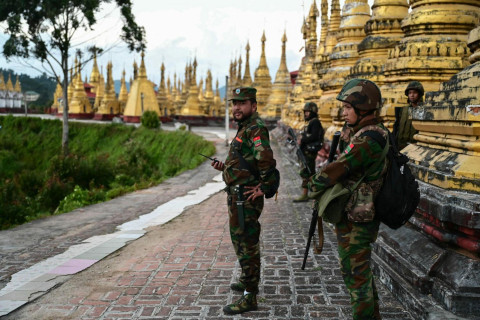
Myanmar's civil war after four years
Oped, Thitinan Pongsudhirak, Published on 31/01/2025
» Four years after its military coup and consequent civil war, Myanmar's spotlight in global headlines continues to dim as geostrategic reorientations and realignments among the major powers take centre stage. Dramatic and drastic foreign policy changes are afoot in the United States under the second administration of President Donald J Trump, while the European Union faces an existential threat from Russia's aggression in Ukraine, and Japan is mired in political sclerosis at home. Myanmar's fate and future will thus likely be determined by the course and outcome of its civil war, China's expanding influence in the country and Asean member states' manoeuvres to a lesser extent.
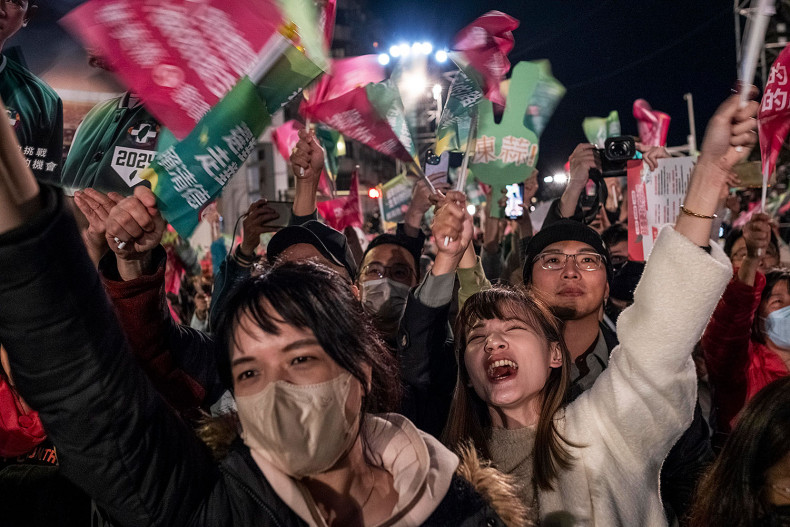
No losers, two winners in Taiwan poll
Oped, Thitinan Pongsudhirak, Published on 26/01/2024
» Among elections in Asia this year, Taiwan's is no less consequential, not just for the island country's political future but also for the United States-China rivalry and broader geopolitics. In the event, the results from the Jan 13 general election in Taiwan ended up with no major losers among the main contenders and two big wins for democracy in Asia and the geopolitical status quo.
The politics of the term-limit wrangle
Oped, Thitinan Pongsudhirak, Published on 19/08/2022
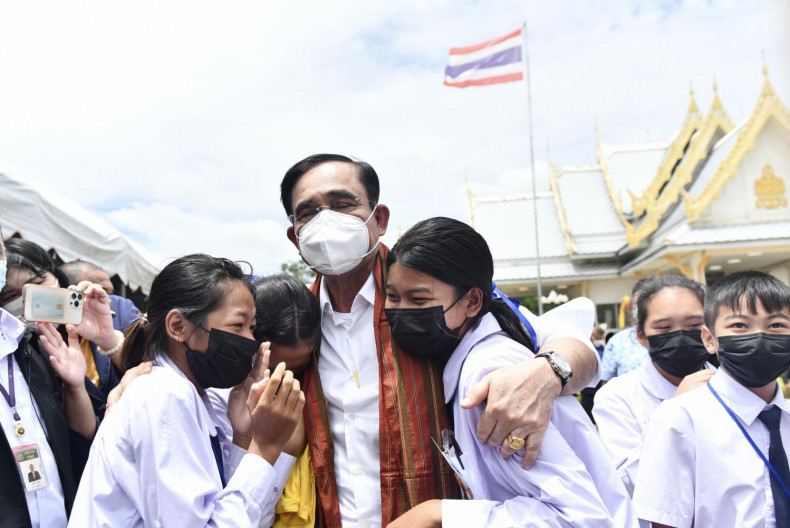
» Time is not on the side of Prime Minister Prayut Chan-o-cha as various groups of people want to see the back of him. Now that he has survived the last of four no-confidence votes in parliament since the March 2019 election, many are pinning their hopes that the eight-year prime ministerial term limit will upend Gen Prayut's rule.
Can technology transform patronage politics?
News, Thitinan Pongsudhirak, Published on 30/03/2018
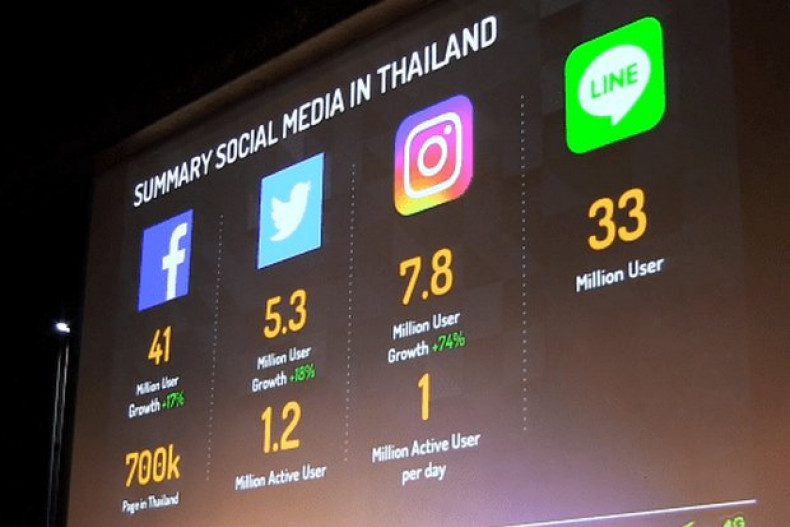
» By the time it takes place after evident foot-dragging by relevant authorities, the next election in Thailand will be unlike its precursors. There will be new parties with new policy ideas, new vote-gathering technologies and first-time voters who came of age during Thailand's political tension and polarisation more or less over the past two decades. At issue during the next poll is whether and to what extent Thailand's entrenched and endemic patronage-driven and vote-buying political system has really changed. The evidence is mixed but it is plausible that a new kind of politics will emerge not directly in the next poll but in the 2020s.
Prime Minister Prayut is no President Xi
News, Thitinan Pongsudhirak, Published on 16/03/2018
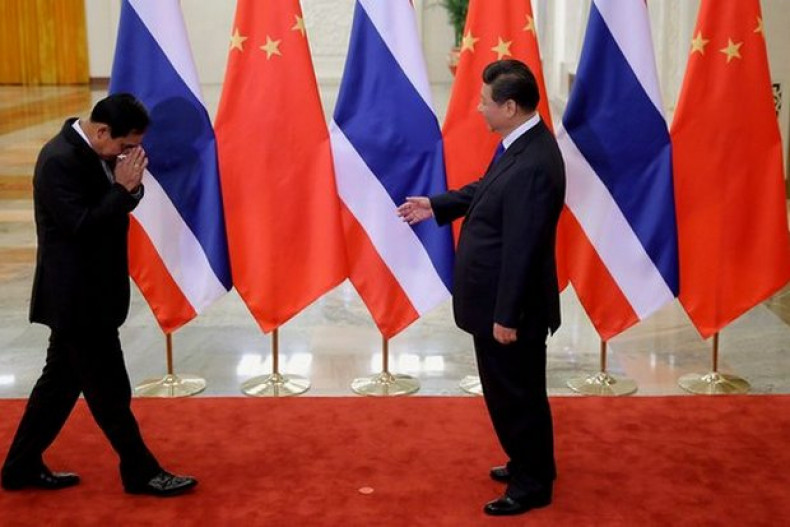
» That the Chinese Communist Party-controlled legislature has removed the term limits of the country's president and vice president has already sent shockwaves worldwide. It means that President Xi Jinping can continue to be China's head of state into a third term beyond 2023. Even though China's presidency is less powerful than the Chinese Communist Party's General Secretary and head of the Central Military Commission, the abolition of presidential term limits sends unmistakable signals that President Xi intends to hold complete and absolute power. He is now seen as more powerful than any contemporary Chinese leader, unrivalled since the time of founding father Mao Zedong.