



Showing 1 - 10 of 19

Thailand's political trajectory in 2026
Oped, Thitinan Pongsudhirak, Published on 09/01/2026
» What happens in Thai politics this year and the immediate horizon will be determined by the upcoming election on Feb 8. While contesting political parties are in full campaign mode, the contemporary history of Thai polls so far in the 21st century is not encouraging. Only once in the past 25 years have voting results went the way they were meant to, in accordance with the popular will. Whether the vote in four weeks will follow the same pattern will depend on whether the conservative establishment gets its preferred outcome.
No-confidence and poll date in flux
Oped, Thitinan Pongsudhirak, Published on 14/11/2025
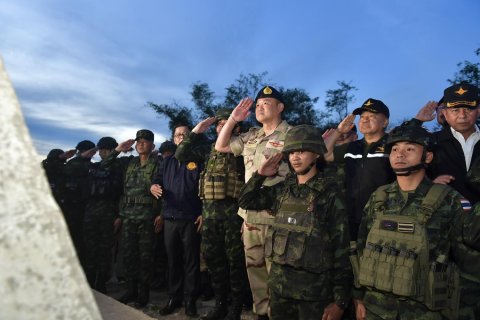
» Amid the drumbeats of military conflict with Cambodia, Thailand's political environment is evidently unruly and unsettled. The minority government of Anutin Charnvirakul, the third prime minister from the third largest-winning party since the latest national election in May 2023, is hard-pressed to stay in office beyond the four-month "Memorandum of Agreement" between his Bhumjaithai Party (BJT) and the People's Party (PP), the largest camp in the national assembly.
Anutin's new cabinet is a mixed bag
Oped, Thitinan Pongsudhirak, Published on 26/09/2025
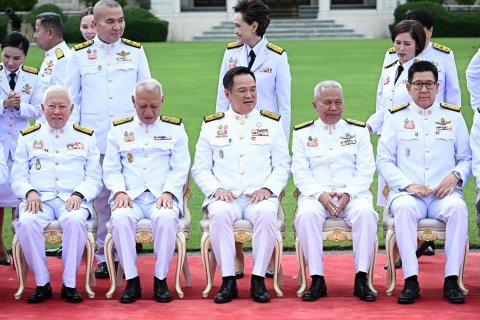
» The composition and size of Prime Minister Anutin Charnvirakul's 36-member cabinet suggest that he intends to stay in office for as long as possible, clinging to the terms of the government-enabling Memorandum of Agreement (MOA) and calling an early election only if circumstances make it unavoidable.

Thailand's costly political shenanigans
Oped, Thitinan Pongsudhirak, Published on 22/08/2025
» In a country of 70 million where a handful of men can remove an elected government time and again, there can be no stability and progress, only tension and regression. This is how Thailand can be characterised over the past two decades. It is now going through yet another cycle of heightened political instability with the potential collapse of the government under suspended Prime Minister Paetongtarn Shinawatra in the footsteps of previous leaders who were similarly ousted by the Constitutional Court.

Implications of Blinken's aborted visit
Oped, Thitinan Pongsudhirak, Published on 17/12/2021
» Having skipped Thailand due to a Covid-19 case among his travel delegation, the United States Secretary of State Antony Blinken's aborted three-country tour of Southeast Asia has hindered the full projection of President Joe Biden's Indo-Pacific geostrategy. Not wrapping up the trip with a visit to Thailand, a mainland Southeast Asia pivot and longstanding US treaty ally, also misses an opportunity to shore up what has been a relative bilateral estrangement. In short, Secretary Blinken's diplomatic foray in Southeast Asia has fallen short for the time being.
Myanmar coup: Asean's new fault line
Oped, Thitinan Pongsudhirak, Published on 26/02/2021
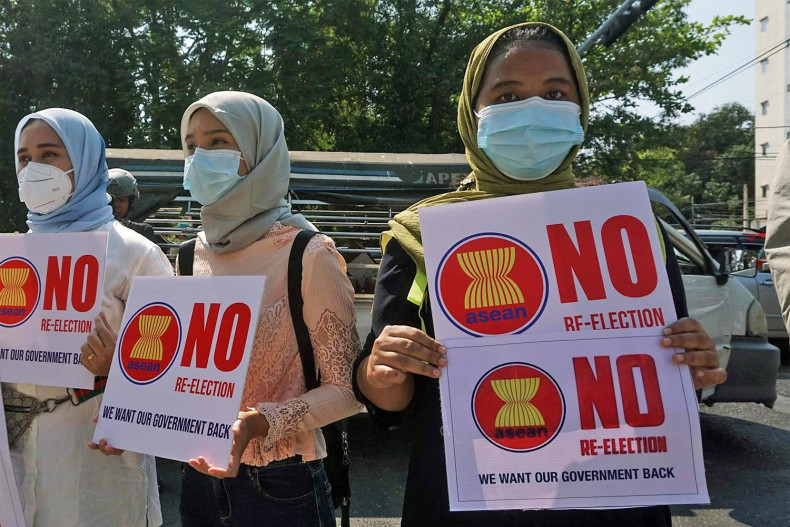
» Already geopolitically divided by China's regional assertiveness, Asean is now facing a new fault line from Myanmar's recent military coup. Just like its divergent views toward China, Asean's mixed preferences toward the Myanmar armed forces' abrupt seizure of power on Feb 1 threaten to further weaken Southeast Asia's 10-member grouping and marginalise its role as the central organising vehicle for regional peace and stability.
China-US rivalry on Mekong mainland
Oped, Thitinan Pongsudhirak, Published on 27/11/2020
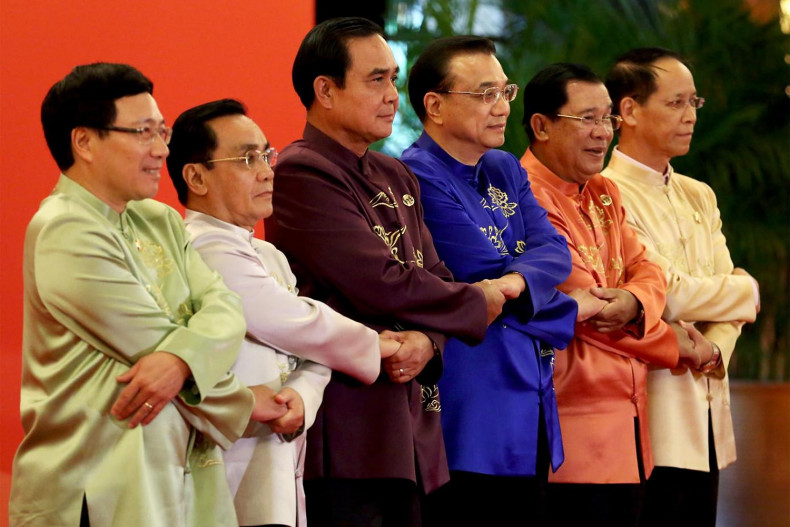
» Unlike other key foreign policy areas where President-elect Joe Biden will likely change the course left behind by outgoing President Donald Trump, the Mekong River region in mainland Southeast Asia represents a low-hanging fruit where continuity from Washington carries consensus. As China has dominated the Mekong space by operating a string of upstream dams and controlling downstream river resources, Cambodia, Laos, Thailand, and Vietnam as adversely affected riparian countries have looked for ways and means to mitigate and counterbalance Beijing's aggressive freshwater offensive. All the incoming Biden administration has to do is to keep its eye on the Mekong and work with like-minded partners to keep mainland Southeast Asian countries from becoming Beijing's uncontested front yard.

Coronavirus blues and clues in Thailand
Oped, Thitinan Pongsudhirak, Published on 17/04/2020
» It is unanimous that the novel coronavirus, also known as Covid-19, is a once-in-a-lifetime experience. A common refrain everywhere in the world is "I have never seen anything like it". Its immediate consequences and longer-term transformational repercussions will be felt for years to come. Covid-19 challenges individuals, societies and state institutions to their very core. For Thailand, re-emerging from this devastating pandemic will be tough and tricky, with trade-offs and hard choices.
Government's competence in question
News, Thitinan Pongsudhirak, Published on 24/01/2020
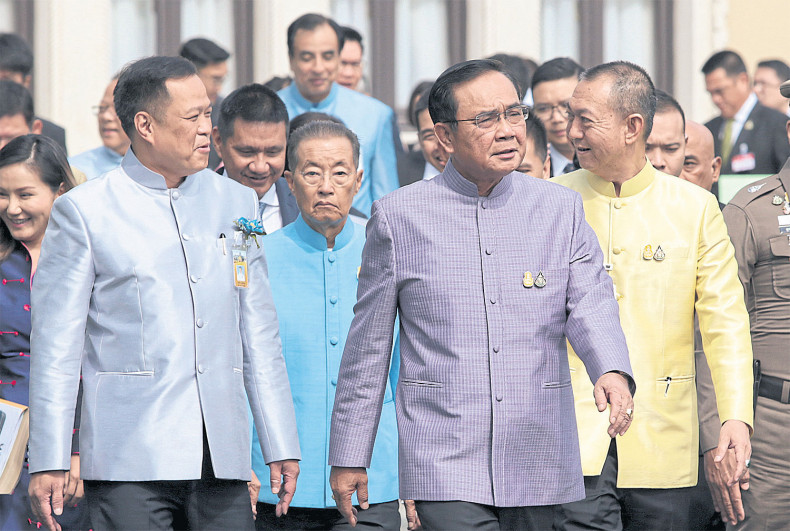
» It's just about official. Despite having a government, Thailand is rudderless. Approaching six years under more or less junta rule and military influence, irrespective of an election last year, this once up-and-coming country has degenerated into an authoritarian-bureaucratic state that is unsuited and unfit to address public grievances and demands of the 21st century. Yet Thailand's biggest problem is that this government, a motley coalition propped up by a crooked constitution and led by former junta chief Prayut Chan-o-cha, intends to stay for the long haul despite its growing incompetence. Unless the Thai people's world-famous patience and tolerance are boundless, political tensions will likely mount in the foreseeable future.
Mekong River region on more minds
News, Thitinan Pongsudhirak, Published on 06/12/2019
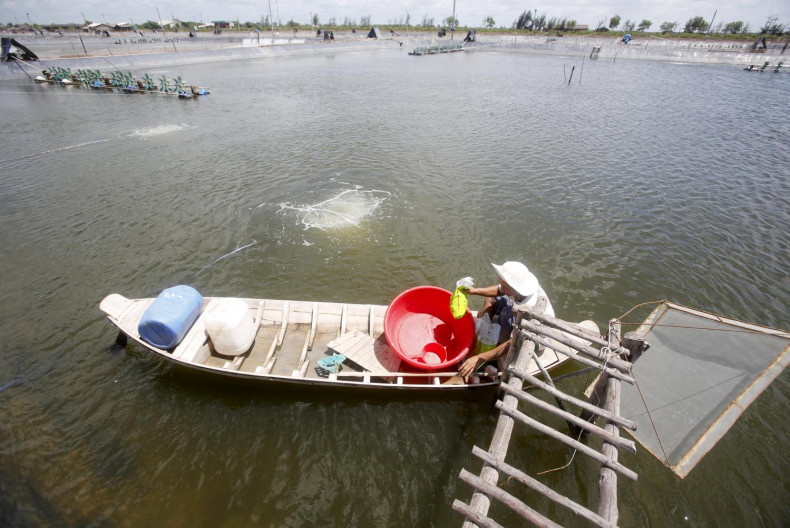
» As Vietnam is poised to take over the rotational chair of Asean in January 2020, its second foremost foreign policy priority after the South China Sea is reportedly the Mekong River region. While the South China Sea, where more than one third of global shipping passes, is considered an overall Asean concern, the Mekong region is left to the five riparian countries in mainland Southeast Asia to deal with in view of China's upstream hydropower dams that have led to frequent droughts and depleted fish stocks in downstream communities, especially in Cambodia and Vietnam.