



Showing 1 - 10 of 13

Will poll be breakout or more of same?
Oped, Thitinan Pongsudhirak, Published on 06/02/2026
» As Thais go to the polls this Sunday, the most consequential question is whether Thailand will finally break out of its debilitating cycle of political instability and economic underperformance that has marked the past two decades. The signs and signals suggest otherwise -- at least not yet.
Flawed Asean needs to regain footing
Oped, Thitinan Pongsudhirak, Published on 10/10/2025
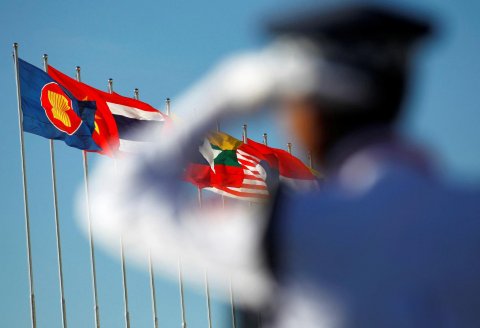
» Nearly six decades after its founding, the Association of Southeast Asian Nations (Asean) finds itself back where it began -- divided, uncertain, and vulnerable to the influence of major powers. Once hailed as a model for regional cooperation in the developing world, Asean now faces a crisis of purpose. Unless it can rediscover the unity and collective way forward that defined its early decades, Southeast Asia's flagship institution risks slipping into irrelevance.
Thai politics back at the brink (again)
Oped, Thitinan Pongsudhirak, Published on 04/07/2025
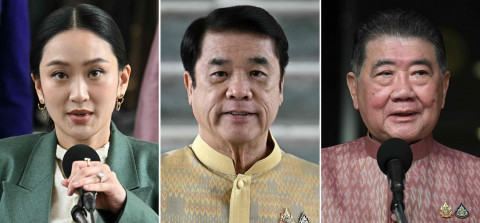
» The Constitutional Court's suspension of Paetongtarn Shinawatra from the premiership is déjà vu, exposing a pattern of systematic manipulation and concoction of political outcomes. After so many dissolutions of leading political parties and repeated bans of elected representatives over two decades, it is time to call a spade a spade. Thailand is a faux democracy. Its core foundations constitute an autocratic regime that does not really care about the country's future and the collective will of its people.

Thai charter court deserves scrutiny
Oped, Thitinan Pongsudhirak, Published on 04/08/2023
» Amid the volatility and confusion during the interim since the May 14 election, Thailand's Constitutional Court has further thickened the plot by accepting a petition to rule on whether a parliamentary vote using the meeting rules to deny the renomination of Move Forward Party leader Pita Limjaroenrat's premiership was unconstitutional.
Myanmar's military takeover falters
Oped, Thitinan Pongsudhirak, Published on 03/02/2023
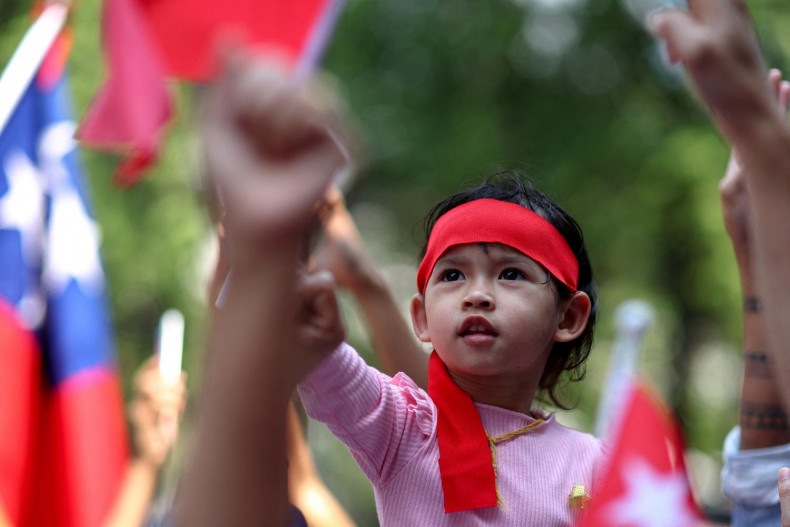
» Global news headlines this month will be focused on the one-year anniversary of Russia's invasion of Ukraine, which falls on Feb 24. This external aggression, where a bigger state unilaterally takes territory from a smaller neighbour by force, can be juxtaposed to an internal subjugation in Myanmar, where a military coup took place two years ago this week. Whether the aggression is externally between states, or internally within a state, the oppressors behave the same way and pursue similar objectives of conquest and dominance. Reversing an internal subjugation is as morally compelling as turning back an external aggression. What Myanmar's civilian-led resistance coalition needs is a fraction of the aid the Ukrainians have been receiving.
The global leadership India needs
Oped, Thitinan Pongsudhirak, Published on 21/10/2022
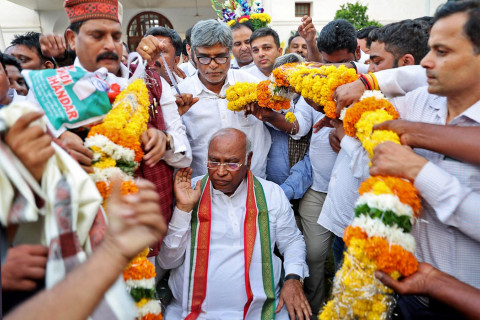
» India, like China, takes enormous pride in its civilisation's scale and antiquity -- and rightly so. But such pride can also lead to a complacent and sometimes dangerous insularity. Since gaining independence from the British Empire 75 years ago, India has mostly looked inward, focusing on improving the welfare of its population by building a strong democracy and a healthy economy.

Myanmar, Thai militaries in cahoots
Oped, Thitinan Pongsudhirak, Published on 08/07/2022
» The recent incursion by a Myanmar MiG-29 fighter jet into Thai airspace is par for the course in the intimate ties between the militaries of both countries. Myanmar's military, also known as the Tatmadaw, in fact wants to be more like its Thai counterpart. The Royal Thai Armed Forces, on the other hand, may end up later having to be more like the Tatmadaw to maintain its role and rule in politics. These two militaries together pose a litmus test for states and societies everywhere. If the popular will and public interest can be systematically stolen and subverted in this corner of the globe, it can happen anywhere.
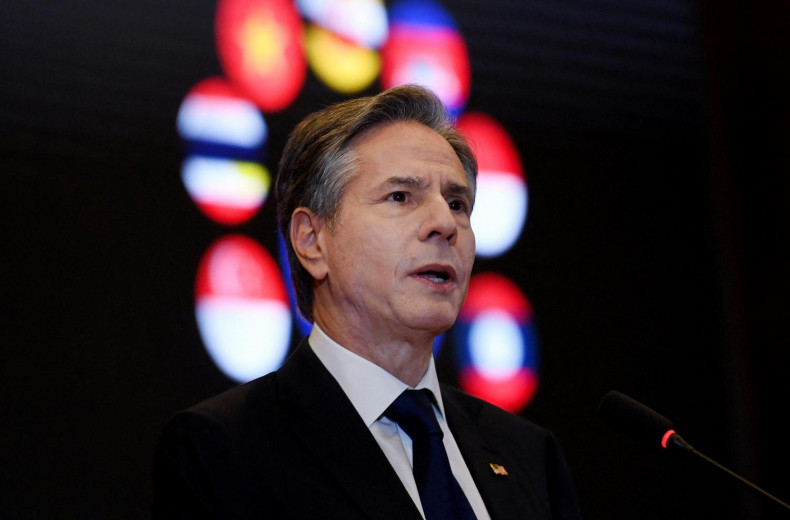
Implications of Blinken's aborted visit
Oped, Thitinan Pongsudhirak, Published on 17/12/2021
» Having skipped Thailand due to a Covid-19 case among his travel delegation, the United States Secretary of State Antony Blinken's aborted three-country tour of Southeast Asia has hindered the full projection of President Joe Biden's Indo-Pacific geostrategy. Not wrapping up the trip with a visit to Thailand, a mainland Southeast Asia pivot and longstanding US treaty ally, also misses an opportunity to shore up what has been a relative bilateral estrangement. In short, Secretary Blinken's diplomatic foray in Southeast Asia has fallen short for the time being.
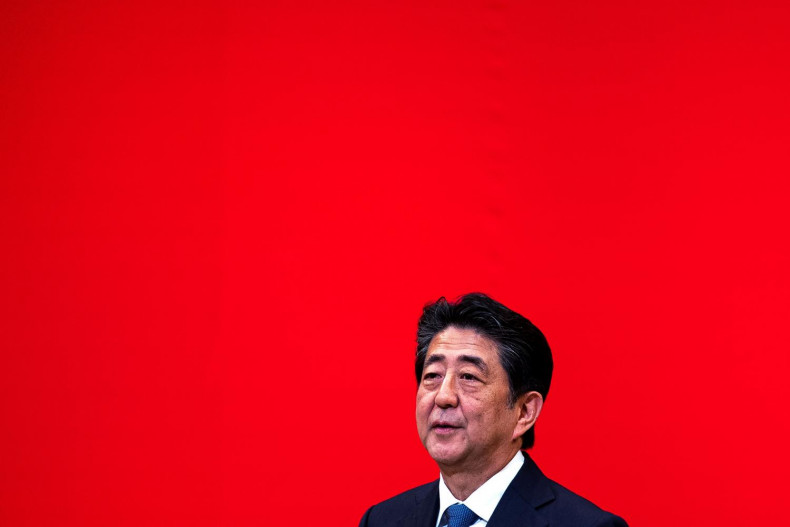
Abe legacy is Japan as 'normal' nation
Oped, Thitinan Pongsudhirak, Published on 04/09/2020
» Japan's outgoing Prime Minister Shinzo Abe will be missed throughout much of Asia, including China. His health-induced political departure attributable to a recurrence of ulcerative colitis brings to an end Japan's longest-serving prime minister in a consecutive tenure. While much will be recorded about his rich legacy, Mr Abe should be seen as a natural mover and shaker who reshaped Japan into a more "normal" country able to pursue its national interest like others by all available means.
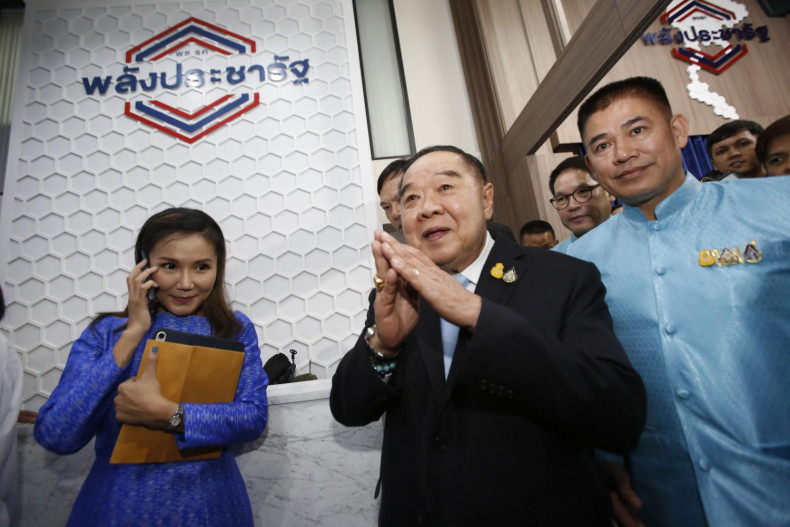
Top brass, technocrats, politicos all same
Oped, Thitinan Pongsudhirak, Published on 12/06/2020
» When ostensible technocrats become ambitious politicians, supervised by army generals and beholden to patronage-driven elected politicians, the result is a power struggle, internal party turmoil, and a country being governed to nowhere. This is the current state of Thailand's ruling Palang Pracharath Party (PPRP), the head of a motley and fractious 19-member coalition of minor and micro parties, some represented by one single MP, propping up the government of former coup leader and current Prime Minister Prayut Chan-o-cha. Yet in the face of the opposition bloc that is weak because it has been weakened, after the third-largest winner the Future Forward Party from the last election was dissolved earlier this year, the PPRP is on course to be in office for the foreseeable future, as a new poll is not due for another three years. These dire dynamics suggest Thailand will continue to be rudderless, stuck in a quagmire of its own making, with headwinds that may lead to a reckoning tempest.