



Showing 1 - 10 of 23
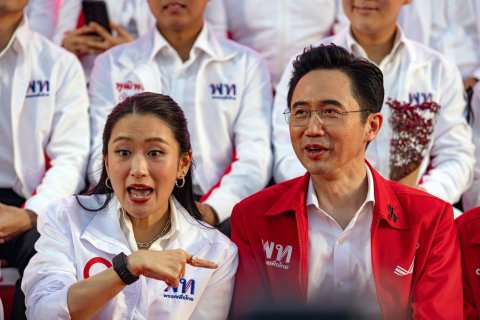
Three main parties and two directions
Oped, Thitinan Pongsudhirak, Published on 16/01/2026
» Although Thailand's election campaign is reaching fever pitch ahead of voting day on Feb 8, the dynamics and contours of its final outcome can be gleaned from past polls over the last 25 years. Only once in January 2001, as was indicated in this space last week, were voter results fully honoured and carried out. Other elections were either upended by military coups or manipulated by judicial interventions.
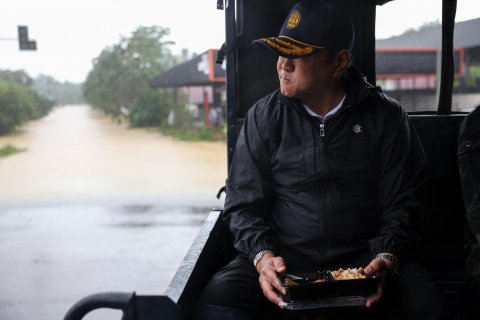
Thailand hit by a confluence of crises
Oped, Thitinan Pongsudhirak, Published on 05/12/2025
» Thailand is currently facing multiple crises of unprecedented proportions in the highest corridors of power that will pose adversity for the economy and political stability next year and beyond.

Prospects at home and abroad in 2024
Oped, Thitinan Pongsudhirak, Published on 05/01/2024
» Overlooked but deeply consequential, 2024 will be the first time in a decade that Thailand is ruled by a civilian-led government. Whatever frustration and disenchantment that arise this year, memories must not run short. Thailand suffered deeply under the coup-backed regime of Gen Prayut Chan-o-cha. Seeing his back is politically good riddance, and having Srettha Thavisin as a thoroughly civilian and pro-business prime minister bodes well for the country. Yet Mr Srettha has his work cut out to boost the economy, address constitutional reform, restore Thailand's international standing, and stay in office into next year amid the global economic slowdown.

Thailand's semi-democracy returns
Oped, Thitinan Pongsudhirak, Published on 01/12/2023
» The appointment of Gen Prayut Chan-o-cha as privy councillor has neatly bookended Thai politics over the past decade. It coincides with the 10-year anniversary of the street demonstrations that were led by the People's Democratic Reform Committee, paving the way for Gen Prayut to stage a military coup in May 2014. While the interim was a period of hard and soft military-authoritarian rule in 2014-19 and 2019-23, the new moving balance in Thai politics is a semi-democracy of sorts under the Pheu Thai Party-led coalition government.

Post-poll lull has a lot to answer for
Oped, Thitinan Pongsudhirak, Published on 26/05/2023
» After a clear election victory, Thailand should already have a new government in office by now with Pita Limjaroenrat as prime minister, as his Move Forward Party (MFP) together with opposition ally Pheu Thai Party won a clear mandate of more than 58% of 500 lower house seats. Yet their coalition government in waiting among eight parties with 313 elected representatives is facing several critical roadblocks, including the military-appointed senate and the Election Commission (EC). Public pressure is now needed to be piled on these powerful but biased bodies that were appointed during the coup-dominated era in 2014–2019 to comply with the people's wishes, as expressed at the polls on May 14.
The fault line that polarises Thai politics
Oped, Thitinan Pongsudhirak, Published on 07/04/2023
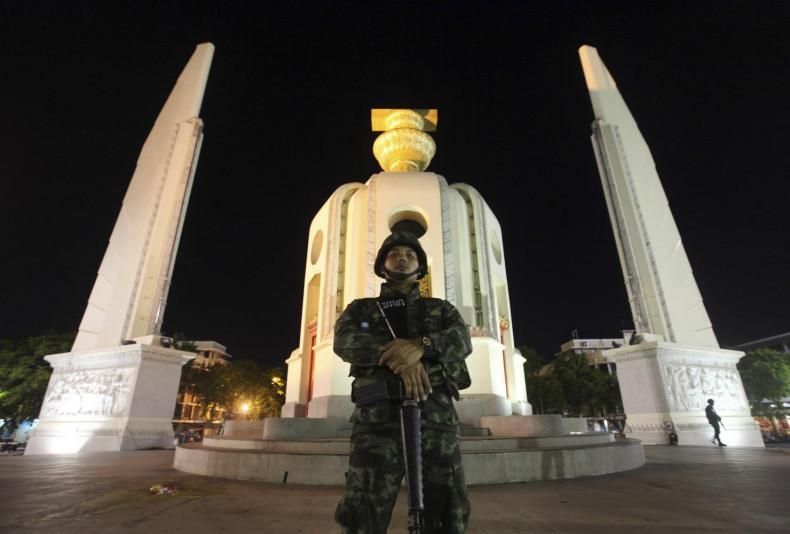
» With all of Thailand's contesting political parties lined up behind populist policy platforms ahead of the general election on May 14, it is not readily obvious what sets them apart.
The truth about Thai money politics
Oped, Thitinan Pongsudhirak, Published on 13/01/2023
» As the election looms in Thailand, money politics returns with a vengeance.

Reopening a good bet with high costs
Oped, Thitinan Pongsudhirak, Published on 12/11/2021
» Nearly two weeks into Thailand's official reopening during the Covid-19 pandemic, it is time to evaluate the country's vaccine management plan, economic costs and prospects of recovery. While the reopening is worth the attendant risks, Thailand is paying a disproportionately high price for earlier mistakes and the government's mismanagement. As the reopening phase builds up, the Thai economy is likely to see a weak and tentative recovery trajectory with medium-term challenges and question marks.
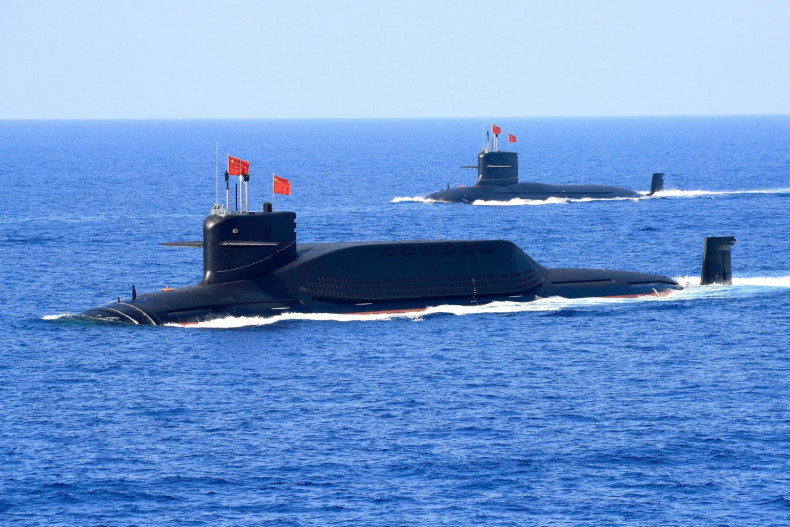
Aukus poses challenges to other powers
Oped, Thitinan Pongsudhirak, Published on 15/10/2021
» The Australia-United Kingdom-United States (Aukus) security pact has caused ripple effects across oceans and continents. Not only will the trilateral security partnership provoke China, but it will likely further divide Southeast Asia and overshadow Asean-centred cooperative vehicles, such as the East Asia Summit. Beyond these concerns, the Aukus deal to share Anglo-American nuclear technology to enable Australia's acquisition of eight nuclear-powered submarines over two decades poses challenges to other major powers, particularly the European Union and its key members as well as Japan.

The trade-off: Freedom and authority
Oped, Thitinan Pongsudhirak, Published on 17/09/2021
» Freedom is a funny thing. In excess, it leads to complacency and devaluation. In scarcity, it brings about urgency and desperation. Put this way, nowhere is freedom more taxed and toyed with than in the United States of America, a country that has so much going for it and yet is so conflicted within.