



Showing 1 - 10 of 15
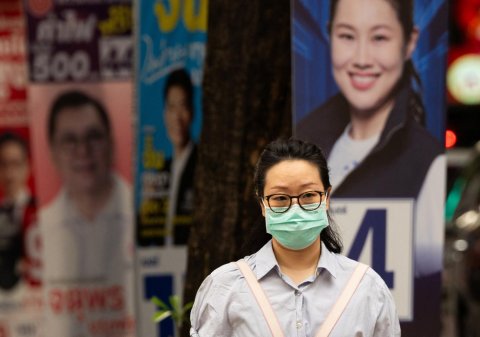
Will poll be breakout or more of same?
Oped, Thitinan Pongsudhirak, Published on 06/02/2026
» As Thais go to the polls this Sunday, the most consequential question is whether Thailand will finally break out of its debilitating cycle of political instability and economic underperformance that has marked the past two decades. The signs and signals suggest otherwise -- at least not yet.

Smart geopolitics starts on home front
Oped, Thitinan Pongsudhirak, Published on 21/02/2025
» According to a longstanding axiom, all politics is local. If so, then smart and crafty geopolitics must start at home with sufficient domestic political stability and consensus about how the country should navigate what is increasingly a turbulent geostrategic chessboard. Put this way, few countries can appreciate the intersection of geopolitics and domestic politics more than Thailand. Its rocky and volatile home front over the past two decades continues to impede and constrain its geostrategic projection.

Thailand needs middle power ambition
Oped, Thitinan Pongsudhirak, Published on 18/10/2024
» Having participated in the recent Asean-related summit meetings in Vientiane, Prime Minister Paetongtarn Shinawatra and her team must now work out Thailand's foreign policy priorities and posture. Foreign policy projection peaked around 20 years ago when Thailand was recognised as an emerging regional leader with the potential of a middle power. Since then, foreign policy has been patchy and hostage to polarisation and domestic political volatility. It is time to chart a way forward for Thailand's international standing and role despite ongoing political conflict at home.

Thailand's semi-democracy returns
Oped, Thitinan Pongsudhirak, Published on 01/12/2023
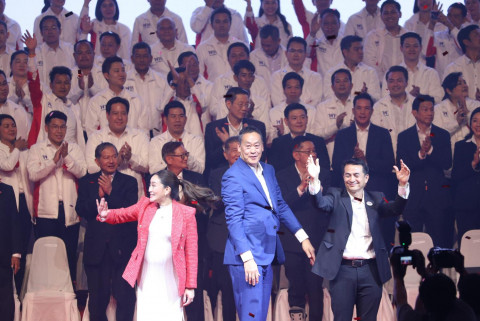
» The appointment of Gen Prayut Chan-o-cha as privy councillor has neatly bookended Thai politics over the past decade. It coincides with the 10-year anniversary of the street demonstrations that were led by the People's Democratic Reform Committee, paving the way for Gen Prayut to stage a military coup in May 2014. While the interim was a period of hard and soft military-authoritarian rule in 2014-19 and 2019-23, the new moving balance in Thai politics is a semi-democracy of sorts under the Pheu Thai Party-led coalition government.
Tolerating populism for democracy
Oped, Thitinan Pongsudhirak, Published on 13/10/2023
» The so-called “super deal” in August that resulted in the return of Thaksin Shinawatra and the formation of the Pheu Thai Party-led coalition government under Srettha Thavisin evidently has its limitations. It appears to be rejected by sections of the conservative old guard who still wants to resort to extra-parliamentary ways and means to undermine Thailand’s delicate parliamentary democracy. Reminiscent of past protests against Mr Thaksin’s brand of populism, a new round of extra-parliamentary political movement has begun in earnest with the petition launched by 99 prominent economists, including former central bank governors, against the Srettha government’s 10,000-baht digital wallet policy.
Next poll brings highest stakes, risks
Oped, Thitinan Pongsudhirak, Published on 09/12/2022
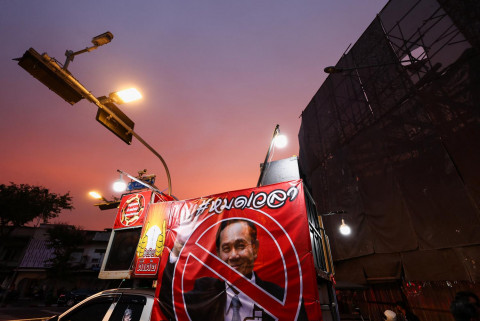
» In the face of the myriad of questions and issues that beset Thai politics in the lead-up to the general election, which must be held by May 7, the biggest facts and dilemmas are not being raised. Prime Minister Prayut Chan-o-cha is now headed to complete nine years in office, the first five of which were under a military government after he and his cohorts seized power by force in May 2014, and the last four under an elected coalition government enabled by the 2017 constitution crafted by a committee the ruling generals had set up. Moving forward, Thailand risks settling into a prolonged period of economic stagnation and political decay unless there is a qualitative change of government after the poll.
Japan's post-Covid regional dilemma
Oped, Thitinan Pongsudhirak, Published on 21/01/2022
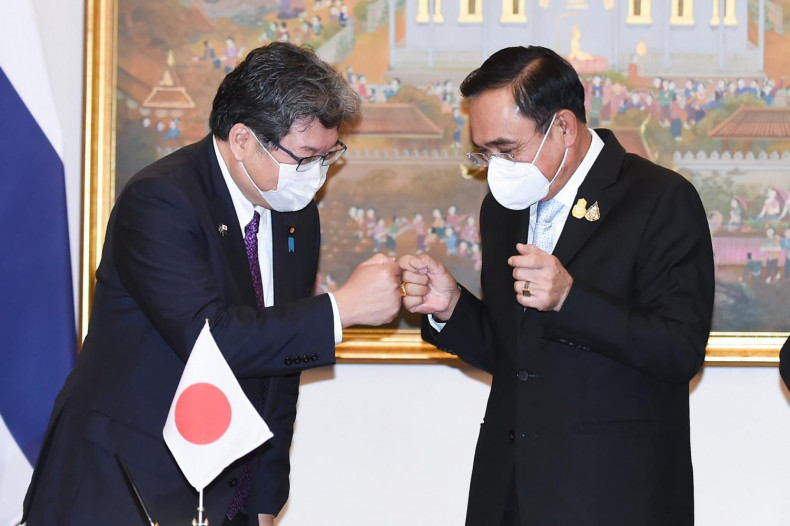
» Among the major powers that are moving forward with an eye on the post-pandemic era, when Covid-19 will eventually become an endemic with flu-like manageability, Japan is second to none. The visit last week by its minister of economy, trade, and industry (METI), Koichi Hagiuda, made front-page news in Bangkok, following similarly notable media coverage in Jakarta and Singapore. But while it has played a critical role in Asean's economic development and regional security, Japan's Indo-Pacific geostrategic environment has become adverse with more downside risks.

Biden's pivot to free, open Indo-Pacific
Oped, Thitinan Pongsudhirak, Published on 03/09/2021
» If former United States President Barack Obama is known for his "pivot to Asia" geostrategy and President Donald Trump for the Free and Open Indo-Pacific, there is now a geostrategic synthesis under President Joe Biden. It can be aptly called the US "pivot to the Free and Open Indo-Pacific".
Thailand's irresponsible runaway debt
Oped, Thitinan Pongsudhirak, Published on 11/06/2021
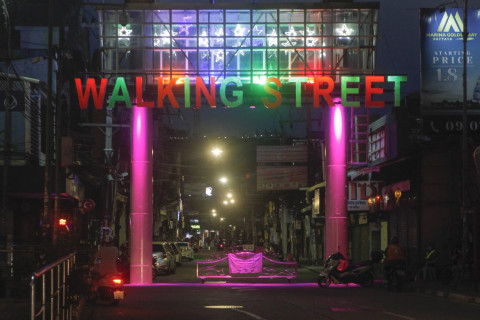
» A major lasting damage Prime Minister Prayut Chan-o-cha will eventually leave behind is his government's co-optation and capture of autonomous agencies that used to safeguard and uphold Thailand's macroeconomic well-being and political level-playing field.
The anatomy of waning youth protests
Oped, Thitinan Pongsudhirak, Published on 19/03/2021
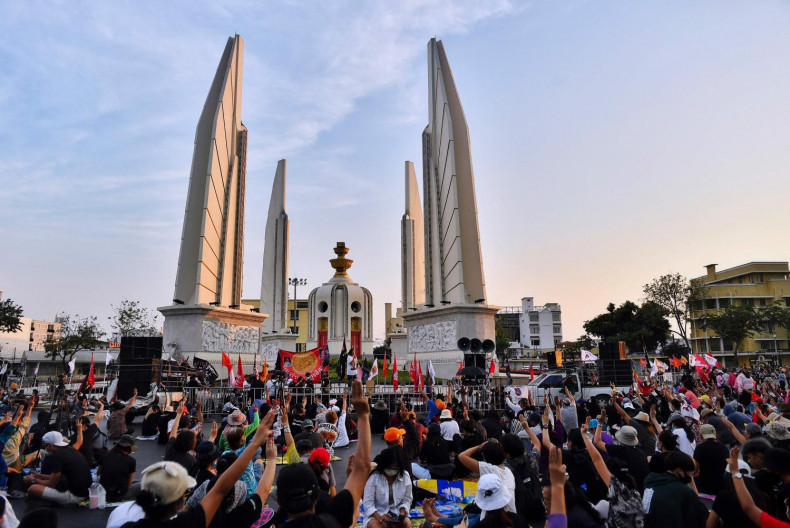
» By all accounts, Thailand's youth protest movement over the past year has lost steam. Its key leaders have been charged on anti-monarchy grounds and jailed without bail, while the rank-and-file are demoralised, still on the move but in thin numbers. On the other side, the incumbent centres of power have reasserted control and put down what at its peak was the most vociferous and vigorous anti-establishment movement Thailand had seen in decades.