



Showing 1 - 10 of 36
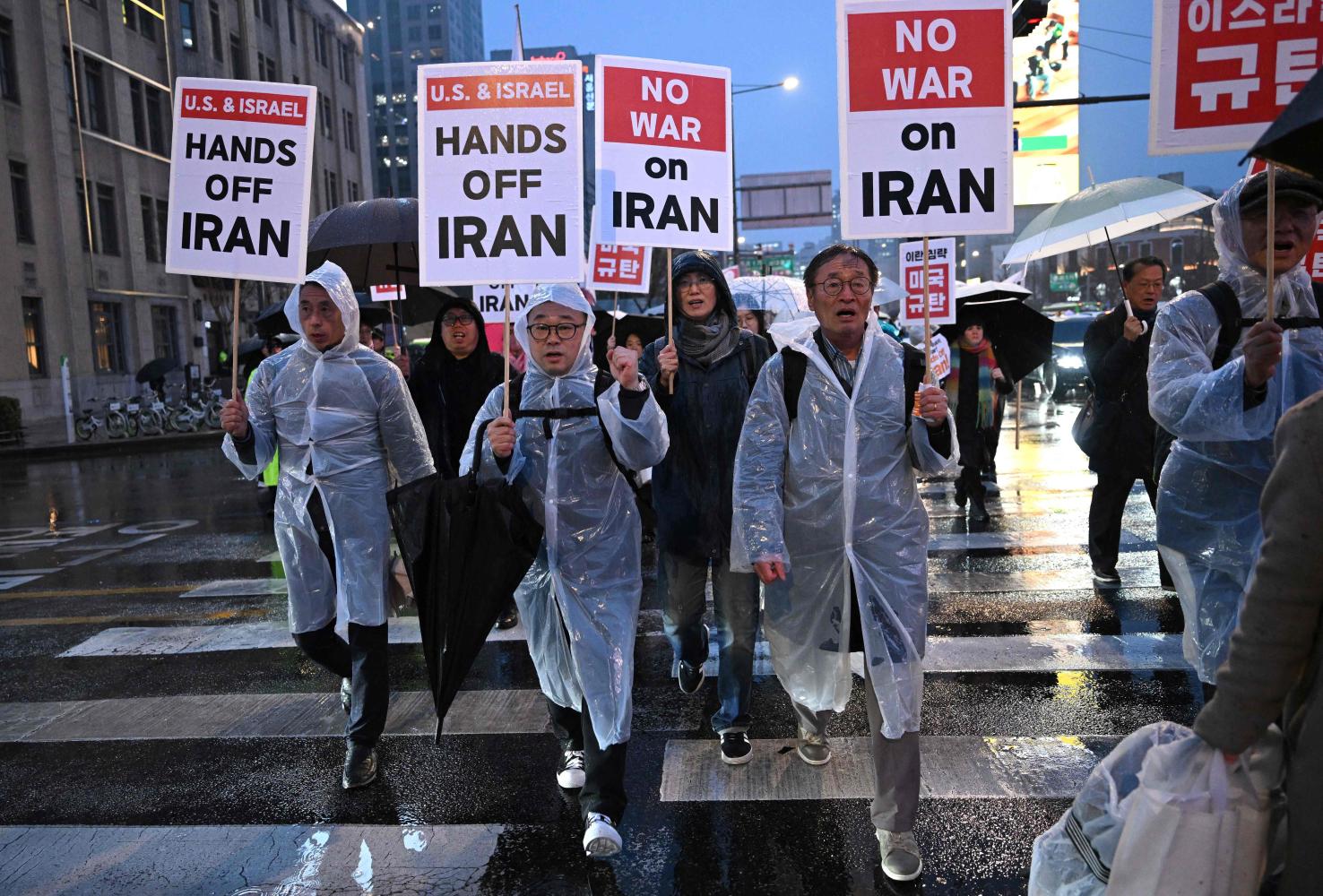
America risks grand folly in Iran war
News, Thitinan Pongsudhirak, Published on 06/03/2026
» It is just the first week of the joint attack between the United States and Israel on the Islamic Republic of Iran, but the repercussions from the Middle East for the Indo-Pacific are already discernible.
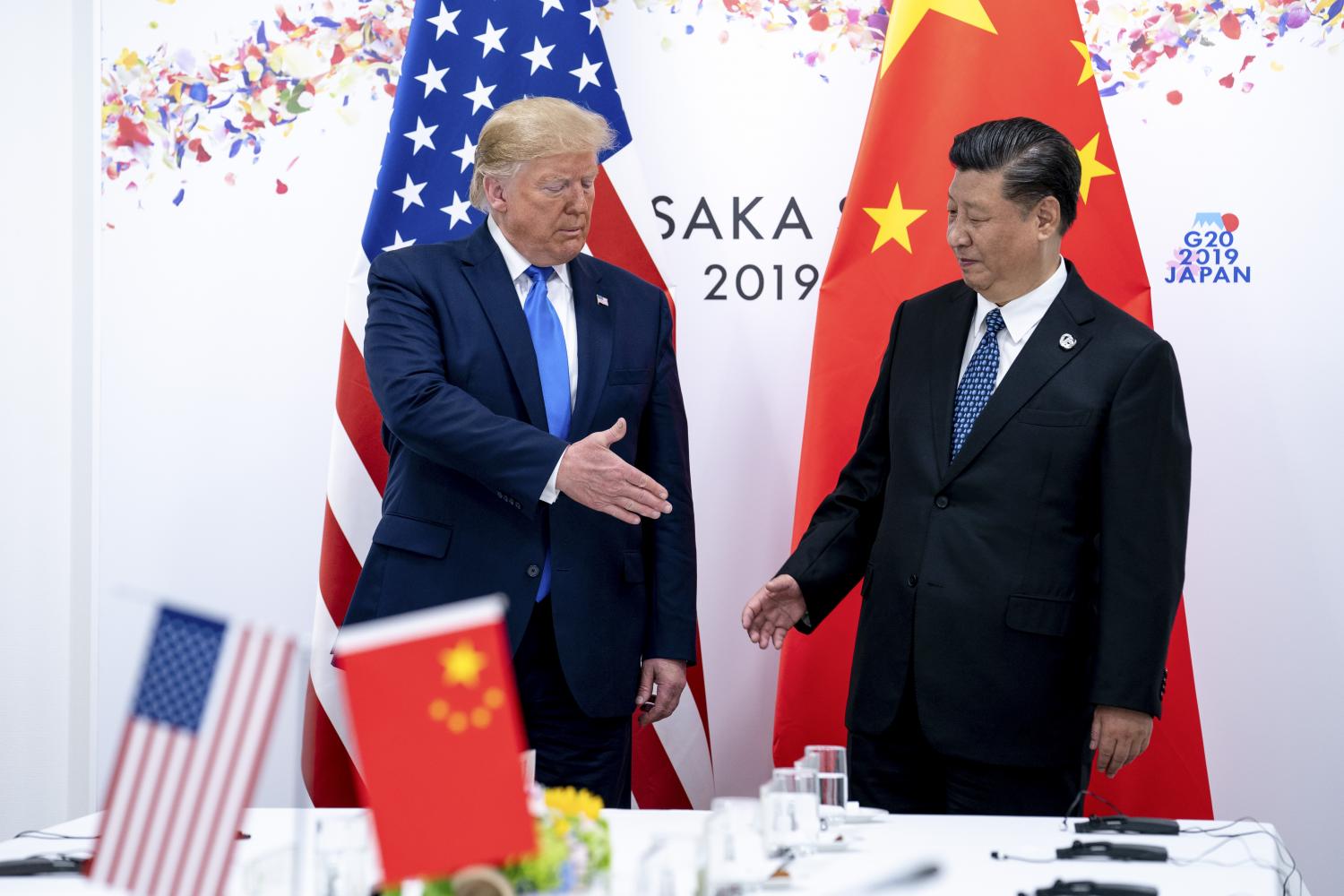
Southeast Asia amid the US-China rift
Oped, Thitinan Pongsudhirak, Published on 03/10/2025
» The rivalry between the United States and China has become the defining contest of the 21st century. Barely two decades ago, Washington and Beijing were partners in prosperity. America's support for China's entry into the World Trade Organization in 2001 epitomised the high-water mark of engagement, reflecting the belief that economic integration would lead to greater political cooperation. Today, that partnership has morphed into suspicion and confrontation. Relations between the United States and China have deteriorated so swiftly that many observers now describe them as locked in a "new Cold War". The more pressing question, however, is not whether this analogy holds, but whether confrontation can be managed short of outright conflict.

A perilous era of absolute advantage
News, Thitinan Pongsudhirak, Published on 25/04/2025
» If a date had to be pinpointed, the post-Second World War international system came to an unmistakable end on April 2 -- the so-called "Liberation Day" -- when US President Donald Trump announced comprehensive "reciprocal" tariffs to a bewildered global audience. The blatantly protectionist move was equivalent to the United States' abrogation and abandonment of the rules-based international order that it ironically and instrumentally constructed and upheld over nearly eight decades. What comes now is a dangerous era of absolute advantage in global trade, investment, and finance, bent on unilateralism over multilateralism, competition over cooperation, nationalism over interdependence, and the singular quest to dominate and reshape the global pecking order under the rubric of making America "great again".

Smart geopolitics starts on home front
Oped, Thitinan Pongsudhirak, Published on 21/02/2025
» According to a longstanding axiom, all politics is local. If so, then smart and crafty geopolitics must start at home with sufficient domestic political stability and consensus about how the country should navigate what is increasingly a turbulent geostrategic chessboard. Put this way, few countries can appreciate the intersection of geopolitics and domestic politics more than Thailand. Its rocky and volatile home front over the past two decades continues to impede and constrain its geostrategic projection.

What's happened to the Asian Century?
Oped, Thitinan Pongsudhirak, Published on 14/02/2025
» Until recently, the "Asian Century" seemed a compelling narrative but now it is not what it used to be. It was supposed to herald a shift in global economic power from the West to the East, driven by China's rapid rise, India's economic dynamism, and the broader development of Asia. But a quarter of the way into the 21st century, the promise of Asian dominance appears less certain. The enduring technological and economic might of the United States, coupled with its geopolitical backlash against China, has lowered expectations. While Asia remains formidable, the trajectory of global power is open and fluid, with potential dominance shifting not necessarily to any nation or region but perhaps to a non-state entity.

Trump II's intellectual foundations
Oped, Thitinan Pongsudhirak, Published on 22/11/2024
» It seems counterintuitive and contradictory to think of an intellectual foundation behind United States President-elect Donald J Trump when he is professedly unintellectual, even anti-intellectual. But make no mistake. Mr Trump is merely a phenomenon. Understanding it reveals his worldview and consequent policy prospects. But doing so requires seeing the Trump phenomenon as it is rather than why and how it is detested by countless millions of us. Indeed, the biggest difficulty when analysing Mr Trump and his second administration is the global disdain he elicits.

Thailand between the US and China
Oped, Thitinan Pongsudhirak, Published on 29/03/2024
» Amid what now has to be acknowledged as a direct non-military conflict and a geoeconomic war of sorts between the United States and China, Thailand is in a quandary. While characterising Thailand's geostrategic dilemma as a US-China binary can be exaggerated and misleading, it does have a point. As with many other developing countries in the region, Thailand will come under increasing pressure to choose between the two competing superpowers. The ability not to choose thus becomes an overarching geostrategic objective.

Japan's dilemmas need bold answers
Oped, Thitinan Pongsudhirak, Published on 03/11/2023
» Among the big countries vying for power and influence in the fluid and contentious geostrategic arena, Japan faces the most daunting challenges. Most of the recognised major powers in Asia, from China and India to Indonesia and South Korea, are rising and aspiring for bigger roles and grander objectives, while Japan's place in the global pecking order has been in decline. The last time Japan had to confront such an existential threat to its place in the world may have been in the 1860s when the Western powers shook up and threatened to take over the isolated and inward-looking martial society.

Done and emerging battles in Thai poll
Oped, Thitinan Pongsudhirak, Published on 28/04/2023
» Thailand's poll-leading Pheu Thai Party (PTP) is fighting a war it has already won. Consequently, its pledged freebie of 10,000 baht in a digital wallet for Thai people is superfluous and unnecessary. As the populism war has run its course, a new battleground revolving around the reform and adjustment of traditional centres of power is emerging. The fight in this new battle, being led by the Move Forward Party (MFP), is likely to last into the foreseeable future as the next stage in Thailand's modernisation imperative in the 21st century.

Populism triumphs as election looms
Oped, Thitinan Pongsudhirak, Published on 24/03/2023
» Although the campaign season for Thailand's much-anticipated election has only just begun, populism has already become the runaway winner. All of the contesting parties have come up with a plethora of populist pledges to woo voters. That populism has triumphed in Thai politics bears multiple longer-term implications.