



Showing 1 - 10 of 47
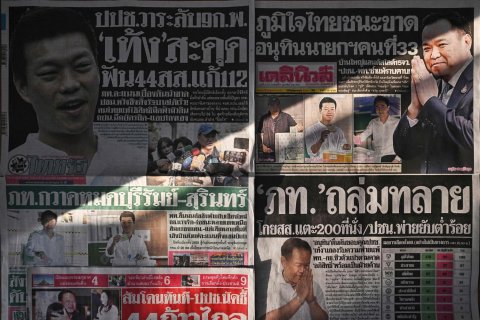
Implications of conservative triumph
Oped, Thitinan Pongsudhirak, Published on 13/02/2026
» The incumbent and conservative Bhumjaithai (BJT) Party has surprisingly swept Thailand's Feb 8 election with a commanding win. With the previously poll-leading and progressive People's Party (PP) coming in a distant second, Thailand appears headed for a conservative coalition government revolving around BJT and like-minded junior partners. Known for its conservative stance and being pro-status quo, it would not be surprising if the BJT-led coalition government, led by Prime Minister-elect Anutin Charnvirakul, were not challenged by the Constitutional Court, the Election Commission, and other supervisory agencies, which have derailed and dissolved reform-minded winning parties in the past.
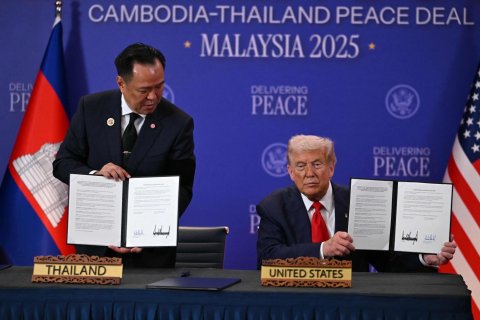
Digesting Trump's trip through Asia
Oped, Thitinan Pongsudhirak, Published on 07/11/2025
» Storming through Asia last week, US President Donald Trump's first stop in Kuala Lumpur on Oct 26, before moving on to Japan and South Korea over the next four days, capped by his meeting with Chinese President Xi Jinping before returning to Washington, was the most consequential for Southeast Asian economies.
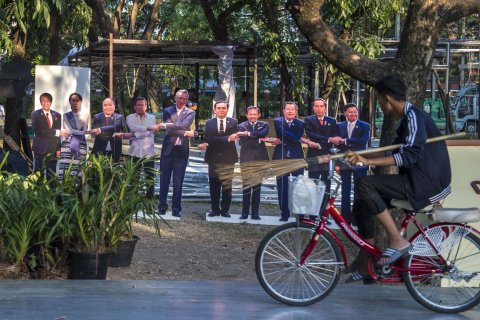
Asean's regroup requires deep reforms
Oped, Thitinan Pongsudhirak, Published on 17/10/2025
» If Asean's 58 years thus far have been about resilience and playing a central organising role in promoting regional security and stability, its next decade will determine whether the Southeast Asian bloc can adapt and remain relevant. After the crises in Myanmar and along the Thai-Cambodian border, Asean's credibility has never been more in doubt. To regain its effectiveness as Southeast Asia's one and only agency, Asean needs to move away from the ritualistic diplomacy of mundane meetings to far-reaching reforms that chart new ways of making things work.
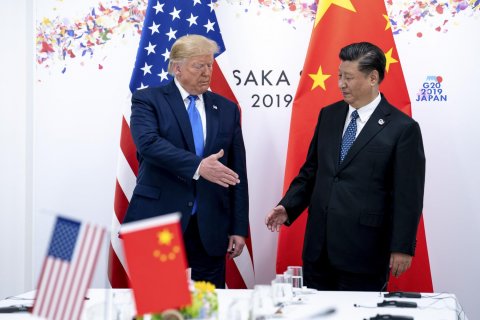
Southeast Asia amid the US-China rift
Oped, Thitinan Pongsudhirak, Published on 03/10/2025
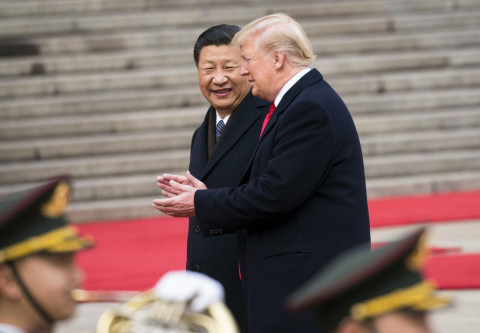
» The rivalry between the United States and China has become the defining contest of the 21st century. Barely two decades ago, Washington and Beijing were partners in prosperity. America's support for China's entry into the World Trade Organization in 2001 epitomised the high-water mark of engagement, reflecting the belief that economic integration would lead to greater political cooperation. Today, that partnership has morphed into suspicion and confrontation. Relations between the United States and China have deteriorated so swiftly that many observers now describe them as locked in a "new Cold War". The more pressing question, however, is not whether this analogy holds, but whether confrontation can be managed short of outright conflict.
The tyranny of anarchy and what to do
Oped, Thitinan Pongsudhirak, Published on 21/03/2025
» It is both exciting and alarming to be a student of international affairs as the world is being turned upside down. In just two months, the second administration of President Donald J Trump has sent shockwaves rippling through the international system as the United States pulls back from its role as leader, underwriter, and guardian of the nearly 80-year-old international order that it instrumentally constructed after WWII. In view of the US's portentous withdrawal, relative anarchy in the international system is back with a vengeance, leaving Asean members and smaller states elsewhere to fend for themselves in a self-help geostrategic environment.

Smart geopolitics starts on home front
Oped, Thitinan Pongsudhirak, Published on 21/02/2025
» According to a longstanding axiom, all politics is local. If so, then smart and crafty geopolitics must start at home with sufficient domestic political stability and consensus about how the country should navigate what is increasingly a turbulent geostrategic chessboard. Put this way, few countries can appreciate the intersection of geopolitics and domestic politics more than Thailand. Its rocky and volatile home front over the past two decades continues to impede and constrain its geostrategic projection.

Indonesia leads Asean into Brics+
Oped, Thitinan Pongsudhirak, Published on 17/01/2025
» As the new year gets underway with the looming re-inauguration of United States President Donald J Trump, countries and entire regions are having to manoeuvre and realign in view of an accelerated breakdown of the post-Second World War rules-based liberal international order.
Trump's tariff blackmail boosts Brics
Oped, Thitinan Pongsudhirak, Published on 06/12/2024
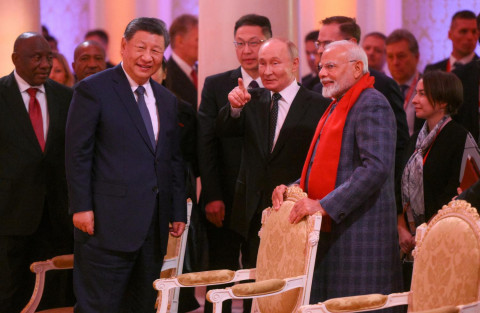
» Even before officially taking office, United States President-elect Donald J Trump is shaking up the international system with drama and fanfare unlike any other major leader in recent memory. His most recent outburst to slap 100% tariffs on the "Brics" countries -- Brazil, Russia, India, China, and South Africa, as well as Egypt, Ethiopia, Iran and the United Arab Emirates -- is a case in point. While it will coerce developing economies to think twice about the cost of going their own way, this tariff blackmail and others like it also risk pushing smaller countries away from the US to other rival big powers, particularly China.

Thailand needs middle power ambition
Oped, Thitinan Pongsudhirak, Published on 18/10/2024
» Having participated in the recent Asean-related summit meetings in Vientiane, Prime Minister Paetongtarn Shinawatra and her team must now work out Thailand's foreign policy priorities and posture. Foreign policy projection peaked around 20 years ago when Thailand was recognised as an emerging regional leader with the potential of a middle power. Since then, foreign policy has been patchy and hostage to polarisation and domestic political volatility. It is time to chart a way forward for Thailand's international standing and role despite ongoing political conflict at home.

Thai foreign policy needs new rudder
Oped, Thitinan Pongsudhirak, Published on 27/09/2024
» Thailand's foreign policy posture and projection under Foreign Minister Maris Sangiampongsa and the new government of Prime Minister Paetongtarn Shinawatra is off to a good start under severe structural constraints. Given the widespread consensus both at home and abroad that Thailand has fallen behind its peers over the past two decades, the imperative of regaining its international standing is undisputed. But doing so under what the foreign minister has outlined as a "neutral stance" under "non-alignment" among the great powers is moot and misguided. What Thai foreign policy needs is multi-alignments and omni-directionality under a new rudder.