



Showing 1 - 8 of 8
Thaksin chapter closes, another opens
Oped, Thitinan Pongsudhirak, Published on 19/09/2025
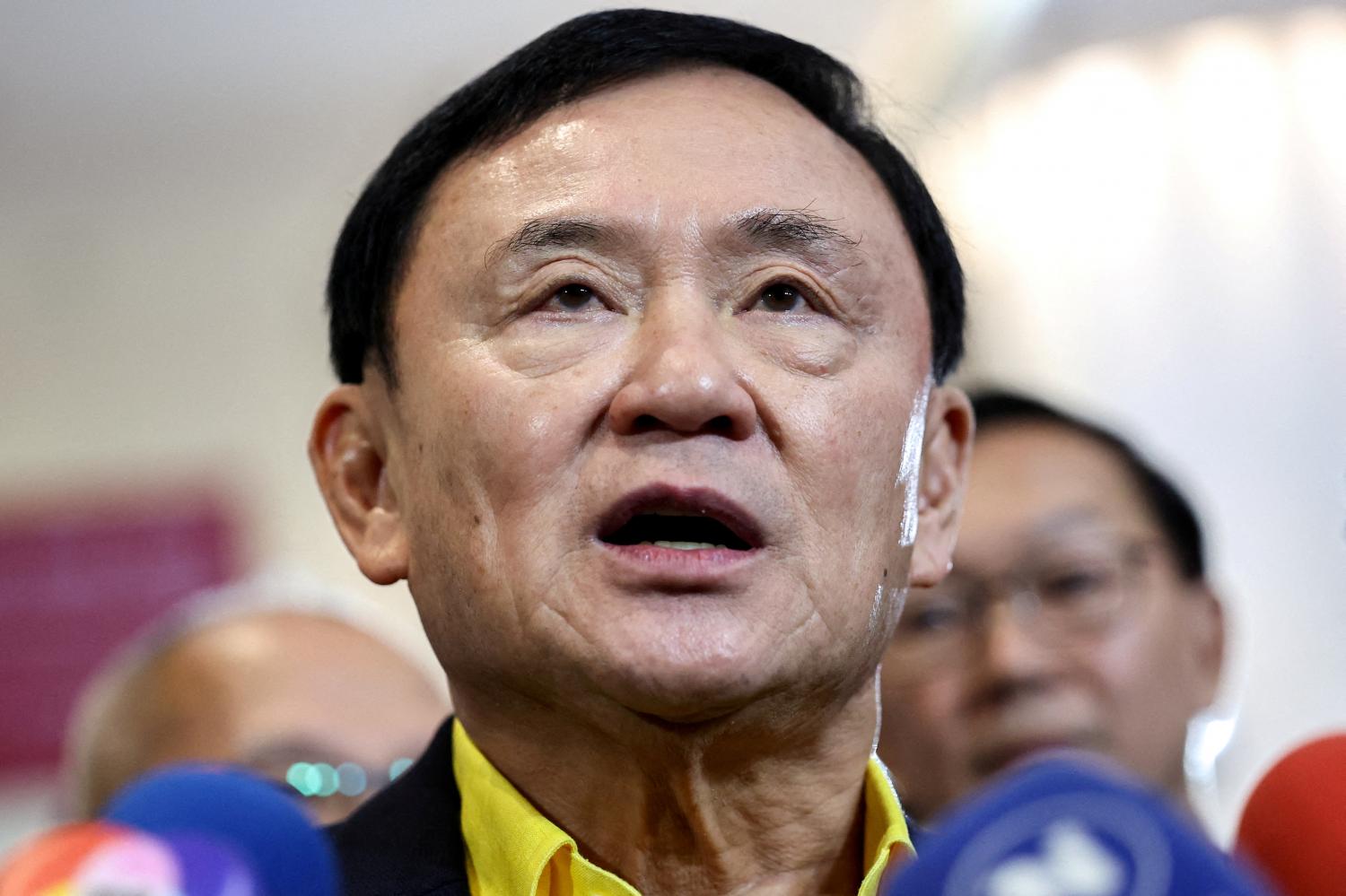
» In yet another dramatic twist in Thai politics, erstwhile anti-establishment political juggernaut and former prime minister Thaksin Shinawatra accepted a one-year jail sentence and began serving his time behind bars on Sept 9. After his return from a 15-year self-imposed exile in August 2023 and a concomitant royal pardon that reduced his eight-year imprisonment on corruption convictions to just one year, Thaksin cited his gravely ill health and spent the time comfortably at the Police General Hospital before being released on parole. The Supreme Court's ruling that his get-out-of-jail health card was invalid means Thaksin's renewed imprisonment and its aftermath are likely to reshape and realign Thailand's political landscape ahead of the next election, due by mid-2027.

Smart geopolitics starts on home front
Oped, Thitinan Pongsudhirak, Published on 21/02/2025
» According to a longstanding axiom, all politics is local. If so, then smart and crafty geopolitics must start at home with sufficient domestic political stability and consensus about how the country should navigate what is increasingly a turbulent geostrategic chessboard. Put this way, few countries can appreciate the intersection of geopolitics and domestic politics more than Thailand. Its rocky and volatile home front over the past two decades continues to impede and constrain its geostrategic projection.

The Thaksin factor in Thai politics
Oped, Thitinan Pongsudhirak, Published on 15/03/2024
» Thai politics in the near term will likely be dominated by the fate of the two largest vote winners from the general election in May 2023, the Move Forward (MFP) and Pheu Thai parties. While the MFP is at risk of another dissolution, the same as its predecessor Future Forward Party suffered in 2020, Pheu Thai's political future appears to hinge on Thaksin Shinawatra and his return from exile in what is believed to be a deal that follows the assumption of the premiership under Srettha Thavisin, and for Thaksin, a royal pardon and early release on parole.

Digital wallet should be implemented
Oped, Thitinan Pongsudhirak, Published on 16/02/2024
» The big debate in Thailand's current economic policy planning is whether the economy is facing a crisis or not. The government of Prime Minister Srettha Thavisin, who doubles as finance minister, has contended that there is an economic crisis in dire need of both monetary policy loosening and fiscal stimulus, particularly the 500-billion-baht digital wallet scheme. The Bank of Thailand, supported by a clique of economists apparently critical of the government's "populist" policy measures, asserts otherwise that an economic recovery is in progress without the need to lower the benchmark repurchase rate.

Thailand's semi-democracy faces risks
Oped, Thitinan Pongsudhirak, Published on 15/12/2023
» The government of Prime Minister and Finance Minister Srettha Thavisin has settled into an uneasy balance between the civilian-led majority forces that represent the Thai electorate and the royalist-conservative minority guardians of the established centres anchored around the monarchy, military, judiciary, and bureaucracy.

Thailand's semi-democracy returns
Oped, Thitinan Pongsudhirak, Published on 01/12/2023
» The appointment of Gen Prayut Chan-o-cha as privy councillor has neatly bookended Thai politics over the past decade. It coincides with the 10-year anniversary of the street demonstrations that were led by the People's Democratic Reform Committee, paving the way for Gen Prayut to stage a military coup in May 2014. While the interim was a period of hard and soft military-authoritarian rule in 2014-19 and 2019-23, the new moving balance in Thai politics is a semi-democracy of sorts under the Pheu Thai Party-led coalition government.

What's next for post-Thaksin Thailand?
Oped, Thitinan Pongsudhirak, Published on 08/09/2023
» The formation of a new coalition government under Prime Minister Srettha Thavisin has closed a two-decade chapter in Thai politics.

Lasting lessons from Malaysia for SE Asia
News, Thitinan Pongsudhirak, Published on 25/05/2018
» Some have likened it to an "earthquake," while others have called it a "tsunami." However it is billed, Malaysia's election outcome still reverberates far and wide. Its political aftershocks yield lessons and considerations for politics in Southeast Asia, particularly Thailand, which holds the dubious distinction as the only parliamentary system in this region that does not know when it will next stage a poll.