



Showing 1 - 10 of 12
Trump's 'America First' in overdrive
News, Thitinan Pongsudhirak, Published on 23/01/2026
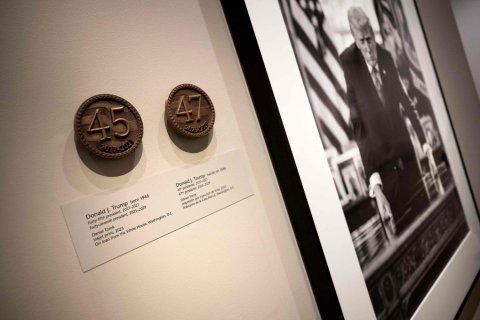
» President Donald Trump's extraterritorial capture of Venezuelan President Nicolas Maduro and his wife on cocaine-trafficking and terrorism-related charges earlier this month and repeated demand to take over Greenland at the World Economic Forum this week are part and parcel of a belligerent and transformative "America First" paradigm that dates back at least four decades.

Domestic drivers of bilateral conflict
News, Thitinan Pongsudhirak, Published on 19/12/2025
» The latest flare-up and intensification of the armed conflict between Thailand and Cambodia should be understood less as a new crisis and more as a resumption of a bilateral clash that erupted in late July.
Asean's regroup requires deep reforms
Oped, Thitinan Pongsudhirak, Published on 17/10/2025
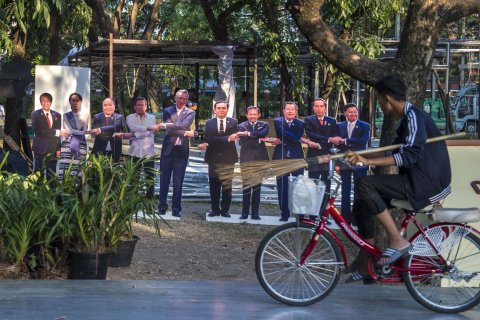
» If Asean's 58 years thus far have been about resilience and playing a central organising role in promoting regional security and stability, its next decade will determine whether the Southeast Asian bloc can adapt and remain relevant. After the crises in Myanmar and along the Thai-Cambodian border, Asean's credibility has never been more in doubt. To regain its effectiveness as Southeast Asia's one and only agency, Asean needs to move away from the ritualistic diplomacy of mundane meetings to far-reaching reforms that chart new ways of making things work.

Trump II's intellectual foundations
Oped, Thitinan Pongsudhirak, Published on 22/11/2024
» It seems counterintuitive and contradictory to think of an intellectual foundation behind United States President-elect Donald J Trump when he is professedly unintellectual, even anti-intellectual. But make no mistake. Mr Trump is merely a phenomenon. Understanding it reveals his worldview and consequent policy prospects. But doing so requires seeing the Trump phenomenon as it is rather than why and how it is detested by countless millions of us. Indeed, the biggest difficulty when analysing Mr Trump and his second administration is the global disdain he elicits.

The tide of history shifts in Thai politics
Oped, Thitinan Pongsudhirak, Published on 02/06/2023
» Notwithstanding the ongoing political shenanigans by appointed agencies to shape final outcomes after the May 14 poll, Thailand already will never be the same again. The Move Forward Party's (MFP) victory as the largest winning side, with 151 out of 500 parliamentary seats, is profound but not unprecedented. Together with the Pheu Thai Party's 141 MPs, these two opposition parties are unwittingly sending a message to each other and to the broader political establishment that the curve of Thai history is shifting tectonically. Failing to grasp and adjust to this evolving tide of history could marginalise Pheu Thai and challenge the establishment to its core foundations.
The global leadership India needs
Oped, Thitinan Pongsudhirak, Published on 21/10/2022
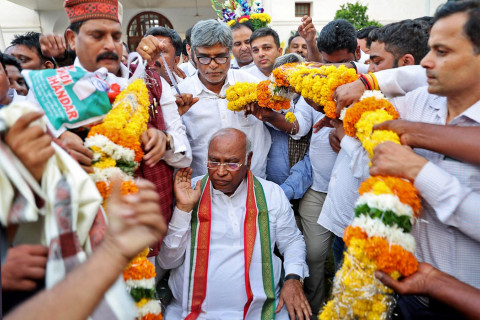
» India, like China, takes enormous pride in its civilisation's scale and antiquity -- and rightly so. But such pride can also lead to a complacent and sometimes dangerous insularity. Since gaining independence from the British Empire 75 years ago, India has mostly looked inward, focusing on improving the welfare of its population by building a strong democracy and a healthy economy.

Reopening a good bet with high costs
Oped, Thitinan Pongsudhirak, Published on 12/11/2021
» Nearly two weeks into Thailand's official reopening during the Covid-19 pandemic, it is time to evaluate the country's vaccine management plan, economic costs and prospects of recovery. While the reopening is worth the attendant risks, Thailand is paying a disproportionately high price for earlier mistakes and the government's mismanagement. As the reopening phase builds up, the Thai economy is likely to see a weak and tentative recovery trajectory with medium-term challenges and question marks.
The global politics of virus vaccines
Oped, Thitinan Pongsudhirak, Published on 11/09/2020
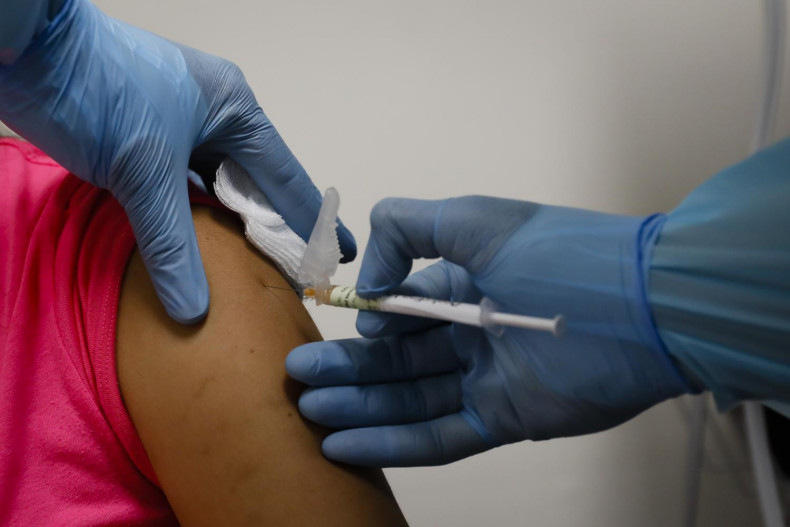
» It is clear now that Thailand's de facto strategy for handling the coronavirus pandemic is to minimise local infections and wait for a safe and effective vaccine. The recent discovery of just one Thai in a Bangkok suburb who tested positive sent the country into near-panic mode after 100 days of zero local transmissions, similar to the case of an Egyptian military official who visited Rayong province in July and tested positive thereafter.
Covid success coming at a heavy price
Oped, Thitinan Pongsudhirak, Published on 17/07/2020
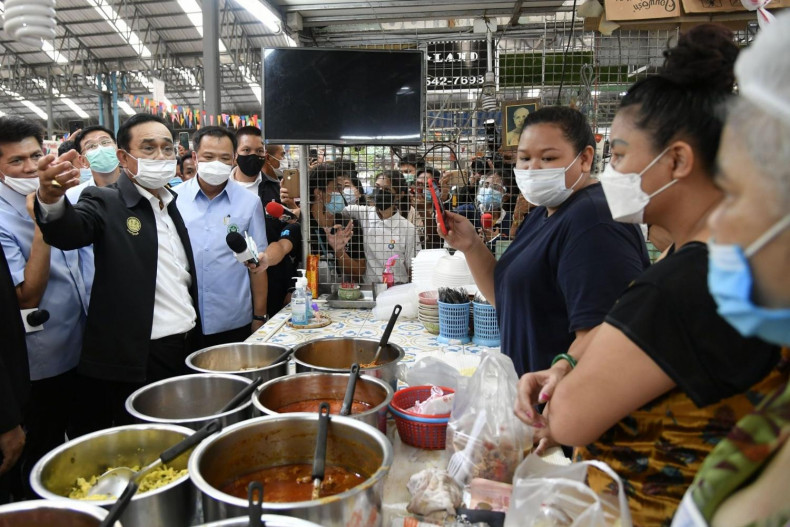
» It was a matter of time before the government of Prime Minister Prayut Chan-o-cha became a victim of its own misguided success in handling the coronavirus pandemic. By presiding over a public mindset of "zero" local virus infections, the government raised unrealistic expectations at a high price. The fiasco that transpired in Rayong last week, when an infected Egyptian air force official was allowed to roam in a shopping mall and thereby fuelled fears of "second wave" infections, should serve as a wake-up call for an overdue change in virus-fighting strategy.
China's Belt & Road impact on Thailand
News, Thitinan Pongsudhirak, Published on 28/09/2018
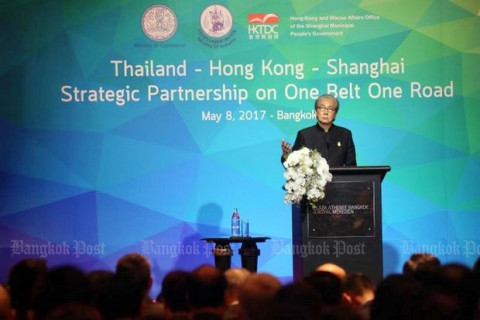
» As China's ambitious Silk Road Economic Belt (SREB) and Maritime Silk Road (MSR) -- popularly known as the Belt and Road Initiative, or BRI -- continues to make ripples and waves in international affairs, its likely impact on mainland Southeast Asia warrants attention. Unlike many of the countries on the Eurasian landmass and along waterways from the South China Sea through the Indian Ocean to eastern Africa, Thailand and its immediate neighbours are not directly on the BRI path.