



Showing 1 - 10 of 78
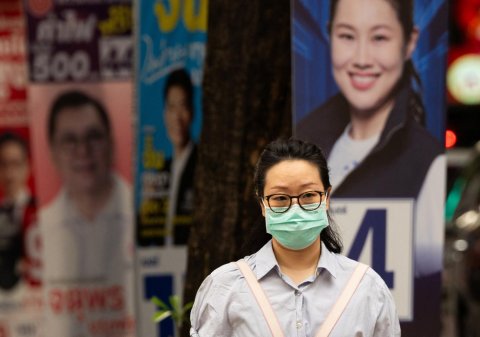
Will poll be breakout or more of same?
Oped, Thitinan Pongsudhirak, Published on 06/02/2026
» As Thais go to the polls this Sunday, the most consequential question is whether Thailand will finally break out of its debilitating cycle of political instability and economic underperformance that has marked the past two decades. The signs and signals suggest otherwise -- at least not yet.
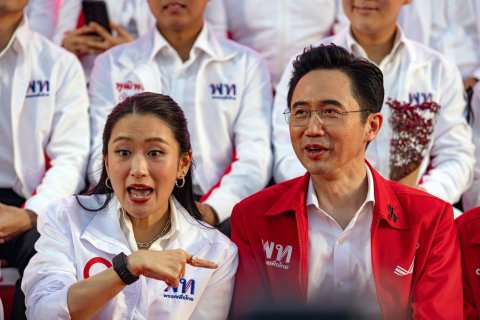
Three main parties and two directions
Oped, Thitinan Pongsudhirak, Published on 16/01/2026
» Although Thailand's election campaign is reaching fever pitch ahead of voting day on Feb 8, the dynamics and contours of its final outcome can be gleaned from past polls over the last 25 years. Only once in January 2001, as was indicated in this space last week, were voter results fully honoured and carried out. Other elections were either upended by military coups or manipulated by judicial interventions.
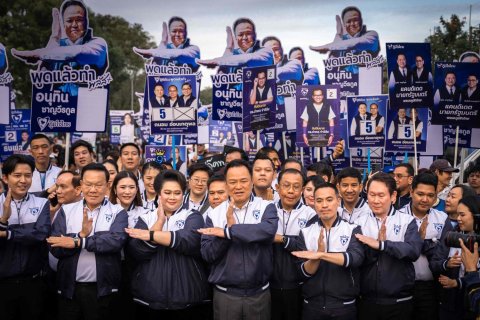
Thailand's political trajectory in 2026
Oped, Thitinan Pongsudhirak, Published on 09/01/2026
» What happens in Thai politics this year and the immediate horizon will be determined by the upcoming election on Feb 8. While contesting political parties are in full campaign mode, the contemporary history of Thai polls so far in the 21st century is not encouraging. Only once in the past 25 years have voting results went the way they were meant to, in accordance with the popular will. Whether the vote in four weeks will follow the same pattern will depend on whether the conservative establishment gets its preferred outcome.
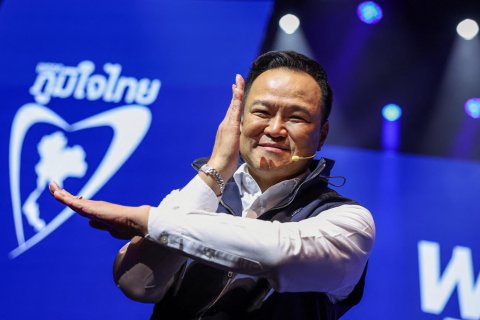
Another wasted year in Thai politics
Oped, Thitinan Pongsudhirak, Published on 26/12/2025
» As Thailand winds down 2025 with an early election looming on Feb 8, the most consequential issue to watch in the coming year will be whether recent topsy-turvy political patterns of polls, protests, and military and judicial interventions give way to a compromise between the old guard clinging on to vested interests and the new generation clamouring for reform and change.
No-confidence and poll date in flux
Oped, Thitinan Pongsudhirak, Published on 14/11/2025
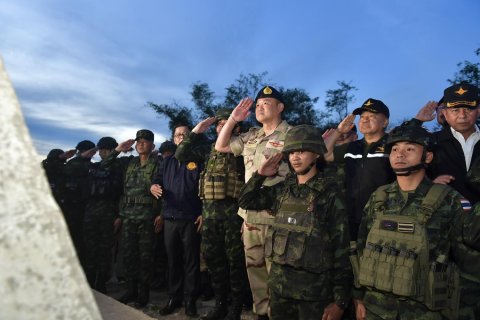
» Amid the drumbeats of military conflict with Cambodia, Thailand's political environment is evidently unruly and unsettled. The minority government of Anutin Charnvirakul, the third prime minister from the third largest-winning party since the latest national election in May 2023, is hard-pressed to stay in office beyond the four-month "Memorandum of Agreement" between his Bhumjaithai Party (BJT) and the People's Party (PP), the largest camp in the national assembly.
New govt may last longer than pledged
Oped, Thitinan Pongsudhirak, Published on 12/09/2025
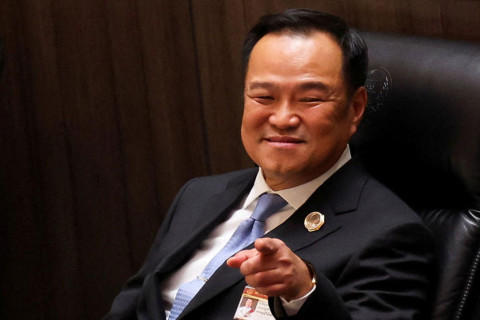
» Thailand's latest round of political tumult reached a culmination when the Constitutional Court removed Paetongtarn Shinawatra of the hitherto ruling Pheu Thai (PT) Party from office on Aug 29, paving the way for Bhumjaithai Party (BJT) leader Anutin Charnvirakul to succeed her as prime minister with the Lower House's majority support a week later.
Thailand needs a geostrategic rebalance
Oped, Thitinan Pongsudhirak, Published on 06/06/2025
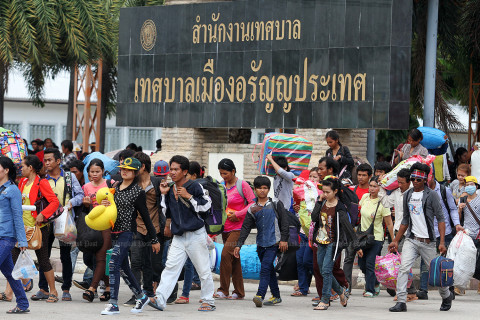
» With two military coups and multiple judicial interventions that combined to subvert election results and weaken democratic institutions over the past two decades, it is unsurprising that Thailand's geostrategic position has leaned increasingly towards China. Naturally, the more Thailand becomes autocratic, the more it will be estranged from established democracies in Europe and North America, as well as Japan and South Korea, with nowhere to turn but to Beijing. But this China orientation is a geostrategic mistake at this time. Thailand should correct its course until clearer signs emerge as to which side of the superpower struggle will come out on top.
Remembering a journo like no other
Oped, Thitinan Pongsudhirak, Published on 04/04/2025
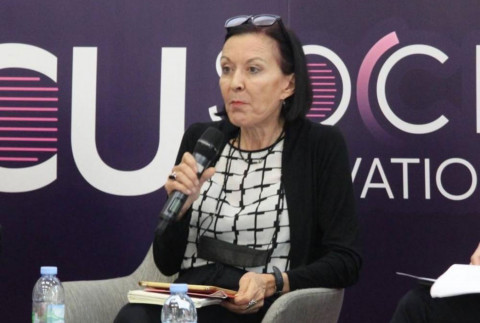
» Gwen Robinson was a quintessential journalist who probed for the best scoop and pried for the juiciest gossip, an old-style old hand the likes of which we are unlikely to see again. In the new contentious era of geopolitical conflict and geoeconomic tension underpinned by American economic nationalism, Robinson's journalist craft over more than four decades explaining and linking Asia and the West will be sorely missed.

Smart geopolitics starts on home front
Oped, Thitinan Pongsudhirak, Published on 21/02/2025
» According to a longstanding axiom, all politics is local. If so, then smart and crafty geopolitics must start at home with sufficient domestic political stability and consensus about how the country should navigate what is increasingly a turbulent geostrategic chessboard. Put this way, few countries can appreciate the intersection of geopolitics and domestic politics more than Thailand. Its rocky and volatile home front over the past two decades continues to impede and constrain its geostrategic projection.
Two wasted decades in Thai politics
Oped, Thitinan Pongsudhirak, Published on 20/12/2024
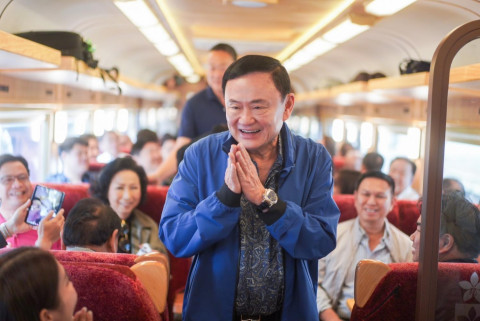
» Now that Thaksin Shinawatra appears actively back in Thai politics, it is demoralising to look back at Thailand's wasted time and opportunities. Once a promising country on the way from democratic transition to consolidation in the late 1990s, Thailand has become semi-autocratic, and its rocky political trajectory over the past two decades is now structural. The traditional institutions of power that grew out of the Cold War have been calling the shots in earlier decades and are just unwilling to let the country move forward in the immediate years ahead.