



Showing 1 - 5 of 5

Another wasted year in Thai politics
Oped, Thitinan Pongsudhirak, Published on 26/12/2025
» As Thailand winds down 2025 with an early election looming on Feb 8, the most consequential issue to watch in the coming year will be whether recent topsy-turvy political patterns of polls, protests, and military and judicial interventions give way to a compromise between the old guard clinging on to vested interests and the new generation clamouring for reform and change.
'Scam-gate' deserves full accounting
Oped, Thitinan Pongsudhirak, Published on 24/10/2025
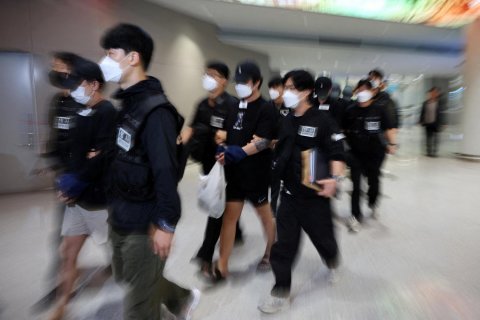
» The explosive revelations and allegations of regional cybercrimes and scam networks have hit Thailand head-on and placed the government of Prime Minister Anutin Charnvirakul in an awkward and defensive position. As more facts surrounding what looks like a labyrinthine cross-border multibillion-dollar transnational criminal ring come to light, more questions have surfaced with no clear answers. The Anutin government needs to come clean and avoid a "scam-gate" of cover-ups and lies at the expense of countless scammed victims across many countries.

Post-poll lull has a lot to answer for
Oped, Thitinan Pongsudhirak, Published on 26/05/2023
» After a clear election victory, Thailand should already have a new government in office by now with Pita Limjaroenrat as prime minister, as his Move Forward Party (MFP) together with opposition ally Pheu Thai Party won a clear mandate of more than 58% of 500 lower house seats. Yet their coalition government in waiting among eight parties with 313 elected representatives is facing several critical roadblocks, including the military-appointed senate and the Election Commission (EC). Public pressure is now needed to be piled on these powerful but biased bodies that were appointed during the coup-dominated era in 2014–2019 to comply with the people's wishes, as expressed at the polls on May 14.
Thailand's bankrupt Myanmar policy
Oped, Thitinan Pongsudhirak, Published on 17/06/2022
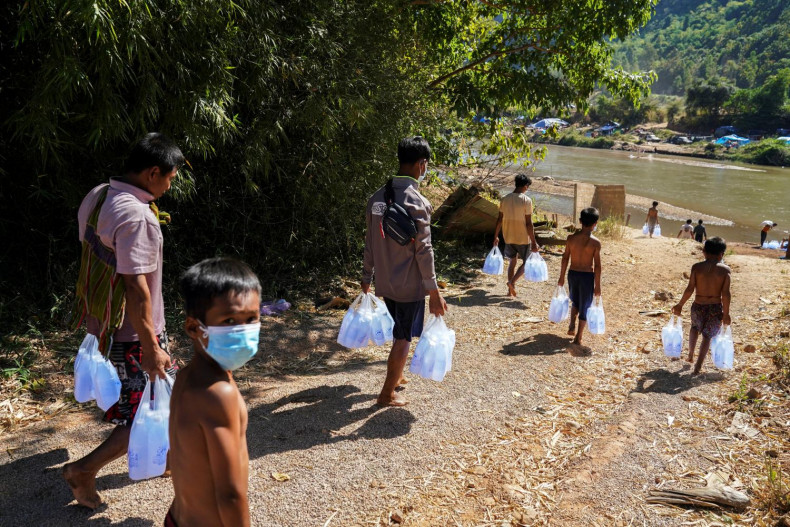
» Few signboards foretell the global issues of our time better than what is addressed at the annual meetings of the Shangri-La Dialogue (SLD) in Singapore. After a pandemic-induced two-year hiatus, the most recent SLD covered the gamut on the main stage, from the United States-China geostrategic competition and military modernisation to security cooperation and climate change. The only anomalous single- and small-country focus in a special session was Myanmar.
Domestic drivers of superpower rivalry
Oped, Thitinan Pongsudhirak, Published on 10/07/2020
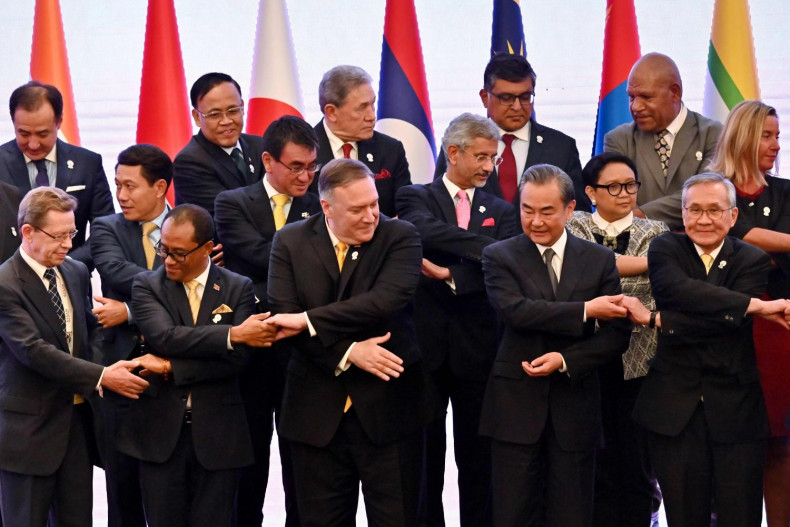
» The coronavirus pandemic is fundamentally global but its impact is mainly local because of the international system of state sovereignty, borders and divergent national interests. What is needed to cope with, contain and overcome the pandemic is more international cooperation and coordination. But we are seeing less international efforts to fight the virus together and more self-help where every nation fends for itself. The upshot from this fractured and fragmented international system during Covid-19 is the primacy of domestic determinants of international outcomes. Nowhere is this reality clearer than the competition and confrontation between the United States and China.