



Showing 1 - 9 of 9
Trump's 'America First' in overdrive
News, Thitinan Pongsudhirak, Published on 23/01/2026
» President Donald Trump's extraterritorial capture of Venezuelan President Nicolas Maduro and his wife on cocaine-trafficking and terrorism-related charges earlier this month and repeated demand to take over Greenland at the World Economic Forum this week are part and parcel of a belligerent and transformative "America First" paradigm that dates back at least four decades.

Authentic intelligence rises with AI
Oped, Thitinan Pongsudhirak, Published on 16/05/2025
» As the cognitive power and proliferation of artificial intelligence take the world by storm, the case for authenticity and originality paradoxically becomes more compelling and carries higher premiums. It is now a widely accepted reality that AI is on its way to master human thought processes and proceed beyond them. This means that it will be more difficult for humans to differentiate between what comes from AI and what does not. As such, the time has come after nearly 40 years of being published -- including more than 25 of them with this newspaper -- that this column goes subjective.

Thai elections without democracy
Oped, Thitinan Pongsudhirak, Published on 14/07/2023
» Although it may come across as dramatic and unprecedented, Move Forward Party (MFP) leader Pita Limjaroenrat’s ordeal in trying to take office as prime minister after winning the May 14 election is par for the course in Thai politics over the past two decades.

Where have the media reformers gone?
Oped, Thitinan Pongsudhirak, Published on 18/02/2022
» After two decades marked by two military coups in 2006 and 2014, Thailand is supposed to be a "reformed" country by now. While all kinds of reforms were promised with each military takeover -- from political parties, parliament and constitution to the bureaucracy, military and police -- none has taken place. In fact, pledged reforms have gone in the opposite direction in the past. Nowhere is this reaction and restoration of old power and interests more evident than in Thailand's media industry.
Prayut govt stuck in self-made trap
Oped, Thitinan Pongsudhirak, Published on 02/07/2021
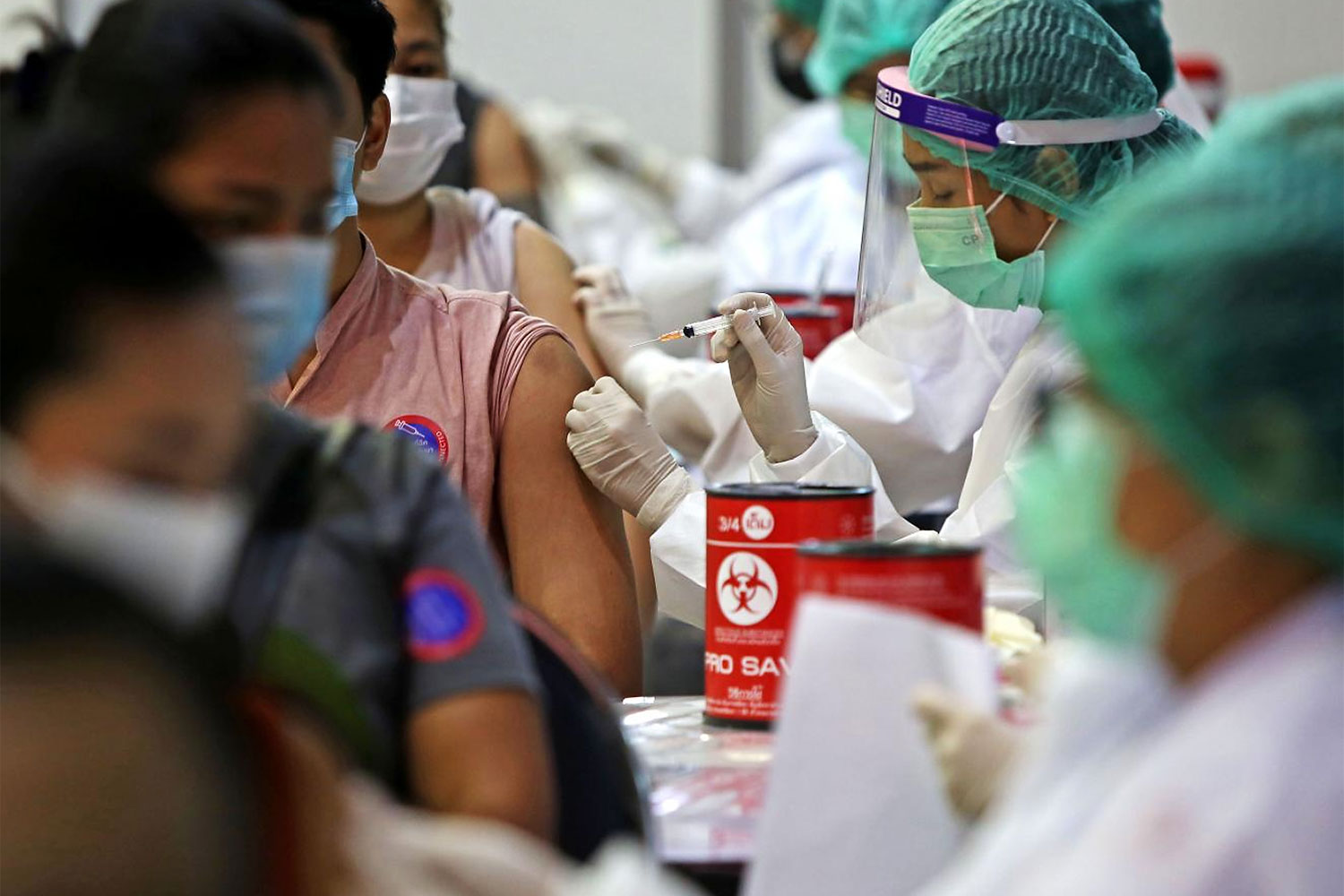
» Thailand's multi-layered crises from persistent virus infections and vaccine shortages to economic damage are building up into a potential political upheaval. The ravaging Covid-19 crisis is worse than the infamous Tom Yum Kung economic crisis in 1997-98. This time, the military-predominant government of Prime Minister Prayut Chan-o-cha is stuck in multiple traps of its own making. Getting out of this predicament means the pandemic situation is likely to get a lot worse before any hope of recovery and way forward can be found.
Prayut government seems bullet-proof
Oped, Thitinan Pongsudhirak, Published on 21/05/2021
» The passage of time shows the government's growing lack of accountability. In fact, the government of Prime Minister Prayut Chan-o-cha appears the most unaccountable on record because it has been the most incompetent. Myriad charges from policy mismanagement and blatant irregularities to outright constitutional violations have been levied against the government but none have stuck. Although some attribute this phenomenon to Gen Prayut's "Teflon" qualities, a more accurate understanding may well be that his cabinet is somehow bullet-proof. Charges can stick but they cannot penetrate.

Geoeconomic implications of Covid-19
Oped, Thitinan Pongsudhirak, Published on 26/06/2020
» The longer the coronavirus pandemic wends its way around the world, the more it takes on permanent features. As case infections still persist virulently, especially in the US, Brazil, Russia and India, states, societies and individuals are being forced to make adjustments. There will be winners and losers in the geoeconomic competition for market shares and supply chains. Those with more effective public health systems will stand in good stead with opportunities to re-emerge less scathed and better positioned to carry on, whereas others with less adequate health infrastructure will face more risks and disadvantages. For the first time in generations, health security has become the main determinant in the fate of nations and peoples.

Global turmoil and Thailand's political reset
News, Thitinan Pongsudhirak, Published on 21/12/2018
» As the world moves into 2019, there is a consensus that the roughly seven-decade-old rules-based liberal international order no longer works. Either it has to be fundamentally revamped to suit new realities and the international distribution of power and wealth, or it will be increasingly violated and marginalised. In a remarkable parallel, Thailand's hitherto political order that lasted about seven decades also requires adjustment and recalibration.

Myanmar needs new generation to lead it
News, Thitinan Pongsudhirak, Published on 10/08/2018
» Southeast Asia suffers from a crisis of leadership whereby the old guard are unwilling to make way for new and younger leaders to emerge through compromise and accommodation to usher in change and reform while maintaining a measure of continuity.