



Showing 1 - 4 of 4
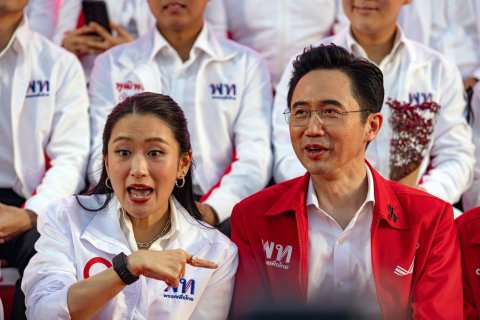
Three main parties and two directions
Oped, Thitinan Pongsudhirak, Published on 16/01/2026
» Although Thailand's election campaign is reaching fever pitch ahead of voting day on Feb 8, the dynamics and contours of its final outcome can be gleaned from past polls over the last 25 years. Only once in January 2001, as was indicated in this space last week, were voter results fully honoured and carried out. Other elections were either upended by military coups or manipulated by judicial interventions.
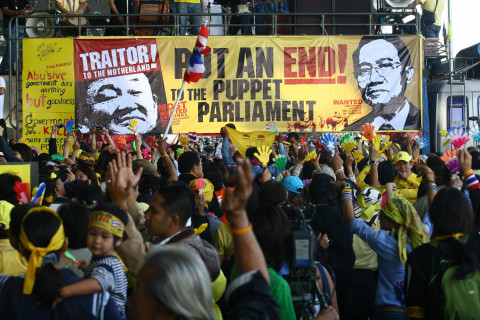
The 'salim' phenomenon in Thai politics
Oped, Thitinan Pongsudhirak, Published on 18/12/2020
» Few phenomena explain and underpin Thai politics more than the rise and decline of what is known pejoratively these days as salim, a metaphorical variation of salim, a Thai dessert comprising multi-coloured thin noodles served in coconut milk with crushed ice. Once socially attractive and politically fashionable, salim have gone out of vogue, looked down upon in a new era of anti-establishment protest for pro-democracy reforms under the new reign. What becomes of these pro-military royalist-conservative salim will have much to say about what will happen to Thailand's political future.

Is the Indo-Pacific eclipsing Asia-Pacific?
News, Thitinan Pongsudhirak, Published on 02/08/2019
» Thailand and the smaller states in its neighbourhood will miss the Asia-Pacific era. It is not as if the Asia-Pacific has gone away or disappeared in any sense. But its role as a cradle of prosperity linking larger and small economies around the Pacific Rim may have passed its peak. In its place is the Indo-Pacific, which thus far lacks a trade-liberalisation and economic growth component so integral to the Asia-Pacific.
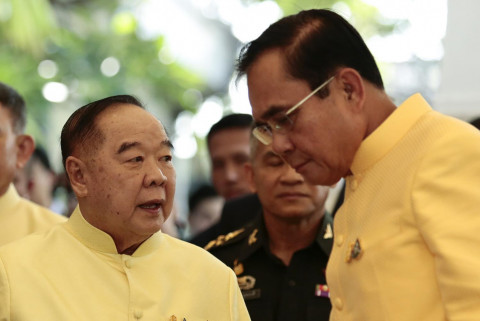
5 years backwards under military rule
News, Thitinan Pongsudhirak, Published on 24/05/2019
» Now that five years have elapsed since Thailand's last military coup, it is an opportune juncture to take stock of where the country is heading. When it seized power in May 2014, the military junta, known as the National Council for Peace and Order, initially had legitimacy from royal ascent and broad approval from its restoration of stability and order after more than half a year of street protests in Bangkok by the People's Democratic Reform Committee that was intent on overthrowing the Pheu Thai government.