



Showing 1 - 10 of 24
Thailand's political trajectory in 2026
Oped, Thitinan Pongsudhirak, Published on 09/01/2026
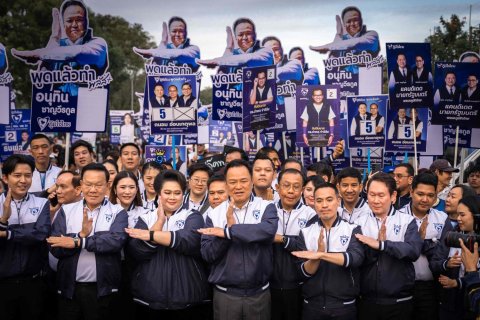
» What happens in Thai politics this year and the immediate horizon will be determined by the upcoming election on Feb 8. While contesting political parties are in full campaign mode, the contemporary history of Thai polls so far in the 21st century is not encouraging. Only once in the past 25 years have voting results went the way they were meant to, in accordance with the popular will. Whether the vote in four weeks will follow the same pattern will depend on whether the conservative establishment gets its preferred outcome.
New government is new wine in old bottle
Oped, Thitinan Pongsudhirak, Published on 13/09/2024
» On the face of it, the new government under Prime Minister Paetongtarn Shinawatra appears to be a generational shift and gender breakthrough. Ms Paetongtarn is the youngest prime minister ever at 38 and only the second female government leader after her aunt Yingluck Shinawatra in 2011-14. The Paetongtarn cabinet features a record eight women among 36 with more ministers in their 30s-50s and fewer above 60. Yet on closer scrutiny, the new and younger faces are largely family legacies and proxies, surrounded by old-style politicians, while the new government's policy directions sound dated not well-suited for the times ahead.
Thailand's central bank dependence
Oped, Thitinan Pongsudhirak, Published on 23/02/2024
» To proponents of central bank independence, the ongoing friction between Prime Minister and Finance Minister Srettha Thavisin and Bank of Thailand Governor Sethaput Suthiwartnarueput appears straightforward. The prime minister is putting unwarranted and unfair pressure on the central bank governor to spur the economy by loosening monetary policy and cutting interest rates. Yet, on closer scrutiny, the entrenched politicisation of central banking in Thailand may suggest otherwise. There is more than meets the eye in the politics of interest rate cuts.

Asian elections, democracy in 2024
Oped, Thitinan Pongsudhirak, Published on 29/12/2023
» Billed as the biggest election year ever as more than half of the global population goes to the polls, 2024 will be critical to the debate about democratisation and autocratisation. Asia will lead the way with elections in India, Bangladesh, Pakistan, and Indonesia, while the most recent polls in Myanmar and Thailand offer long-term lessons about democracy and dictatorship. The salient themes next year will be about the self-perpetuating tendencies of incumbent regimes and the resilience of democratic rule when authoritarianism seemed to have the upper hand.
Global, regional, local trends for 2023
Oped, Thitinan Pongsudhirak, Published on 23/12/2022
» Although economic predictions are usually reserved for the foolhardy, as the future is always difficult to ascertain, there are certain trend lines and probabilities that can be discerned at the global and regional level as well as the local level here in Thailand. As a year-end exercise, we can tease out a few contours with a reasonably high degree of probability.
Next poll brings highest stakes, risks
Oped, Thitinan Pongsudhirak, Published on 09/12/2022
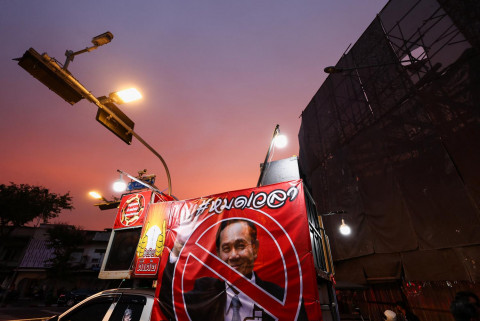
» In the face of the myriad of questions and issues that beset Thai politics in the lead-up to the general election, which must be held by May 7, the biggest facts and dilemmas are not being raised. Prime Minister Prayut Chan-o-cha is now headed to complete nine years in office, the first five of which were under a military government after he and his cohorts seized power by force in May 2014, and the last four under an elected coalition government enabled by the 2017 constitution crafted by a committee the ruling generals had set up. Moving forward, Thailand risks settling into a prolonged period of economic stagnation and political decay unless there is a qualitative change of government after the poll.

US shoots itself in foot over Taiwan
Oped, Thitinan Pongsudhirak, Published on 05/08/2022
» Even pro-democracy critics of China’s authoritarian ways would have to call United States House Speaker Nancy Pelosi’s visit to Taiwan an undue provocation that ended up as a lose-lose outcome for all concerned, including the 82-year-old congresswoman. Everything about it was misguided and self-indulgent, designed for domestic consumption in the US rather than regional peace and security in Asia. The US, by way of Mrs Pelosi, has unnecessarily shot itself in the foot big time, leaving regional states and societies to deal with the consequences.
Keeping democratic institutions weak
Oped, Thitinan Pongsudhirak, Published on 22/07/2022
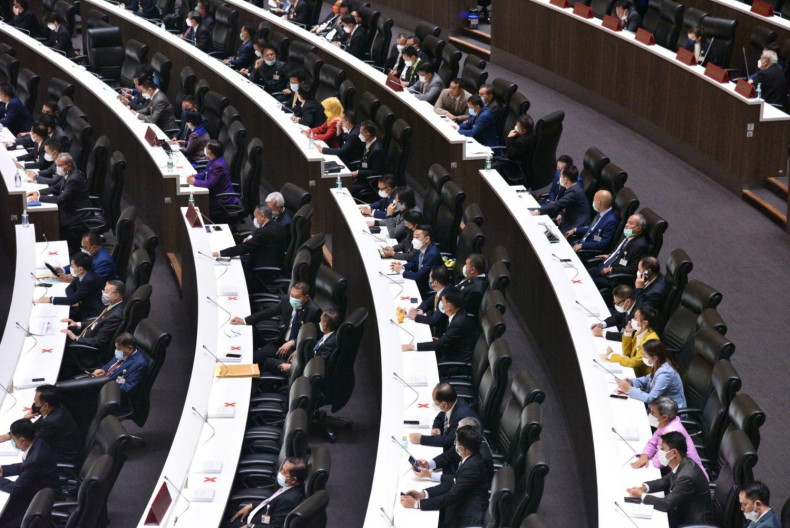
» The worst thing one can do in Thai politics is to run for office and win by a landslide. When this happens, the knives will come out and the massive election winner will be overthrown before long -- one way or another -- because the real source of power in Thailand is unelected. Such was the fate of Thaksin Shinawatra when he spearheaded the Thai Rak Thai Party to win two landslide poll victories in January 2001 and February 2005, first a near majority and later a thumping 75% of the lower house of parliament.

The politics of the Chadchart juggernaut
Oped, Thitinan Pongsudhirak, Published on 01/07/2022
» In countries where integrity, competence and popular legitimacy in leadership are valued -- for example, in Scandinavia, Singapore or Taiwan -- Bangkok governor Chadchart Sittipunt would be considered fairly average. He would merely be another good leader who exudes modesty, humility, capability and authenticity, always in touch with and answerable to his constituents.
Election-related agencies need overhaul
Oped, Thitinan Pongsudhirak, Published on 03/06/2022
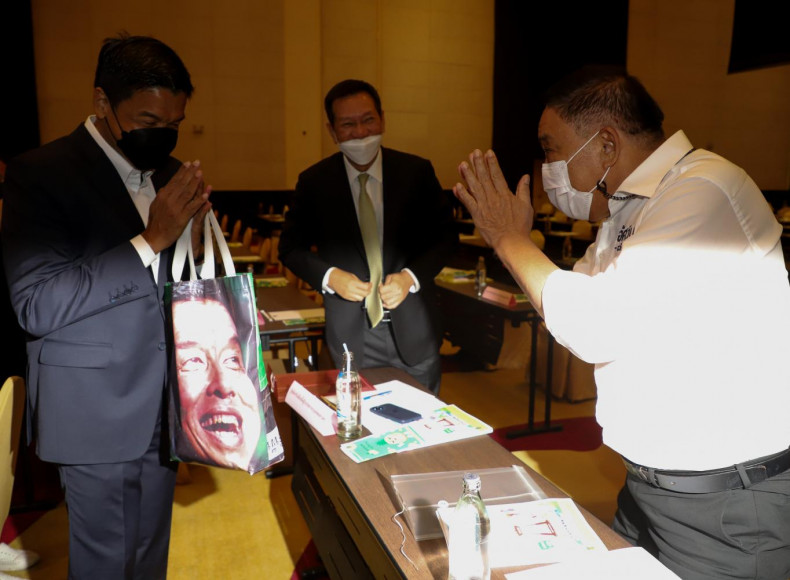
» In any respectable democratic system, a winning poll candidate who secured an overall majority of electoral support would take office with the earliest effect. Not in Thailand. When Chadchart Sittipunt trounced 29 rivals by gathering 1.38 million or 51% of the votes cast in Bangkok's gubernatorial election on May 22, the capital's electorate had to hold their breath in suspense to see whether and when the Election Commission (EC) would validate his runaway victory.