



Showing 1 - 7 of 7
Government stability tests performance
Oped, Thitinan Pongsudhirak, Published on 03/04/2026
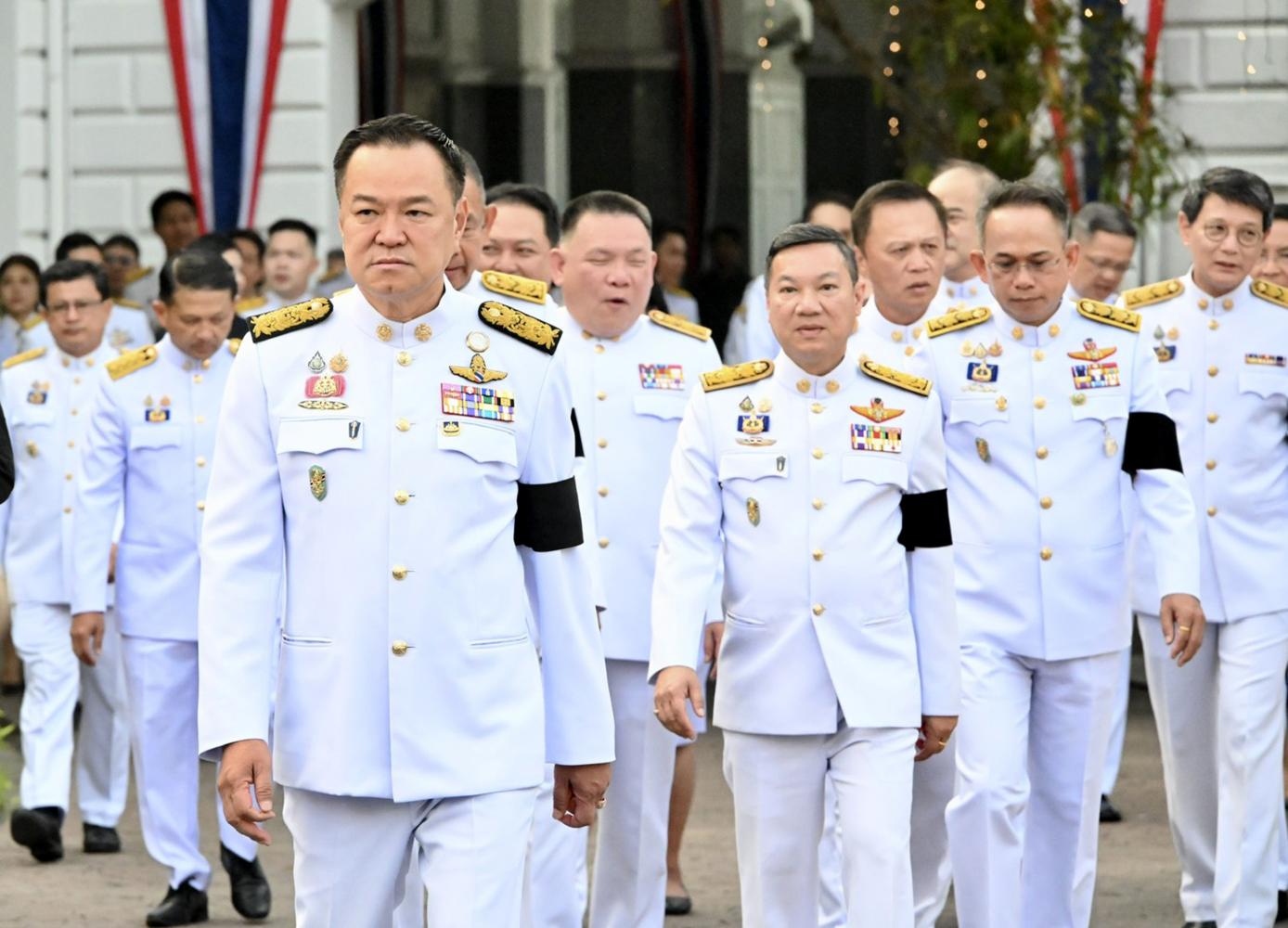
» Prime Minister Anutin Charnvirakul has gone from strength to strength, leveraging a stopgap minority government late last year into solid majority rule after the Feb 8 election.

Authentic intelligence rises with AI
Oped, Thitinan Pongsudhirak, Published on 16/05/2025
» As the cognitive power and proliferation of artificial intelligence take the world by storm, the case for authenticity and originality paradoxically becomes more compelling and carries higher premiums. It is now a widely accepted reality that AI is on its way to master human thought processes and proceed beyond them. This means that it will be more difficult for humans to differentiate between what comes from AI and what does not. As such, the time has come after nearly 40 years of being published -- including more than 25 of them with this newspaper -- that this column goes subjective.

What's happened to the Asian Century?
Oped, Thitinan Pongsudhirak, Published on 14/02/2025
» Until recently, the "Asian Century" seemed a compelling narrative but now it is not what it used to be. It was supposed to herald a shift in global economic power from the West to the East, driven by China's rapid rise, India's economic dynamism, and the broader development of Asia. But a quarter of the way into the 21st century, the promise of Asian dominance appears less certain. The enduring technological and economic might of the United States, coupled with its geopolitical backlash against China, has lowered expectations. While Asia remains formidable, the trajectory of global power is open and fluid, with potential dominance shifting not necessarily to any nation or region but perhaps to a non-state entity.

Thailand between the US and China
Oped, Thitinan Pongsudhirak, Published on 29/03/2024
» Amid what now has to be acknowledged as a direct non-military conflict and a geoeconomic war of sorts between the United States and China, Thailand is in a quandary. While characterising Thailand's geostrategic dilemma as a US-China binary can be exaggerated and misleading, it does have a point. As with many other developing countries in the region, Thailand will come under increasing pressure to choose between the two competing superpowers. The ability not to choose thus becomes an overarching geostrategic objective.

Tolerating populism for democracy
Oped, Thitinan Pongsudhirak, Published on 13/10/2023
» The so-called “super deal” in August that resulted in the return of Thaksin Shinawatra and the formation of the Pheu Thai Party-led coalition government under Srettha Thavisin evidently has its limitations. It appears to be rejected by sections of the conservative old guard who still wants to resort to extra-parliamentary ways and means to undermine Thailand’s delicate parliamentary democracy. Reminiscent of past protests against Mr Thaksin’s brand of populism, a new round of extra-parliamentary political movement has begun in earnest with the petition launched by 99 prominent economists, including former central bank governors, against the Srettha government’s 10,000-baht digital wallet policy.

Thailand's bankrupt Myanmar policy
Oped, Thitinan Pongsudhirak, Published on 17/06/2022
» Few signboards foretell the global issues of our time better than what is addressed at the annual meetings of the Shangri-La Dialogue (SLD) in Singapore. After a pandemic-induced two-year hiatus, the most recent SLD covered the gamut on the main stage, from the United States-China geostrategic competition and military modernisation to security cooperation and climate change. The only anomalous single- and small-country focus in a special session was Myanmar.

Remembering Chai-anan Samudavanija
News, Thitinan Pongsudhirak, Published on 21/09/2018
» In death, as in life, Chai-anan Samudavanija always outshines. More than two decades after he left an academic career for policy work and a public intellectual role, Chai-anan's scholarly output is still cited more than any other social scientist. His passing, at 74, reflects Thailand's circuitous political trajectory and the shortcomings of the country's higher education. Until Thai academic standards are better incentivised and upgraded, few scholars are likely to scale international heights of scholarship and thought leadership anywhere near Chai-anan's achievements.