



Showing 1 - 8 of 8
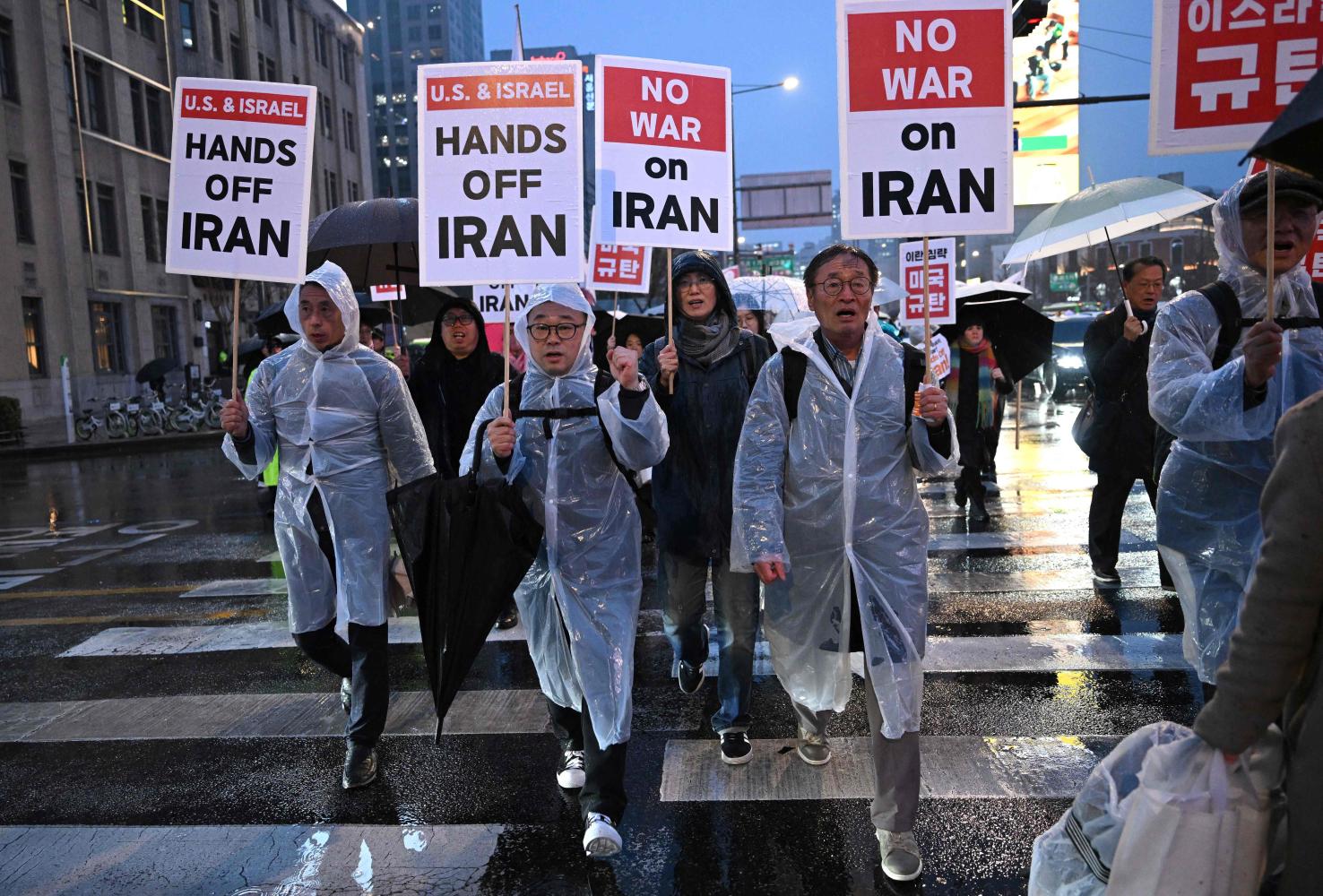
America risks grand folly in Iran war
Oped, Thitinan Pongsudhirak, Published on 06/03/2026
» It is just the first week of the joint attack between the United States and Israel on the Islamic Republic of Iran, but the repercussions from the Middle East for the Indo-Pacific are already discernible.

Geoeconomics of the US-China tech war
Oped, Thitinan Pongsudhirak, Published on 16/09/2022
» Chinese President Xi Jinping's arrival in Central Asia this week in his first overseas travel in nearly three years is perhaps the most consequential irony of the coronavirus pandemic. As the place where the deadly pandemic began in early 2020, China was the first to swiftly and successfully suppress and contain Covid-19 within weeks, while its counterparts in North America and Europe languished for months under mounting death tolls and hospitalisations.

Reopening a good bet with high costs
Oped, Thitinan Pongsudhirak, Published on 12/11/2021
» Nearly two weeks into Thailand's official reopening during the Covid-19 pandemic, it is time to evaluate the country's vaccine management plan, economic costs and prospects of recovery. While the reopening is worth the attendant risks, Thailand is paying a disproportionately high price for earlier mistakes and the government's mismanagement. As the reopening phase builds up, the Thai economy is likely to see a weak and tentative recovery trajectory with medium-term challenges and question marks.

Aukus poses challenges to other powers
Oped, Thitinan Pongsudhirak, Published on 15/10/2021
» The Australia-United Kingdom-United States (Aukus) security pact has caused ripple effects across oceans and continents. Not only will the trilateral security partnership provoke China, but it will likely further divide Southeast Asia and overshadow Asean-centred cooperative vehicles, such as the East Asia Summit. Beyond these concerns, the Aukus deal to share Anglo-American nuclear technology to enable Australia's acquisition of eight nuclear-powered submarines over two decades poses challenges to other major powers, particularly the European Union and its key members as well as Japan.

Biden's pivot to free, open Indo-Pacific
Oped, Thitinan Pongsudhirak, Published on 03/09/2021
» If former United States President Barack Obama is known for his "pivot to Asia" geostrategy and President Donald Trump for the Free and Open Indo-Pacific, there is now a geostrategic synthesis under President Joe Biden. It can be aptly called the US "pivot to the Free and Open Indo-Pacific".

Thailand's changed coup considerations
News, Thitinan Pongsudhirak, Published on 18/09/2020
» That coup rumours are swirling again while Thai politics heats up in view of an ominous student-led anti-establishment protest this weekend attests to the weakness of the country's democratic institutions.

RCEP without India poses new hurdles
News, Thitinan Pongsudhirak, Published on 08/11/2019
» On the face of it, the Regional Comprehensive Economic Partnership is an Indo-Pacific trade pact that would shore up the stalled world trade liberalisation and stem the rising tide of protectionism in the global economy. India's withdrawal from the RCEP -- whose other 15 members comprise the 10 Asean economies along with China, Japan, South Korea, Australia and New Zealand -- is a major setback, posing new challenges for the Asean-centred trade bloc. Asean should persuade India to return to the RCEP fold, while preparing for a much less promising RCEP15 as second-best outcome.

The Trump-Kim summit and its aftermath
News, Thitinan Pongsudhirak, Published on 15/06/2018
» The unprecedented and dramatic summit meeting between President Donald Trump and Chairman Kim Jong-un, the current leaders of the United States and the Democratic People's Republic of Korea (otherwise known as North Korea), will go down in history as another case of "better the devil you know than the devil you don't". Since the Korean War stopped without a permanent truce in 1953, the world has become accustomed to the North Korean regime as a menace to regional peace and stability with ominous global ramifications because of its nuclear weapons.