



Showing 1 - 10 of 13

Trump's 'America First' in overdrive
News, Thitinan Pongsudhirak, Published on 23/01/2026
» President Donald Trump's extraterritorial capture of Venezuelan President Nicolas Maduro and his wife on cocaine-trafficking and terrorism-related charges earlier this month and repeated demand to take over Greenland at the World Economic Forum this week are part and parcel of a belligerent and transformative "America First" paradigm that dates back at least four decades.

Asean's regroup requires deep reforms
Oped, Thitinan Pongsudhirak, Published on 17/10/2025
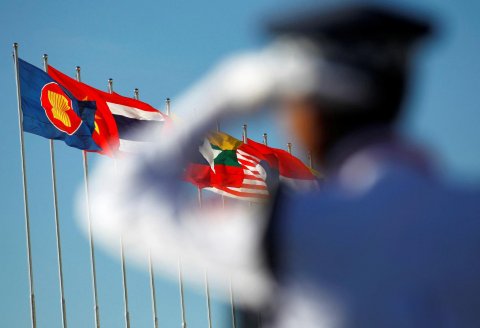
» If Asean's 58 years thus far have been about resilience and playing a central organising role in promoting regional security and stability, its next decade will determine whether the Southeast Asian bloc can adapt and remain relevant. After the crises in Myanmar and along the Thai-Cambodian border, Asean's credibility has never been more in doubt. To regain its effectiveness as Southeast Asia's one and only agency, Asean needs to move away from the ritualistic diplomacy of mundane meetings to far-reaching reforms that chart new ways of making things work.
Flawed Asean needs to regain footing
Oped, Thitinan Pongsudhirak, Published on 10/10/2025
» Nearly six decades after its founding, the Association of Southeast Asian Nations (Asean) finds itself back where it began -- divided, uncertain, and vulnerable to the influence of major powers. Once hailed as a model for regional cooperation in the developing world, Asean now faces a crisis of purpose. Unless it can rediscover the unity and collective way forward that defined its early decades, Southeast Asia's flagship institution risks slipping into irrelevance.

What's happened to the Asian Century?
Oped, Thitinan Pongsudhirak, Published on 14/02/2025
» Until recently, the "Asian Century" seemed a compelling narrative but now it is not what it used to be. It was supposed to herald a shift in global economic power from the West to the East, driven by China's rapid rise, India's economic dynamism, and the broader development of Asia. But a quarter of the way into the 21st century, the promise of Asian dominance appears less certain. The enduring technological and economic might of the United States, coupled with its geopolitical backlash against China, has lowered expectations. While Asia remains formidable, the trajectory of global power is open and fluid, with potential dominance shifting not necessarily to any nation or region but perhaps to a non-state entity.

Srettha Thavisin fell to hidden forces
News, Thitinan Pongsudhirak, Published on 30/08/2024
» Hindsight is likely to place Srettha Thavisin in Thai political annals as a prime minister who tried his best but ultimately succumbed to forces way beyond his control. While his nearly 12-month tenure in office came up short on policy deliverables, it nevertheless reset Thailand's foreign policy projection on Myanmar amid more omnidirectional relations with the major powers.
54 years on, Asean needs new modality
Oped, Thitinan Pongsudhirak, Published on 13/08/2021
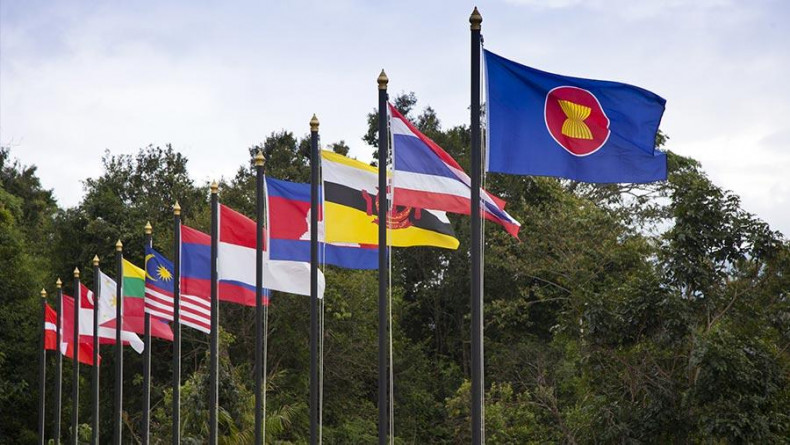
» After 54 years of being together, Asean is at the end of its tether. It has never been more divided than now, split within member states and across all 10 of them, dominated once again by divisive superpower rivalry and competition. In practice, this means Asean will appear increasingly ineffectual and inert. There will be much bureaucratic motion but few substantive organisational and policy outcomes amid unresolved challenges from within and from outside the region. Asean's best way forward may require unprecedented radical thinking towards a multi-track organisation to ensure relevance and momentum where it can be generated.

Asean's Myanmar crisis out of control
Oped, Thitinan Pongsudhirak, Published on 26/03/2021
» Myanmar's spiralling post-coup violence and bloodshed has become Asean's existential crisis. It is customary to pin hopes on an Asean way of fudging and nudging the main protagonists into some workable, face-saving compromise to save the day but this time the situation is dire and dark. Unless the 10-member regional organisation can make a difference in halting Myanmar's descent into uncontrollable violence and potential civil war, Asean is at risk of undermining and perhaps ending its success story.

Thai-Australian ties in the regional mix
Oped, Thitinan Pongsudhirak, Published on 05/06/2020
» Unlike the externally originated coronavirus pandemic, the mass protests in the United States in the aftermath of George Floyd's wrongful death at the hands of police officers in Minneapolis are internally driven. Seen from outside, the public fury, street demonstrations and ensuing violence over the fatal suffocation of Floyd, a black man, yield geopolitical ramifications. If the US is socially unwell and geopolitically unreliable, regional states in Asia will have to respond accordingly in view of the US-China rivalry and competition. A case in point is Thailand-Australia relations in the regional mix.
Rail deals must have accountability
News, Thitinan Pongsudhirak, Published on 03/05/2019
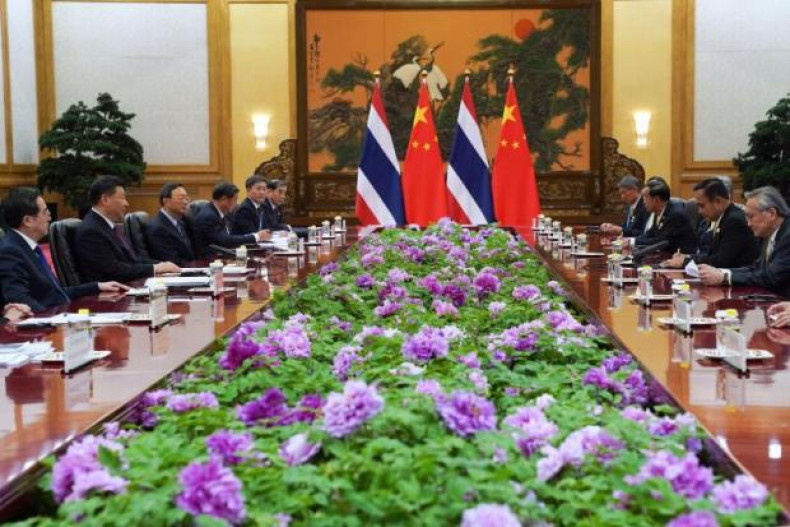
» Prime Minister Prayut Chan-o-cha's recent participation in the second Belt and Road Forum (BRF) in Beijing was problematic on many levels. On what basis did Gen Prayut negotiate a rail deal between Thailand and China? What are the details and cost-benefit considerations of this deal? The lack of transparency and public accountability surrounding the Thailand and China rail plan is likely to pose future questions and problems for a huge infrastructure project Thailand can use, but according to whose terms its people must be the main beneficiary.
Asean chairmanship has many limitations
News, Thitinan Pongsudhirak, Published on 16/11/2018
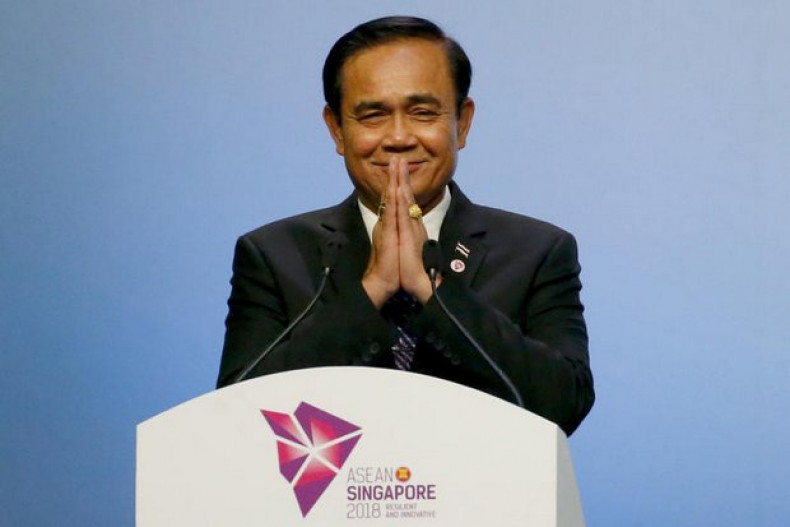
» Just as all politics is ultimately local, all regionalism is mostly domestic. Such is the case with Asean. Whichever of the 10 member states chairs Asean, its role and performance tends to be domestically rooted. To envision and drive Asean forward requires deft leadership, bold ideas and smart diplomacy that must extend beyond and transcend parochial domestic concerns. No Asean member has shown this sort of farsighted regionalist ambition in recent years. Thailand appears on course to be no different when it chairs Asia's most durable organisation next year.